– SURSĂ DE TEXTE FUNDAMENTALE, CĂRŢI, CURSURI, LECŢII, ÎN LIMBA ROMÂNĂ –
Autor: arhiprofesor
Rene Guenon spunea candva ca numai prostii cred ca se pot initia singuri. Intotdeuna ai nevoie de un maestru. Dar cartea ramane o sursa de imbogatire a cunostintelor noastre fara de care nici maestrii nu-si pot desavarsi lucrarea. Biblioteca de arhitectura este pentru un arhitect tot atat de importanta cat experimentarea in concret a trairii fiecarui spatiu arhitectural.
54) “And her two sons.” Were her sons not the sons of Moses? Because Zipporah labored with them without her husband, the Torah calls them, “her sons,” and not “his sons.” Even though they were Moses’ sons, it speaks the truth, for they were certainly her sons, since Moses connected in another place, high and holy, and it was not respectful toward him to call them “his sons.” Although they were his sons, due to the honor of that place to which he connected, Divinity, here it refers to them as “her sons.” Afterwards, it calls them “his sons” because at the time when they reached Moses, Moses was conversing with Divinity. After he parted from Divinity and went out toward his father-in-law, it is written, “Then Jethro, Moses’ father-in-law, came with his sons.”
55) Certainly, because of the honor of Divinity, which is the bonding of the upper one to which Moses bonded, it is written, “her sons.” And why does it write, “Then Jethro, Moses’ father-in-law, came with his sons and his wife to Moses,” calling them, “his sons”? It is because it is all one. When it says “his sons,” it means Jethro’s sons, since after Moses came to him he had sons.
56) And so it was with Jacob. When he came to Laban and lived with him, he had sons. Here, too, when Moses lived with Jethro, he had sons, and he brought his entire household with him to put them under the wings of Divinity. Jethro said to Moses, “I, your father-in-law, am coming to you, as well as your wife, and her two sons with her. It does not say, “And your two sons.” How do we know that Jethro had sons? It is written, “The sons of the Kenite, Moses’ father-in-law, went up from the city of palms,” and he left his sons with Moses.
1) “And Aaron raised his hands.” It writes “His hands” without a Yod [in Hebrew], which means one hand, since he had to raise the right over the left.
2) It is written in King Solomon’s book that anyone who raises his hands not in prayer and litany is a person who was cursed by ten rulers who were in the city. These are ten appointees over those who raise their hands up, to receive that prayer or that blessing, and place in it the strength to honor the holy Name, and he is blessed below. When he is blessed below by the raising of his hands above, he is blessed above and grows on all sides.
3) Those ten appointees are there to receive the blessings above and to pour them down, to bless the one who blesses Him, as it is written, “And I will bless them.”
4) For this reason, one should guard himself when he raises his hands, to make them be in prayer or in litany. One should not raise one’s hand in vain, since those ten appointees are there, awakening to the raising of hands, and if it is in vain, those ten curse him with 248 curses.
5) Then the spirit of Tuma’a [impurity] is on those hands, whose conduct is to be in an empty place, and there is no blessing in an empty place. This is why it is written, “I have lifted up my hand unto the Lord, God Most High,” which translates as “under His shade,” meaning in prayer.
6) There are high secrets in the spreading of hands. When they spread and are raised upright, a person honors the Creator with several high secrets and is worthy of unifying ten utterances, to unite everything and to properly bless the holy Name. Also, he is worthy of uniting the inner Merkavot [assemblies/structures] deAtzilut, and outer Merkavot, outside of Atzilut, so the holy Name will be blessed on all sides and everything will unite as one, above and below.
7) It is written, “And none shall appear before Me empty-handed.” This is the meaning of the stretching of the fingers: when one stretches them upward, he must not stretch in vain, but in prayer, in litanies, and in blessings.
8) There are ten rulers below, ten utterances, like letters that are inscribed as above. They are the first to stand over that stretching of fingers, and by that, the whole side of Kedusha [holiness] unites above. Then all the Sitra Achra surrender and thank the holy King.
9) In Kedusha, there is a King, and priest serving below him, whether above or below. There is a King above, who is the holy of holies, Bina, and he is the upper King. Below Him is a priest, the first light, which serves before Him, the Sefira of Hesed. This is a priest who is called “great,” the right side.
10) There is a king below, Malchut, like the upper King, and he reigns over everything below, BYA. And below him is a priest who serves him, Michael, the great priest, who is to the right, Hesed, the complete faith, the side of Kedusha.
11) In Sitra Achra, there is a king who is called “a foolish old king.” This is the evil inclination. Below him is the priest of On, as it is written, “And Ephraim said, ‘But I have become rich; I have found On [strength] for myself,’” meaning the priest of Sitra Achra. This is so because this power, On, controls the deed that Jeroboam did. Were it not for that force, he would not have been able to succeed in that act.
12) When this king and that priest of the Sitra Achra surrender and break, all the other sides surrender and thank the Creator. Then the Creator alone rules above and below, as it is written, “And the Lord alone will be exalted in that day.”
13) In precisely the same way, the Creator worked in the earth. He broke the foolish old king, who is Pharaoh. When Moses came to Pharaoh and said, “The God of the Hebrews has met with us,” Pharaoh started and said, “I do not know the Lord.” The Creator wanted His name honored on earth as it is honored above, so He struck him ten blows. When He struck him and his people, he came and thanked the Creator.
14) Afterwards, that priest of On, Jethro, broke and surrendered until he came and thanked the Creator. He said, “Blessed be the Creator for saving you from the hand of Egypt and from the hand of Pharaoh. Now I know that the Lord is great.” This is the priest of On, another side, the left side. Likewise, when Rachel saw that she was dead, she said, Ben Oni [son of my strength]. For this reason, Jacob hurried and said, Ben Yamin [son of the right side], and not Ben Oni [son of my strength], meaning the right side and not the left.
15) Since the king and that priest thank the Creator and break down before Him, the Creator rises in His glory above everyone, above and below. And before the Creator rose in His glory, when these thanked before Him, the Torah was not given, until Jethro came, confessed, and said, “Now I know that the Lord is greater than all the gods. Blessed be the Lord who saved you.” Then the Creator rose in His glory above and below, and He gave the Torah in the fullness of His governance over everything.
16) “Let the peoples thank You, O God; let all the peoples thank You.” King David rose and praised and thanked the holy King. He engaged in Torah when the northern wind awakened and struck the chords of the violin, and the violin would play, and he would sing. And what would he sing?
17) When the Creator awakens to all those Merkavot, to give them prey, as it is written, “She rises while it is still night and gives prey to her household and a portion to her maidens,” they all started and said joyfully, “God be gracious to us and bless us, and cause His face to shine upon us—Selah.” When the northern wind awakens and descends to the world, it blows and says, “That Your way may be known on the earth, Your salvation among all nations.”
When the violin is played by the wind, he started and said, “Let all the peoples thank You.” When David would rise and the holy spirit awakened upon him, he started and said, “The earth has yielded its produce; God, our God, blesses us. God blesses us, that all the ends of the earth may fear Him,” to extend the good of the Creator from above to below.
Afterwards, David came with the spirit of holiness and set them up together, as it is written, “God blesses us.” He observed all this verse concerning the violin, “Let all the peoples thank You,” since the wholeness of the glory of the Creator is above and below, as it is written, “That all the ends of the earth may fear Him.”
18) When the rest of the peoples surrender and come and thank the Creator, when they yield and thank Him, the glory of the Creator is completed above and below. When Moses came to Pharaoh and told him, “The Lord, the God of the Hebrews has met with us,” Pharaoh stared and said, “I do not know the Lord.”
19) The Creator wanted His name glorified on earth as it is glorified above. When He struck him and his people, he came and thanked the Creator, as it is written, “The Lord is the righteous one, and I and my people are the wicked ones.” When he who was an important king throughout the world confessed, all the other kings confessed, as it is written, “Then the champions of Edom were startled.”
20) Jethro, a high and great priest, a minister appointed over all the other idols, came and thanked the Creator. He said, “Now I know that the Lord is greater than all the gods.” Then the Creator rose and was glorified in His honor above and below. And afterwards, He gave the Torah in the completeness of His governance over everything.
21) It is written about it: “Let the peoples thank You, O God; let all the peoples thank You.”
22) But it does not write, “Priest of On” in regard to Jethro; it writes “Priest of Midian.” Yet, it is all one. In the beginning, he was called “Priest of On,” Joseph’s father-in-law. Afterwards, he was called Moses’ father-in-law, priest of Midian. It is all one: the priest of Midian is like the priest of On, since those two, Moses and Joseph, are at the same degree of the letter Vav, which is Vav–Vav in the king, two Vavs together. The first Vav is Moses, Tifferet, and the second Vav is Joseph, Yesod. It was said “Priest of Midian” in relation to “a contentious woman.”
23) Rabbi Aba raised his hands on his head, wept, and said, “Now the light of Torah rises to the height of the firmament of the uppermost throne. When my lord departs from the world, who will illuminate the light of Torah? Woe to a world that will be orphaned from you. But the words of my lord will illuminate in the world until the Messiah King arrives, and then it is written, ‘And the earth shall be full of the knowledge of the Lord.’”
24) “And Jethro, the priest of Midian, Moses’ father-in-law, heard of all that God had done for Moses and for Israel His people, that the Lord had brought Israel out of Egypt.” In the beginning it writes, “All that God had done for Moses,” and then it writes, “That the Lord had brought Israel out.” “God had done” is the Malchut; it is the name that protected Moses and Israel and which did not move from them during the exile. Afterwards, the upper name, Yovel, Bina, brought them out of Egypt.
25) “All that God had done for Moses,” meaning that he was thrown in the river, and that He saved him from Pharaoh’s sword. “And for Israel, His people,” as it is written, “And God heard their groaning.” And it is written, “But the more they afflicted them, the more they multiplied and the more they spread out.”
26) It is written, “He has sent redemption to His people; He has ordained His covenant forever; holy and awesome is His name.” Why do all the verses in this chapter have two words from the alphabet, and in this verse and its subsequent there are three words? It is to complete the six Behinot [discernments] in the alphabet, which are three redemptions: Torah [Pentateuch], Prophets, and Hagiographa. This verse corresponds to the three redemptions of Israel: Babylon, Greece, and Edom, excluding the first exile, in Egypt, which already took place. And the other verse corresponds to Torah, Prophets, and Hagiographa.
27) It is written, “He has sent redemption to His people.” When He brought Israel out of Egypt and worked miracles and mighty deeds for them, “He has ordained His covenant forever,” meaning Jethro came and the Creator accepted him and brought him closer to His work. From there, all those foreigners drew closer under the wings of Divinity. Henceforth, “Holy and awesome is His name,” since then the name of the Creator is sanctified, when the Sitra Achra broke and surrendered.
28) “And Jethro … heard.” Can it be that Jethro heard and the rest of the people in the world did not hear? Indeed, the whole world heard, but they did not break, hence their hearing is not hearing. He heard and was broken, surrendered before the Creator, and drew nearer to fearing Him, hence his hearing is hearing.
29) Everything that the Creator does above and below is true, and His work is true. There is nothing in the world that one should reject or despise, since they are all true works, and everything is needed in the world.
30) It is written, “If the serpent bites before being charmed.” The serpent does not bite people until it is whispered to from above. It is told, “Go and kill this or that person.
31) Sometimes—as it does that—so it saves people from other things. Through it, the Creator works miracles to people; it all depends on the Creator; it is all the work of His hands. But the world needs them. If it did not need them, the Creator would not make them. Hence one need not be contemptuous toward things in the world, and certainly not toward the words and deeds of the Creator.
32) “And God saw all that He had done, and behold, it was very good.” “And God saw” is the living God, Bina.” “Saw” means that He looked, to illuminate for them and to watch over them. “All that He had done” means it is all included as one, above and below. “And behold, it was very good” is the right side. “Very” is the left side, “Good” is the angel of life. “Very” is the angel of death, and it is all one matter for those who observe the wisdom.
33) “And God saw all that He had done.” Throughout the story of creation, it is written, “And God saw that it was good.” And here, “And God saw all that He had done.” God below, Malchut, governs the lower ones. God above, Bina, governs the upper ones. God above, who governs the upper ones, is the living God, Bina. This is why, “And God saw all that He had done,” since He illuminated and lit all those upper and lower candles, and from there, all the lights come out to shine.
34) An imprint of the Masach of Midat ha Din [quality of judgment], which uses Atik, is inscribed in the most covered of all that is covered, Atik, who is unseen and is not revealed. That imprint inscribes another Partzuf, AA, who imprints and does not imprint, for it is not imprinted from it. The ones with Tevuna and open eyes, who have Hochma, cannot perceive him. He is the existence of everything. That imprint in AA is so small that it is unseen and is not revealed; it stands there with a desire to sustain everything. In other words, its existence is felt only in the desire that it will be, since everything exists because of it, receiving what one receives of that in which there is neither Reshimo nor will, and which is unseen. This is Ein Sof, and were it not for that imprint, they would not be able to receive from Ein Sof.
The Zohar explains the order of the emanation of the Partzufim of Atzilut: Atik, AA, AVI, and ZA, how the source of everything, the Masach of Malchut of Midat ha Din, uses Partzuf Atik, operates in AA to conceal the Hochma there, and how a part of her is mitigated in Bina, called “palace,” while she herself is hidden in the GAR of the palace, who are upper AVI. Afterwards, it explains VAKdeZA concerning six curtains, and the embroidered curtain, GARdeZA.
35) That imprint wished to cover itself and made a palace for itself, to cover in it. It elevated part of it to be mitigated in Bina, and then Bina became a palace. It took it out of itself, meaning raised a part of it to Bina, and drew it with great and elaborate expansion, in illumination of Hochma that shines to all sides. And he honored it with a garment of honor, the light of Hassadim to clothe the Hochma, and opened fifty gates in it.
36) Deep within that palace—in the GAR in it, which is upper AVI—that imprint was covered and concealed. When he was hidden in it and entered it, upper AVI were filled with light. Lights and sparks stem from that light, which is Ohr Hozer [reflected light], come out of those gates in the palace, and they all shine.
37) That palace is covered, meaning clothes in six curtains, HGTNHYdeZA. Six curtains are five because Yesod is not a particular Sefira but includes only the five Sefirot HGTNH. Deep within those curtains stands an embroidered curtain, the GAR of the curtains. The palace covers and clothes in that curtain, meaning it is the first to clothe the palace, Bina, and the other six curtains are atop it. From it, it observes and watches everything. In other words, it is the GAR, in which there is vision.
38) This palace is opening of eyes, so he will not sleep. It always keeps an eye for illuminating below, out of the light of the imprint, the light of Hassadim. That Tevuna—the covered Hochma, and the will of wills, the Keter—GAR in the palace, which are all upper AVI—is hidden and covered and is not revealed. It is present and absent. It is more blessed than the one who is more covered than all who are covered, Keter.
39) Jethro gave Moses an advice about the correction of the Dinim, and so it should be. He thanked the Creator and set up the correction of his Dinim before him, indicating what is written, “For the judgment is for God,” and not for the Sitra Achra, and the Dinim were given to Israel and not to another, as it is written, “His statutes and His ordinances to Israel.” One should not treat others with contempt, and a matter from a layperson is a matter, as it is written about Moses, “And Moses listened to his father-in-law.”
40) This is why it is written, “I will give thanks to You among the nations, O Lord, and I will sing to Your name.” King David said it in the spirit of holiness, when he saw that the glory of the Creator was not rising in exaltedness and was not glorified in the world, but only by the rest of the nations. But is the Creator not glorified in the world only thanks to Israel? So it is indeed, since Israel are the foundation of the candle to shine. But when the rest of the nations come and thank Him in subjugation to the glory of the Creator, the foundation of the candle is supplemented and strengthens over all its works in one bonding, and the Creator alone rules above and below.
41) The whole world feared and dreaded the Creator when they heard of the miracles of the exodus from Egypt. And when Jethro—who was the high priest of all the other gods—came, the glory of the Creator strengthened and ruled over everything.
42) This is so because when the whole world heard of the Creator’s might, they all shook and looked at Jethro, who was wise and the great appointee over all the idols of the world. When they saw him approaching and serving the Creator, saying, “Now I know that the Lord is greater than all the gods,” they all veered away from their works and knew that they were futile. Then the glory of the holy Name of the Creator was glorified on all sides. This is why this portion was written in the Torah, and the beginning of the portion is with Jethro.
43) Jethro was one of Pharaoh’s sages. Pharaoh had three sages: Jethro, Job, and Balaam. Jethro—there was not one operation, appointee, a sun, or a star that governed in its governance, that did not know its proper work and utilization. Balaam was charming with any kind of witchcraft, whether in deeds or in words.
44) Job was fearful with fear, and in that fear was the core of his power. This is so because a circumcision above, whether of Kedusha [holiness] or of the Sitra Achra, one cannot draw the spirit above to below and bring it near him unless with fear, by aiming one’s heart and will with fear and with breaking of the heart. Then he will extend the spirit above downward and the required desire.
45) If one does not place one’s heart and will toward that side, his will cannot cling to Him, except for those fine forms. And not in all of them, since there are rulers among them that require fear and the will of the heart. It is all the more so with sublime matters that require great fear, dread, and will.
46) Jethro needed to always work on the same side, either in times when a person needed him and or in times when he did not need him, so that that will be attached to him when he needed it. Balaam clung to those charms, as we said.
47) In Egypt, Job returned to fearing the Creator when he saw the mighty deeds and miracles that the Creator performed in Egypt. Jethro did not return to the Creator through all of that, until Israel went out of Egypt, when all the ties and forms that the Egyptians tied were nothing, and they went out after He drowned them in the sea. Then he repented and went back to serving the Creator.
48) Balaam did not repent and did not return, because the filth of the Sitra Achra was attached to him. And yet, he was looking from afar, within that filth and attachment of the Sitra Achra, since there is one fine illumination in the Sitra Achra that illuminates around, as it is written, “And a bright light around it.” He was looking that small looking from afar, but not at all the things.
49) When he was looking at a small thing from that illumination, it was as if from behind a wall. He said, and did not know what he was saying. And he was looking at that illumination with the blocked part of the eye, when the eye rolled, and a man sees a blocked light, and he does not see.
50) There is no Sitra Achra in which there is no fine and tiny illumination from the Kedusha. It is like many dreams, where in a lot of straw there is a single seed of wheat. Besides those tiny forms, they were all very impure, and through them Balaam knew.
51) Happy is Moses, who is above in all the sublime sanctities, looking at what no other person in the world was permitted to look. And as Balaam saw a fine and small illumination as if from behind a wall, out of that Sitra Achra, Moses—out of a great and sublime illumination—saw one fine darkness that appeared to him below, as if from behind a wall. But not at all times, as did Balaam; he was not looking at that illumination at all times.
52) Happy is Moses, the loyal prophet. It is written about him, “And the angel of the Lord appeared to him in a blazing fire from the midst of a bush.” The bush, which is a Klipa, was certainly in that Kedusha and clung to it, for everything clings to one another, pure to impure, and there is no purity unless out of impurity.
53) “Who can make the pure out of the impure?” Klipa and Mocha rise in one another, and this Klipa will not be absent or broken until the dead rise from the dust. Then the Klipa will break and the light will shine from the Moach [mind/brain] without concealment in the world. Happy are the righteous in this world and in the next world.
(înapoi la pagina ZOHAR CUPRINS / BESHALACH – click)
485) “And Moses built an alter and named it ‘The Lord Is My Banner.’” This means that the banner was the Lord’s. Because Amalek took all those who were circumcised and did not expose, and cut them and tossed them upward saying, “Take that which You want,” at that time it is written, “The Lord has sworn; the Lord will have war against Amalek from generation to generation.” It writes “From generation to generation” without the Vav [in Hebrew], indicating that these generations that have war against Amalek lack the tenants above. That is, the name is incomplete and the throne is incomplete, and the tenants below are lacking, meaning the lower ones have no wholeness.
486) Each generation, in all the generations that come to the world, there is not a generation in which there is none of that evil seed of Amalek, and the Creator makes war against them. It is written about that, “Let sinners perish from the earth.” “From the earth,” in this world and in the next world. At the same time, it is written, “Bless the Lord, my soul, Hallelujah.”
(înapoi la pagina ZOHAR CUPRINS / BESHALACH – click)
(înapoi la pagina ZOHAR CUPRINS / BESHALACH – click)
476) “And they saw the God of Israel.” Who could have seen the Creator? But it is written, “For man shall not see Me and live.” But here it says, “And they saw.” However, the rainbow of bright colors appeared to them, meaning Divinity, who receives from three colors, white, red, and green. Anyone who looks at a rainbow, it is as though he is looking at Divinity, and it is forbidden to look at Divinity.
477) This is why it is forbidden for one to look at the fingers of the priests as they stretch their palms. It is forbidden to look at the rainbow, both the rainbow above and the rainbow below.
478) It is forbidden to look at the rainbow above, at its colors—white, red, and green—which are three lines that shine in Divinity. Anyone who looks at its colors, it is as though he looks at a high place, and it is forbidden to look at, so he will not be disrespectful toward Divinity. The rainbow below is the sign of the covenant that is imprinted in man, and anyone who looks at it is being disrespectful toward above.
479) It is written, “Please put your hand under my thigh.” Did he not swear him by that sign? Let the fathers of the world be, for they are not as the rest of the people. Moreover, it is written, “Please put your hand under my thigh,” and it is not written, “Look under my thigh.” For this reason, it is forbidden to look at the rainbow without cause.
480) “And they saw the God of Israel” means that the rainbow appeared to them in beautiful and bright colors, blazing to every direction. This is Divinity. It means that it is written, “The God of Israel,” and it is not written, “And the God of Israel saw.” Divinity is called “the,” meaning the light of the light of Divinity, the one who is called “youth,” Matat, who serves Divinity in the Temple. This is why it is written, “the,” since it is the name of Divinity, who includes Matat from her servant.
481) “And under His feet there appeared to be a pavement of sapphire,” since a brick was inscribed in him under his place, from among those bricks that they would build in Egypt. A woman gave birth in Egypt and Pharaoh’s ministers would come to throw him in the river. She put him in the place of one of the bricks in the building, and a piece of hand came and gripped him, and he was inscribed under the feet of Divinity. She stood before him until the Temple below was burned, as it is written, “And has not remembered His footstool,” which is the pavement of sapphire.
482) The pavement of sapphire is the light of sapphire, the keys of the perfumed wine, meaning the Masach that is mitigated in Bina, Miftacha, which opens the Mochin called “the perfumed wine.” High engravings above that blaze in seventy-two directions, since the name AB [Gematria 72] appears from the Masach deMiftacha. “As the very sky” is ZA, engraved in seventy-two branches blooming to all sides. The name AB shines in both Hochma and Hassadim. Here, too, the vision of that very sky is as the vision of the sky itself, which is ZA. All is inscribed in the light of the vision that is carved from the side of Divinity.
483) There are sixty that surround Divinity, as it is written, “Sixty mighty men around her.” However, those sixty illuminated from the twelve boundaries in ZA and never moved from around Divinity. The twelve engraved upper boundaries amount to the weight of the great and strong tree, the three lines that illuminate in the four directions, HGTM, which are twelve, and they all shine in the queen, Divinity, when she bonds with the King, ZA. “As the very sky” means that she receives all that there is in the sky, ZA, and all those lights and paths illuminate in him in the light of Divinity.
484) The light of sixty mighty men around Divinity are inscribed in him, in the youth—Matat. Their names are “sixty strikes of fire that blaze in Din,” which clothed in them from the side of Divinity, as it is written, “Sixty mighty men around her.”
(înapoi la pagina ZOHAR CUPRINS / BESHALACH – click)
(înapoi la pagina ZOHAR CUPRINS / BESHALACH – click)
437) “Happy are you who sow beside all waters, who let out freely the ox and the donkey.” How many waters are there? Meaning, there are several kinds of lights: the sweet water [fresh water is called “sweet water” in Hebrew] of Kedusha [holiness], and there is the bitter water, and the malicious water. Happy are Israel for they have a seed only by the water, to subdue all kinds of water of the Sitra Achra, as it is written, “And they camped there by the water,” by these waters that were under the branches of the tree of the Creator, which are malicious water.
438) The Creator, meaning Bina, has a tree, and it is a big and strong tree, ZA, and in it there is nourishment for all. It is limited by twelve boundaries, three lines for each of the HGTM, which are twelve. Also, it is strengthened by the four directions of the world, which are HGTM, and seventy branches are gripped to it, which are the seventy ministers of the seventy nations. And Israel are in the trunk of this tree, and the seventy branches surround them, around Israel, which are gripped to the trunk of the tree.
439) It is written, “And they came to Elim where there were twelve springs of water and seventy date palms.” What is “And they camped there by the water”? At that time, Israel were governing these waters that are under the branches of the tree, which are called “malicious water.” It is written about that, “Happy are you who sow beside all waters,” surrendering all the kinds of waters of the Sitra Achra.
440) “Who let out freely the ox and the donkey” are two Ketarim [plural of Keter] of the left, to which the idol worshipping nations—called “ox” and “donkey”—grip. It is written, “I have dwelled with Laban … I had an ox and a donkey,” since Laban was wise in witchcraft and in those lower Ketarim, and he wished to destroy Jacob with those ox and donkey, as it is written, “An Aramean who destroyed my father.” When Israel are rewarded, they are sent away and they cannot govern them, as it is written, “Who let out freely the ox and the donkey,” meaning they do not govern them.
441) When they mate together, the people of the world cannot stand up to them. It is written about that, “You shall not plow with an ox and a donkey together,” meaning one should not give room to the evil kinds because man’s actions awaken what need not be so. When they mate together, it is impossible to stand up to them. A Klipa called “dog” comes out of their side, and this is the fiercest of all, as it is written, “Against any of the sons of Israel a dog will not even bark.” The Creator said, “You said, ‘Is the Lord among us or none?’ Behold, I am giving you over to a dog. Promptly, then came Amalek and fought against Israel.”
442) It is written, “Amalek was the first of the nations, and his end shall be destruction.” But is Amalek the beginning of the nations? After all, there were several tongues, peoples, and nations in the world prior to the arrival of Amalek?
443) However, when Israel went out of Egypt, fear and dread of Israel fell upon all the nations in the world, as it is written, “The peoples have heard, they tremble.” There was not a nation that did not fear the high Gevurot [might] of the Creator. But Amalek was not afraid, as it is written, “And he did not fear God.” He did not fear approaching you, hence he is the beginning of the nations.
444) The first to come and wage war against Israel was Amalek. For this reason, “His end shall be destruction,” as it is written, “I will surely blot out the memory of Amalek.” And it is written, “Blot out the memory of Amalek.” Why is it written, “His end shall be destruction”? Should it not have said, “To his destruction”? However, the Creator will come and destroy him, as it is written, “For I will surely blot out.” Even though “The Rock! His work is perfect,” and He was graceful with them, bringing forth water for them, He did not leave what is His, for it is written, “Then Amalek came.”
445) It is written, “There is an ill evil which I have seen under the sun.” How hard-hearted are people because they do not engage in Torah. “There is an ill evil.” But is there an evil that is ill and an evil that is not ill? Certainly, there is an ill evil, when several litigants come out from the left side and fissure the air.
446) When they wish to come out and go, and are swallowed in the crevice of the great deep. Afterwards, they come out and unite together and fissure the airs, roaming the world and approaching people. Each is called “an evil,” as it is written, “No evil will come to you,” since they come with libel over people.
There is a small deep that clings to Malchut deMidat ha Din [of the quality of judgment], and there is the great deep, which clings to Malchut deMidat ha Din that is mitigated in Bina. The litigants extend from Malchut deMidat ha Din whose origin is the small deep. However, they wish to cling to the souls that come from Malchut that is mitigated in Bina, hence they are swallowed first, sucked into the great deep.
When they wish to come out and harm, they are swallowed in the crevice of the great deep so they can harm the souls that come from the mitigated Malchut. They fissure the airs and roam the world, instilling the Yod in the Ohr [light] of the souls, turning the Ohr into Avir [air], and the degree of the soul is fissured, meaning that her Bina and TM fall off him.
Each is called “evil,” as it is written, “No evil shall come to you,” since they come over people with libel. This is so because by the strict judgment, they can do harm only to souls that extend from Malchut of Midat ha Din. However, because they were sucked into the crevice of the great deep, they harm the souls of the mitigated Malchut, as well, which is unfounded libel.
447) “Ill evil,” why is it ill? When it is over people, it makes them mean about their money. When collectors of charity come to them, she protests and tells him, “Do not take out anything of your own.” If poor come, she protests. If he comes to eat with his own money, she protests, to keep the money for later. And because she is over the person, she is ill, as though he is lying down because of his illness and neither eats nor drinks. Hence, she is an ill evil.
448) King Solomon shouted wisely and said, “A man to whom God has given riches and wealth and honor so that his soul lacks nothing of all that he desires; yet God has not empowered him to eat from them, for a foreigner enjoys them.” This verse, its beginning is not its end, and its end is not its beginning. It is written, “A man to whom God has given riches.” Thus, what is “Yet God has not empowered him to eat from them”? It follows that it is not in the hands of man, and God has given him nothing.
449) It does not say, “And God has not let him eat from them,” meaning that He has given him nothing. Rather, it is written, “Has not empowered him,” since he believed that evil and clung to it. Thus, he himself caused him that. The Creator did not empower it—that man would be created under its governance. Rather, he himself wished for it and clung to it.
450) All his ways are when he lies because of his illness: he neither eats nor drinks, nor approaches his money or spends any of it, but keeps it until he passes away from the world, and another, who is its owner, comes and takes it.
451) And King Solomon shouted and said, “Wealth is kept for its owner, to harm him. Who is its owner? It is the other one, who inherited it. And why was the other one rewarded with being the owner of that wealth? It is because he believed that evil, wanted it, and clung to it. For this reason, the other one, who did not cling to this evil, was rewarded with being the owner of that evil, as it is written, “To harm him,” meaning that because of the evil to which he clung, another one earned it.
452) One who sits in a good part in his father’s house and goes against his father with libel clings to this ill evil as a man who lies down due to his illness, whose every way is in libel, saying “I want this and I do not want that.” And because of this wealth, the man clung to an ill evil and was punished in this world and in the next world. This is the wealth that is kept for its own, to harm him.
453) So are Israel. The Creator took them on wings of eagles and surrounded them with clouds of glory. Divinity journeyed before them, He brought down the manna for them to eat, brought them sweet water, and they treated Him with libel. Promptly, “Then came Amalek.”
454) Here is the meaning of the wisdom. This war comes out of the sentence of the harsh Din [judgment], and this war is present above and below. There is not a thing in the Torah that does not contain high secrets of the wisdom, connecting to the holy Name. Ostensibly, what did the Creator say? “When Israel are righteous below, My power prevails over everything. And when they are not righteous, it is as though they exhaust the power above and the power of the harsh Din prevails.”
455) When Israel sinned below, it is written, “Then came Amalek and fought against Israel in Rephidim.” Din came to slander Rachamim. This is its war above because everything exists above and below. “In Rephidim” means in Riphion Yadaim [loose hands], that their hands became loose on the Creator’s law. In both times, Amalek waged war on Israel.
456) The war against Amalek was above and below. Above, it was the slander against the Creator, and below it was also against the Creator, since they would take people and cut their foreskin of the holy impression. They took them and tossed them up and said, “Take that which You want.” But still, the whole war was against the Creator.
457) “And Moses said to Joshua, ‘Choose men for us and go out, fight against Amalek.’” Did Moses see that he removed himself from this first war of the Creator? Indeed, happy is Moses, who looked and knew the root of the matter. He said, “I will summon myself to this war above, and you, Joshua, summon yourself to the war below.”
458) It is written, “And it came to pass that when Moses held up his hand, Israel prevailed,” meaning the Israel above, ZA. For this reason, Moses removed himself from the war below, to hurry in the war above, so that it would be won by him.
459) But do you slight this war against Amalek? Since the day the world has been created and up to that time, and since that time until the Messiah King arrives, and even in the days of Gog and Magog, there was none like it, and not because there were many and mighty soldiers, but because on all sides, it was the Creator’s.
460) “And Moses said to Joshua.” Why to Joshua and not to another? After all, at that time he was a youth, as it is written, “Joshua, the son of Nun, a youth,” and several in Israel were stronger than him. However, Moses looked with wisdom and knew; he saw SAM coming down on the side above to help Amalek below. Moses, said, “We will see a fierce war indeed here.”
461) At that time Joshua was at a very high degree. However, he was not in Divinity at that time, since in Moses was she taken and united. It follows that Joshua was united below Divinity, in a place called “Youth,” who is Matat.
462) It is written, “Your eyes will see Jerusalem, an undisturbed habitation, a tent which will not be folded.” Jerusalem means the Jerusalem above, which is called “A tent which will not be folded,” meaning it will never be found to walk in the exile. Indeed, “Joshua son of Nun, a youth,” since he clung to the upper youth, Matat. “Will not depart from the tent,” from the one called “A tent which will not be folded,” which is Divinity. Each and every day, he suckles from Divinity, just as that upper youth will not move out of the tent and always suckles from her, that youth below, who is Joshua, will not move out of the tent and always suckles from it.
463) For this reason, when Moses saw SAM coming down to help Amalek, Moses said, “This youth will certainly rise up against him, will govern him and defeat him. Promptly, “And Moses said to Joshua, ‘Choose men for us and go out, fight against Amalek.’” Yours is this war below, and I will hurry for the war above. “Choose men for us, righteous sons of righteous, who will be worthy of going with you.”
464) When the youth Joshua came out, the upper youth, Matat, awakened and was established in several corrections, several arms that his mother, Divinity, has set up for him for this war, to avenge the vengeance of the covenant, as it is written, “A sword which will execute vengeance for the covenant.” It is also written, “And Joshua weakened Amalek and his people by the sword.” By the sword indeed, and not by lances or arms, but it is certainly by the sword, the one that is called “A sword which will execute vengeance for the covenant.”
465) Moses was establishing himself for the war above, as it is written, “And Moses’ hands were heavy,” truly heavy. Holy and honorable were never defiled. Honorable ones are those who are worthy of making with them a war above. “And they took a stone and put it under him, and he sat on it,” since Israel were in grief and he was with them in their grief.
466) “And Aaron and Hur supported his hands.” Moses did everything with wisdom. Aaron on the right, and Hur on the left, were holding his hands from here and from there so that help from above would be found, and Moses’ hands were in the middle, in the middle line. This is why it is written, “Thus his hands were faith,” loyal.
467) “And it came to pass that when Moses raised.” When he raised means that he raised the right over the left. By that, it meant that when he spread his hands, Israel prevailed, Israel above, ZA. “And when he let down his hand, Amalek prevailed.” When Israel below abate in their prayer, Moses’ hands could not rise and be upright, and Amalek prevailed. Thus, even though the priest spreads his hands in an offering to correct himself in everything, Israel must be with him in his prayer.
468) In this war of Amalek, there were upper ones and lower ones. This is why it is written, “Thus, his hands were faith,” with faith as it should be. It is written, “Thus, his hands were faith,” but should it not have said, “Thus, his hands were” [in Hebrew, “were” is written differently here]? However, because everything depends on the right hand, it is written, “were” [as written originally], to show that the right is the most important, as it is written, “Your right hand, O Lord, is majestic in power; Your right hand, O Lord, shatters the enemy.”
469) “And Joshua weakened Amalek and his people by the sword.” It writes, “Weakened.” Should it not have written, “Killed”? However “Weakened” is like “You who have weakened the nations.” Joshua weakened them and that sword that executes the vengeance of the covenant killed them, as it is written, “By the sword.”
470) “And the Lord said unto Moses, ‘Write this in a book as a memory and place it in the ears of Joshua. “This” is Malchut. “Place it in the ears of Joshua,” for he is destined to kill other kings, thirty-one kings, as it is written, “For I will surely blot out the memory of Amalek. “Blot out is above,” “I will blot out,” below. “Memory” means the memory above and below.
471) It is written, “For I will surely blot out,” which means that the Creator will blot out. It is also written, “Blot out the memory of Amalek,” meaning that we should blot it out? However, the Creator said, “You will blot out the memory of Amalek below, and I will blot out the memory of Amalek above.”
472) Other nations came with Amalek, and they all feared battling Israel, except him. This is why Joshua weakened them. “And Joshua weakened” means he broke their power from above.
473) “And Moses built an altar and named it The Lord Is My Banner.” “And Moses built an altar” corresponds to the upper altar. “And named it,” meaning the name of the upper altar, “The Lord Is My Banner.” This is so because he avenged the vengeance of that holy impression of Israel. And at that time, it was called “A sword which will execute vengeance for the covenant,” and Moses called it “The Lord Is My Banner.”
474) “And Moses built an altar” to atone for Israel. “And named it” means the altar,” “The Lord Is My Banner,” as it is written, “And there He tested them,” which means ascension, that they ascended for having ascended for Israel having been exposed and that sign of the covenant—the holy impression—appeared in them. Thus, when the son of a man is circumcised and the sign of the covenant of the holy impression appears in him, that son is called “an altar on which to atone,” and his name is “The Lord Is My Banner.”
475) Similarly, Jacob built an altar, as it is written, “And he erected an altar there and called it, ‘God, the God of Israel.’” To whom did he call? To that place called “an altar,” Malchut. And what is His name? “God, the God of Israel.”
(înapoi la pagina ZOHAR CUPRINS / BESHALACH – click)
(înapoi la pagina ZOHAR CUPRINS / BESHALACH – click)
434) “Is the Lord among us or none?” Were Israel fools, not knowing this thing? But they saw Divinity before them and the clouds of glory on them that surrounded them, and they said, “Is the Lord among us or none?” People who saw the bright luster of their King by the sea—as the maidservant that saw by the sea what Ezekiel did not see—were fools and said, “Is the Lord among us or none?”
435) However, they wished to tell between Atik, the most hidden of all that are hidden, who is Keter, called “none,” and ZA, who is called HaVaYaH [HaVaYaH also means “being” in Hebrew]. This is why it is not written, “Is the Lord among us or not,” as it is written, “If he will walk in My law or not,” but “Is the Lord among us or none.”
436) Thus, why were they punished? It was for separating between Atik and ZA. They did in a test, as it is written, “And because they tested the Lord,” Israel said, “If it is among us, we will ask in one way, and if the other, we will ask differently.” This is why it immediately writes, “Then Amalek came.”
(înapoi la pagina ZOHAR CUPRINS / BESHALACH – click)
(înapoi la pagina ZOHAR CUPRINS / BESHALACH – click)
425) It is written, “And you shall strike the rock, and water will come out of it.” Is this customary with the holy Name? So it is, since there is not a name among the holy names of the Creator that does not perform miracles and great deeds, and elicits everything that the world needs, especially here, eliciting water.
426) It is written, “He struck the rock and the waters poured out.” Who strikes for His name? A pointed hammer is apparent by its strikes, meaning a sharp man knows how to ask. However, in all the places, Tzur [rock] is Gevura, meaning Malchut when she is discerned as Gevura. When the Creator, ZA, wishes to strike or to punish, this Gevura awakens, and that Gevura strikes and punishes, as it is written, “He struck the rock.” If the rock did not awaken and struck in the places where it was needed, water would not pour out.
427) However, it is written, “You have forgotten the Rock who begot you.” “Forgotten” means you have weakened it. But this cannot be there. Yet, of course this is so, for if the wicked knew that the rock was destined to awaken against them and to punish them, they would avoid sinning before it. However, it was a weakness in their eyes because they did not consider it and it did not consider their ways, to punish them promptly. It is said about that, “You have forgotten the Rock who begot you.”
428) There is a rock and there is a rock. From the upper rock comes forth another rock. The upper rock is the rock of all rocks, the one who begot Israel, ZA, as it is written, “You have forgotten the Rock who begot you,” meaning Bina, who begot Israel. This is so because from the upper rock, above, another rock comes out, and from the side of Ima—Bina—Gevura comes out, Malchut.
429) It is written, “Who can speak of the mighty deeds of the Lord?” What are the “Mighty deeds of the Lord”? It is including the upper Ima of everything, Bina, where even though she is not Din in and of herself, Din is present from her side, because Gevura is present from her side, Malchut that is mitigated in Bina. This is why she is called “the upper rock.” And it is written, “And forgot the God who gave you birth” is the light of Aba, upper Hesed.
430) Wherever it writes “water,” it indicates light of Hesed. The Creator awakened in this rock, which is Din, to impart water, Hesed, for it is proper to come out only from Hesed. This is the sign and the miracle of the Creator, that a rock, Din, imparted Hassadim. This is what David praised and said, “Who turned the rock into a pool of water.” The meaning of “Who turned” is that He turned it from Din to Hesed, for it is not the conduct of a rock to impart Hesed.
431) For this reason He poured out water in the upper rock, Bina, from the place below, from Malchut. And what is the name of that one below? It is “a rock,” as it is written, “You shall thus bring forth water for them out of the rock.” With what did this rock bring forth water? With the power of the upper rock, Bina.
432) “The Rock! His work is perfect,” meaning that rock has turned into doing the work of a perfect one. And who is he? Abraham, Hesed, of whom it is written, “Walk before Me and be you whole.” This is, “Who turned the rock into a pool of water,” turning the act of Din into an act of Hesed. Thus, it means that his work is perfect, meaning Hesed, and this is Abraham, who is Hesed.
433) At that time the rock became perfect once more. At another time, a second one, when Moses wished to bring water out of this rock, he did not return to being perfect because of the iniquities of Israel. Then Moses was angry and said, “You have forgotten the Rock who begot you,” meaning you have weakened it from what it was in the beginning. Because of you, it is not perfect now, and it became Din, which was not so in your childhood days, when you were a youth.
(înapoi la pagina ZOHAR CUPRINS / BESHALACH – click)
(înapoi la pagina ZOHAR CUPRINS / BESHALACH – click)
420) Happy are the righteous, whose honor the Creator desires more than His own. How many are the people in the world who revile and curse above. Sennacherib reviled and cursed and said, “Who among all the gods of the lands,” and the Creator forgave and did not pursue him. When he stretched his hand out on Hezekiah, it is written, “The angel of the Lord went out and struck … the camp of the Assyrians.”
421) Jeroboam son of Nabat was an idol worshipper, burned incense for it, sacrificed for it, and the Creator did not pursue him. When Ido the prophet came and prophesied on him, and Jeroboam stretched out his hand against him, it is written, “But his hand … dried up, so that he could not draw it back to himself.”
422) Pharaoh reviled and cursed and said, “Who is the Lord that I should obey His voice?” But the Creator did not collect from him until he refused to send Israel out, as it is written, “Still you exalt yourself against My people, not sending them off.” It is also written, “Behold the hand of the Lord is upon your livestock.” Similarly, in every place, the Creator pursues for offending the honor of the righteous more than for His own.
423) Here Moses said, “A little more and they will stone me.” The Creator told him, “Moses, this is not the time to pursue the offence of your honor. Rather, pass before the people and we will see who stretches out his hand against you. After all, are you in their authority or in Mine?”
424) “Take your staff in your hand … and go,” because it was engraved in miracles and the upper holy Name was inscribed on it. First, the staff turned into a serpent, YesoddeZAdeKatnut. It is written, “The way of a serpent on a rock.” It is known that a serpent evokes the rock, which is Malchut. In which place did the Creator appear? He appeared here, as it is written, “I stand before you on the rock.” Who is a rock? It is written, “The Rock! His work is perfect,” and he is Malchut, and there Moses knew how the serpent stands on the rock.
(înapoi la pagina ZOHAR CUPRINS / BESHALACH – click)
(înapoi la pagina ZOHAR CUPRINS / BESHALACH – click)
364) When a person lies on a sick-bed, he is caught by the King’s rulers—his head in a chain, his legs in cuffs, several soldiers keeping him from this side and from that side so he will not escape, his organs are all in a strait, fighting each other, and eating is removed from him.
365) At that time, he is visited by an advocate, to speak in his favor before the King, as it is written, “If there is an angel as an advocate for him, one out of a thousand.” At that time, happy is a man for he enters him and teaches him a way to save him from the Din [judgment], as it is written, “Happy is he who teaches the poor.”
366) And how can he save the sick? By teaching him the way of life, to repent before his Master. Then he becomes his advocate above, and he is saved. What is his reward? It is written, “The Lord will deliver him in a day of trouble.” Another meaning is as it is written, “Happy is he who teaches the poor” because the reward of one who helps the poor before the Creator is great indeed.
367) It is written, “For the Lord hears the poor.” Why does He hear the poor and not others? It is because they are closer to the King, as it is written, “A broken and a contrite heart, O God, You will not despise,” and no heart in the world is broken as that of the poor. All the people in the world are seen before the Creator in body and in soul. But the poor appears before the Creator only in a soul, for his body is broken, and the Creator is nearer to the soul than to the body.
372) Each day, dew of holy Atik drips unto ZA, and the whole of the field of holy apples—meaning Malchut—is blessed, and that dew extends to those below. Holy angels feed on it, each according to what he eats, and it is written, “Man did eat the bread of the mighty,” meaning the dew is the bread of angels. And from that food, which is the manna, the children of Israel ate in the desert.
373) How many people feed on it at that time, and who are they? They are the friends who engage in Torah days and nights. And would you even consider that Israel ate of that very food in the desert? No, but it was like that very food, for it is worth twice as much as the manna that Israel ate in the desert.
374) When Israel came and clung to the holy King, for the disclosure of the holy impression, of the circumcision, they were rewarded with eating another bread, higher than what it was at first. In the beginning, when Israel came out of Egypt, they came with a bread called Matza, which is Malchut. And now they were rewarded and entered to eat another bread, higher, from a high place, as it is written, “Behold, I shower you with bread from the heaven,” which is ZA.
At that time, it will be found for Israel from that place. The friends that engage in Torah are nourished from another place, higher, as it is written, “Wisdom revives its owner,” which is a higher place than ZA.
375) Hence, why did the soul of those who engage in Torah weaken more than the rest of the people in the world? After all, the rest of the people seem to be stronger and more powerful than those who engage in Torah.
376) All the food of the people in the world comes from above. That food comes from the heaven, and the earth is the food of the rest of the world, and it is food for all. This is crude and thick food. And that food, which comes from a higher place, is finer food. It comes from a place where Din is present, from Malchut, and this is the food that Israel ate upon their departure from Egypt, the Matza. The food that Israel had at that time in the desert, from a high place, is called “heaven.” This is ZA, the finer food, which enters the soul more than any other food, and more separated from the body. And it is called “The bread of the mighty,” MAN [manna].
377) The highest food of all is the food of the friends who engage in Torah, who eat the food of the Ruach [spirit] and the Neshama [soul], and do not eat the food of the Guf [body] whatsoever, from the highest, most precious place, called Hochma [wisdom]. For this reason, the body of the friends is weaker than that of the rest of the people in the world, since they do not eat the food of the body whatsoever, but eat only nourishments of the spirit and the soul, from the highest, most remote place, which is Hochma, who is far, as it is written, “I said, ‘I will be wise,’ but it was far.” For this reason, that food is the finest of the finest, happy are they. It is written, “Wisdom revives its owner.” Happy is the part of a body that can nourish on the food of the soul.
378) But at that time, how are these foods present? The first food is the food of the whole world, that one which comes from heaven and earth. This is the food of the body.
379) A higher and finer food than that comes from the place where Din is present, which is called Tzedek [justice], meaning Malchut, the food of the poor, a Matza, which is called “bread of affliction.”
One who complements the poor, complements a single letter for Tzedek for him and becomes Tzedakah. This is rewarding his soul, a man of Hesed [grace]. Charity indicates that he is in Din and complements it with Hesed, and then he is Rachamim [mercy].
380) Higher food is higher and more precious food from heaven, ZA, the manna that Israel ate in the desert. It is finer than all, and it is the food of the sick because those sick are nourished only by that very food of the Creator, ZA.
381) Higher, holy and precious food is the food of spirits and souls, the food of the high and remote place, Bina that returned to being Hochma. It was said about her, “I said, ‘I will be wise,’ but it was far from me,” from that place that is called “the pleasantness of the Creator.”
382) The most precious of all is the food that the friends who engage in Torah eat, food that comes from high Hochma, actual Hochma. This is because the Torah comes out of the upper Hochma, and those who engage in the Torah enter the essence of the roots, hence their food comes from the high and holy place.
383) Happy are the righteous who engage in Torah day and night, for it cleanses them in this world and in the next, as it is written, “For it is your life and the length of your days.”
384) It is written, “You open Your hand and satisfy the desire of every living thing,” and it is written, “The eyes of all look to You.” All the people in the world look for and raise their eyes to the Creator. For this reason, each day, all those with faith must ask their food from the Creator and pray their payer over Him.
385) What is the reason? It is that anyone who prays his prayer for food to the Creator causes that each day, that tree in which there is the food for all, will be blessed by Him. And even if he has food, he must ask for it from the Creator and pray his prayer for food each day so that through him there will be blessings above, each and every day. This is the meaning of “Bless the Lord each and every day.”
386) For this reason, one need not cook one’s food from one day to another, so as not to delay from one day to another day, as it is written, “And the people shall go out and gather a day’s portion every day.” Every day is accurate, except from the eve of Sabbath to Sabbath. And then the Creator is full of blessings each day. Then it is written, “You open Your hand and satisfy the desire of every living thing.” What is “desire”? It is that desire that is found in holy Atik, which is Keter. A desire comes out of Him—that there will be food for all. And anyone who asks for food each day is called “a loyal son,” a son for whom there are blessings above.
387) “The Lord favors those who fear Him, those who await His grace [Hesed].” People should walk in the ways of the holy King and walk in the ways of Torah so there will be blessings for all—for the upper ones and for the lower ones.
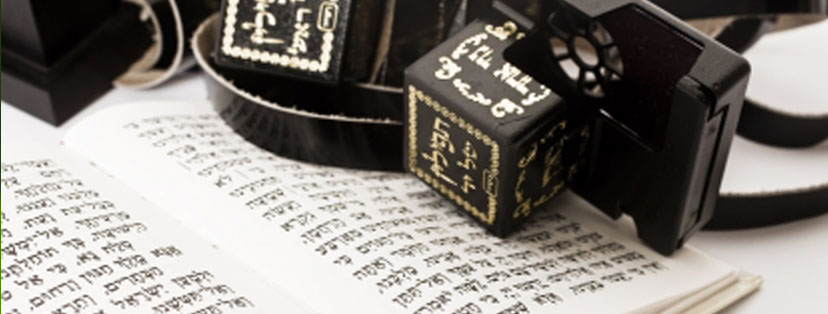
388) It is written, “Israel, in whom I will be glorified,” since the Creator above is glorified because of Israel below, who raise MAN. What is His glory? That he puts on Tefillin. In other words, through the MAN that Israel raise, Mochin come out to ZA, who are called Tefillin, and the colors to be glorified connect to them. This is so because the four portions are three colors—white, red, and green—that connect to the three lines to illuminate in all the perfection.
389) “The Lord favors those who fear Him.” Should it not have written, “The Lord has favor for those who fear Him” [in Hebrew the two phrases differ, using “of” or “in”]? “The Lord favors those who fear Him” means that He took out that desire and in it, He desired those who fear Him. And who are those who fear, for whom He took out that desire? It is those “Who await His grace,” those who expect and wait each day to ask for their food from the Creator. This is the meaning of what is written, “Who await His grace.”
390) One should not set up one’s meal before one prays his prayer for food before the Creator. The meal is not set up until it is given from the King’s house. After he prays his prayer before the Creator, he should wait one hour and say, “It is now time for it to be given from the King’s house.” Henceforth, he will set up the meal. This is the way of those who fear the Creator, who fear sin.
391) It is written about those wicked ones who walk in the ways of Torah in twisted roads, “Woe to those who rise early in the morning to pursue strong drink.” It is written about that, “The Lord favors those who fear Him, those who await His grace.” This is what distinguishes those with faith each day, as it is written, “And the people shall go out and gather a day’s portion every day.” It writes, “Every day,” and not “Every day for another day.”
392) Why is this so? “That I may test them, whether or not they will walk in My law.” Those with faith are recognized by eating. Each day, they walk in the Torah in a straight path. Thus, a righteous eats to satiate his soul. Once he has satiated his soul in prayer and in reading the Torah, he eats.
393) As long as the Creator did not give the Torah to Israel, He distinguished between those with faith and the wicked ones, who did not have faith and had no wish for the Torah. And how did He distinguish them? With MAN, as it is written, “That I may test them.” The Creator inscribed all those who were present, who had faith, in the impression of the SefiraHesed, as it is written, “Those who await His grace [Hesed].” Hence, “That I may test them.” Also, He removed this high Sefira from all those without faith, and Hamman declared and said, “But the stomach of the wicked shall go wanting.” And yet, “He did not favor the one who did much or deny those who did little.”
394) At that time, Israel below were complemented as above, as it is written, “And they came to Elim where there were twelve springs of water and seventy date palms.” Meaning, the holy tree, ZA, grew stronger in twelve boundaries on the two sides of the world, HGTM, in three lines on each of the four sides of the world, HGTM. These are the twelve boundaries, which are twelve springs of water. And he grew stronger in seventy branches, which are seventy ministers, seventy date palms, and all is as it is above.
395) At that time, the holy dew drips—meaning abundance, which is called “dew” —from the concealed Atik, which is Keter, and fills the Rosh of ZA, the place called “heaven.” Of that dew, of the holy, upper light, the manna would be drawn out and come down. When it came down, it scattered like crusts over crusts and congealed below, as it is written, “As thin as frost on the earth.”
396) All those with faith would go outside and gather and bless the holy Name for it. And that manna would emit the fragrances of all the perfumes in the Garden of Eden, since it was anointed with it and came down. When one placed it before him, he would taste it as any flavor that he wished to taste, and he would bless the high, holy King.
397) Then the manna would be blessed in his intestines and he would look and know above, and would observe with the upper Hochma [wisdom]. For this reason, they are called “the generation of knowledge.” Those were the ones with faith, and they were given the Torah, to observe it and to know its ways.
398) And those who were not with faith, it is written about them, “The people became foolish and gathered.” What is “Became foolish”? They would take foolishness for themselves because they did not have faith. It is written about them, “And grinded it between two millstones or beat it in the mortar.” Who made them trouble themselves so hard? It is because they did not have faith.
399) Similarly, those who do not believe in the Creator, do not wish to look in His ways. They wish to trouble themselves after food each day, day and night, fearing that perhaps they will have no bread. Who caused them that? It is because they have no faith.
400) Here, too, “The people became foolish and gathered” means that they were made foolish by their own folly, and wished to trouble themselves for it, as it is written, “And grinded it between two millstones.” And after all this trouble, they did not succeed. Rather, it is written, “Its taste was as the taste of kneading with oil,” and nothing more. Who caused them that? It is because they had no faith.
401) What is “Kneading with oil”? Some say that it was kneaded in oil, and some say that as the breast [Shad (breast) is part of the word Loshad (kneading)] changes in several ways, the manna changes into several flavors. They tasted each flavor that they wished to taste in it. The “Kneading with oil” means suckling of oil.
402) “Every man gathered as much as he should eat.” Did one who eats little gather little and those that more gathered more? It is written, “He did not favor the one who did much or deny those who did little.” Indeed, they gathered according to what they ate. This is the meaning of the words “should eat,” meaning those who eat it. This is why it did not say, “Each according to his eating.”
403) Did each one take according to those who ate? If he had a slave or a maidservant and said that they were his, and his friend came and said, “He is mine,” they approached Moses to sentence. He told them, “How many people are in your house?” and “How many people are in this one’s house?” He said this and that. Then Moses told them, “Gather tomorrow and let each one come to me. The next day, they went out, gathered, and came to Moses. They placed the vessel before him and he measured it. If that slave belonged to one, the gathering for the slave was in that vessel, for one would collect for each person in his home. He measured for the other one and the food for the slave was missing in the other one’s vessel, and he would collect one for each person in his home. Than he said, “This slave belongs to this one,” as it is written, “Every man gathered as much as he should eat,” and it is written, “gathering according to the number of persons.”
404) It is written, “In the evening, you will know that the Lord has brought you out of the land of Egypt, and in the morning you will see the glory of the Lord.” “In the evening, you will know.” How did they know? Each day, the conducts of the Creator would come out. In the morning, the Hesed awakened in the world. And at that time, which is called “evening,” Din hangs in the world. So we asserted it: Isaac established the noon-prayer, and Isaac is Gevura. Hence, “In the evening, you will know.” When Din awakens in the world, you will know that with this Din, the Lord brought you out of Egypt. “And in the morning you will see the glory of the Lord,” since at that time the Hesed awakened in the world and will give you food.
405) On the contrary, it is written, “Would it be that we had died by the Lord’s hand in the land of Egypt, when we sat by the pots of meat … for you have brought us out into this desert to kill this whole assembly with hunger.” At that time, the evening awakened, the Din. And at the time when the Din awakened, Hesed awakened in the world, as well, as it is written, “You will know that the Lord has brought you out of the land of Egypt.” Know this grace that He had done with you at the time of judgment, and brought you out of the land of Egypt. “And in the morning you will see the glory of the Lord,” which is the Malchut. Why is it so? “When the Lord hears your complaints.”
406) The Creator did not change His ways, making Hesed illuminate in the evening. Rather, those wicked in the world change it, reversing mercy into judgment.
407) From that manna, the righteous are destined to eat in the next world. But is it in the way that Israel ate in the desert? No, but more than them, for it was never in that perfection. What is “that”? It is as it is written, “To behold the pleasantness of the Lord and to visit in His palace.” And it is written, “Neither has the eye seen a God besides You.”
408) “A song of ascents. Out of the depths I have called You, O Lord.” Why does it say, “A song of ascents,” without saying who said it? A song of ascents means that all the people of the world are destined to say it because this song is destined to be said for all eternity.
409) “Out of the depths I have called You.” Anyone who prays his prayer before the holy King must ask his pleas and pray from the bottom of the heart so that his heart will be wholly with the Creator, and he will aim his heart and will, as it is written, “Out of the depths I have called You.” But it is written, “With all my heart I have sought You.” This verse is sufficient, to pray with all of one’s heart, so why the need for “From the bottom”?
410) Every person who asks his request of the King must aim his mind and will to the Root of Roots, to extend blessings from the depth of the pit, so that blessings will pour from the fountain of all. The place from which that river comes out is the concealed Hochma, as it is written, “And a river comes out of Eden. “Eden” is Hochma; “river” is Bina that went out of RoshAA, which is the concealed Hochma. It is written, “There is a river whose streams make the city of God glad.” This is called “Out of the depths,” the depth of everything, the depth of the pit from which streams come out and extend from it to bless all. This is the beginning, to extend blessings from above downwards.
411) When Atik, who is more concealed than all that are concealed, wished to summon blessings for the world, He instilled everything and included everything in that high depth, which is the concealed Hochma deAA in relation to Bina coming out of it. From here, a river, which is Bina, draws and continues. Rivers and streams, which are the Mochin, come out of it and water everything from it, meaning that all the Mochin of ZON and BYA extend from there. And one who prays his prayer should aim one’s heart and will to extend blessings from the depth of this everything, so his prayer will be accepted and his wish will be done.
412) Each day, the world is blessed from that upper day, since every six days are blessed by the seventh day, and each day gives of those blessings which he received on that day of his.
413) This is why Moses said, “Let no man leave any of it until morning,” since he does not give and does not lend this day to another, but each and everyone rules that day of his by himself, for a day does not rule over another day.
414) For this reason, all those five days govern their days and what is present in them is what they received, and the sixth day is more present in it. The sixth day is with a Hey, which is not written in the rest of the days. It indicates that the queen, who is called Hey, has bonded with it. And she is called Malchut [kingship], to set up a table for the King. This is why there are two parts in it: from itself and from the correction of the King’s joy with the queen.
415) On that night is the joy of the queen with the queen and their Zivug, and all six days of each by himself are blessed. For this reason, one must set up one’s table on the eve of the Sabbath, since there are blessings on it from above, and there is no blessing over an empty table. For this reason, the Zivug of wise disciples who know that secret is from the eve of the Sabbath to the eve of the Sabbath.
416) “See, the Lord has given you the Sabbath.” Sabbath is a day on which the rest of the days rest, and it is the inclusion of all those six other days, and they are blessed by it. Also, the assembly of Israel is called “Sabbath,” and she is the mate of the Sabbath. This is a bride, as it is written, “Therefore keep the Sabbath, for it is holy to you.” “To you,” and not to the rest of the peoples,” as it is written, “Between Me and between the children of Israel.” This is the everlasting inheritance for Israel, and this is why it is written, “If you turn your foot from the Sabbath.”
417) “Let no man move out from his place,” a place that is worthy of going to, outside the whole of the city. It is written, “Blessed is the glory of the Lord from His place,” which is the Malchut. This is a place, as it is written, “For the place in which you stand is holy ground.” This is a known place, called “a place,” for it is known in the upper glory, Malchut.
418) For this reason, it is a warning to a man who is crowned with the holy crown above on the Sabbath, to not let any every-day words out of his mouth, since if he lets an every-day word out of his mouth, he is desecrating the Sabbath. The desecration of the Sabbath in his hands is in the doing of labor. In his legs is in walking beyond the two thousand Ammas [cubits].
419) “Let no man move out from his place” is the honorable place of holiness. This is so because outside of it are other gods. “Blessed is the glory of the Lord” is the glory above, Malchut from the Chazeh and above. “From His place” is the glory below, Malchut from the Chazeh and below, the crown of the Sabbath, which is called “a place.” “Let no man move out from his place,” since outside of it, it is other gods. Happy is one who was rewarded with honoring the Sabbath in this world and in the next.
(înapoi la pagina ZOHAR CUPRINS / BESHALACH – click)
(înapoi la pagina ZOHAR CUPRINS / BESHALACH – click)
350) “And He said, ‘If you will hear and listen to the voice of the Lord your God.’” Who said, “If you will hear and listen”? The Creator did. It is written, “And to Moses He said, ‘Come up to the Lord,’” but there it means Malchut. If it were the Creator then it should have said, “Come up to Me.” Here, too, it means Malchut.
351) This means that when it writes before, “And he cried out to the Lord, and the Lord showed him a tree,” it follows that the meaning of “And He said” is that the Creator said this word. But it is written, “To the voice of the Lord your God.” Should it not have said, “To My voice”? The answer is that it means to the voice in which they entered through the circumcision, the voice of Malchut. This is why it did not say, “To My voice.”
352) After the holy impression was revealed in Israel, they entered into the two holy parts, Yesod and Malchut. Through circumcision, they were rewarded with Malchut, and through exposure, with Yesod. And since they entered into those two, they entered NH, as well, since when they rise in NH they will bond in Yesod and Malchut, and will not prevent blessings, that Yesod will bestow upon Malchut. For this reason, they will arrive in those up to the holy King, ZA.
353) “And He said, ‘If you will hear and listen.’” “And He said” is the holy King. What did He say? “If you will hear and listen to the voice of the Lord your God.” This so because “The Lord your God” is consuming fire, the assembly of Israel, Malchut. “And do what is right in His eyes” is righteous, who is called “right.” “And you will heed His commandments” is Netzah, “And keep all His statutes” is Hod.
When they entered those Malchut, Yesod, and NH, they arrived at the holy King, Tifferet, whose place is after Netzah. This is why afterward, it is written, “I will not put all the diseases which I have put on the Egyptians on you, for I, the Lord, am your healer.” “For I, the Lord” is the holy King, Tifferet.
354) It sounds as though anyone who keeps this holy impression, the circumcision, rises from it to the holy, upper King. This means that NH, in which the seed for blessing gathers, and the oil for the holy anointing that is placed onto the meatus, Yesod, have bonded together. The upper King, Tifferet, is over them, and they are tied to Him. For this reason, anyone who enters Yesod and Malchut through circumcision and exposure, and keeps them, connects to NH and enters them, and then reaches the holy King, Tifferet.
355) Indeed, one who is rewarded with a righteous, Yesod, is rewarded with NH because Yesod contains NH within it. These are three with which the assembly of Israel, Malchut, was blessed. And one who is rewarded with them is rewarded with the holy King, Tifferet, and enters all four Sefirot—Netzah, Hod, Yesod, Malchut.
356) Opposite those four, there is keeping for the holy impression from four things: The assembly of Israel, Malchut, is keeping from menstruation. The keeping of the righteous, Yesod, is keeping from a maidservant. The keeping of Netzah is keeping from the daughter of an idol worshipper. And the keeping of Hod is keeping from a prostitute.
For this reason, “The voice of the Lord your God” is the assembly of Israel, Malchut, in which they entered through the circumcision.
357) By what are Israel rewarded with welcoming the face of Divinity? By keeping from menstruation. It is written about that, “And you shall not approach a woman to uncover her nakedness during her menstrual impurity.” “To uncover her nakedness,” so he will not blemish the assembly of Israel.
358) “And do what is right in His eyes” is righteous, Yesod, as it is written, “The eyes of the Lord are toward the righteous,” to keep from a maidservant. And it is written, “A maidservant that is heir to her mistress,” meaning that it causes the righteous to cling to a maidservant.
“And you will heed His commandments” is Netzah, to keep from instilling that impression in a daughter of a strange god, and will not lie in him in Netzah, as it is written, “Also, the Eternal [Netzah] of Israel shall not lie.” One who keeps the holy covenant keeps His commandments, as it is written, “For you shall not bow unto another god.”
“And keep all His statutes” is Hod, to keep from a prostitute.
359) “Gird your sword on the thigh of the mighty one of Your splendor and Your majesty.” Anyone who rushes and places the fear of the strong toothed sword—Malchut—before him “On the thigh.” What is “On the thigh”? On that holy impression, to keep it, as it is written, “Please put your hand under my thigh.”
360) “Gird Your sword” means hurry and attack your evil inclination, since your sword is on the thigh, on that holy impression, to keep it. And if he keeps it then he is called “Mighty one” and the Creator clothes him in His garments. And who are the garments of the Creator? They are Hod and Netzah, as it is written, “You are clothed with splendor and majesty.” Here, too, it is “Your splendor and Your majesty.” Then, one properly adheres to the holy King.
361) “I will not put all the diseases which I have put on the Egyptians on you, for I, the Lord, am your healer.” This is the holy King. And this is why He warned them about that very thing that He had given and inscribed in them, which is the circumcision, and not more. It is true that thus far the Torah has not been given to them. But since it is written, “There He made for them a statute and regulation,” which are circumcision and exposure, promptly, “And He said, ‘If you will hear and listen,’” for it is about the four keepings of the holy covenant.
362) When the Creator wished to warn Israel regarding the Torah, He pulled with several things, with several pulls of love, like a person drawing his son to school. The Creator did not wish to give them the Torah until they drew closer to Him. And with what did they draw closer to Him, with a disclosure of the impression of the circumcision.
363) Israel did not draw near Mount Sinai until they entered the part of the righteous, the covenant, and were rewarded with it.
(înapoi la pagina ZOHAR CUPRINS / BESHALACH – click)