– SURSĂ DE TEXTE FUNDAMENTALE, CĂRŢI, CURSURI, LECŢII, ÎN LIMBA ROMÂNĂ –
Autor: arhiprofesor
Rene Guenon spunea candva ca numai prostii cred ca se pot initia singuri. Intotdeuna ai nevoie de un maestru. Dar cartea ramane o sursa de imbogatire a cunostintelor noastre fara de care nici maestrii nu-si pot desavarsi lucrarea. Biblioteca de arhitectura este pentru un arhitect tot atat de importanta cat experimentarea in concret a trairii fiecarui spatiu arhitectural.
(înapoi la pagina ZOHAR CUPRINS / Lech Lecha – click)
382) Why was he not called Abraham thus far? Thus far, he was still not circumcised, and now he has been circumcised. And once he has been circumcised, he connected with this letter, Hey, which is Divinity, and Divinity was in him. This is the reason why now he is called Abraham, with a Hey.
383) “These are the generations of the heaven and the earth when they were created.” We learned—Be Hibaram [when they were created] and Be Avraham [in Abraham]. This means that the world was created for Abraham. Why are they disputed in the interpretation that Be Hibaram implies to Avraham? One says that Be Hibaram implies to Avraham, who is Hesed, that the world was created for Hesed, and one says that Be Hibaram implies to Divinity, since the Hey implies to Divinity. But it is without question that if there is Hesed in the world, Divinity is in the world, as well, and vice versa. Hence, the two meanings—Hesed and Divinity—are one thing, and the world was created for Hesed, as well as for Divinity.
384) What is the difference between the small Hey in Be Hibaram and the big Hey, as it is written, “Do you thus repay the Lord?” The small Hey is Shmita [remission of cultivation every 7th year], Malchut, and the big Hey is Yovel [50th year anniversary], Bina. Thus, at times, the moon is full and at times, she is flawed. When she dresses the Bina—at which time she is the big Hey—she is full, and before she dresses the Bina, she is a small Hey, flawed. The difference between the small and big Hey is easily apparent in the moon’s face.
(înapoi la pagina ZOHAR CUPRINS / Lech Lecha – click)
(înapoi la pagina ZOHAR CUPRINS / Lech Lecha – click)
357) “Your people are all righteous.” Happy are Israel from among all the peoples, for the Creator has called them “righteous.” 125,000 birds walk and roam through the whole world; they hear a voice and accept the voice.
358) There is nothing in the world without a voice. It walks and it roams in the firmament, and the birds catch it and raise that voice for MAN to ZON, and sentence it for better or for worse, as it is written, “For a bird of the air shall carry the voice.”
The righteous raise MAN, meaning Masach deHirik, to the middle line, which unites the Creator and His Divinity through good deeds that the righteous do in the daytime. When the deeds below are upright and man exerts in the work of the holy King, Hevel [fume] is made out of them, which rises up as MAN, and there is no Hevel without a voice. In other words, it becomes a middle line, which is called “a voice.” Also, it becomes an advocate before the Creator, meaning unites the Creator and His Divinity, and all the deeds that are not the work of the Creator, Hevel is made of them, which is the breaking of the wind, as it is written, “Hevel [vanity] and a striving after wind.”
Thus, Hevel rises out of each deed, and the Hevel becomes a voice. If it is good, it rises for MAN to untie ZA and Nukva. The angels that serve in the unification of ZON—to receive the MAN from the righteous and to bring down to them from the level of the Zivug—are called “birds” or “fowls.” They are called “birds” because they only have the level of VAK, the light of Ruach [wind], called Avir [air]. This is an intimation that they fly in the air like birds when they receive the MAN, which is called “voice,” as it is written, “For a bird of the air shall carry the voice.”
After the Zivug, when they give the level of the Zivug, called “speech,” to the righteous, they have GAR, but they reduce the GARdeHochma with their wings so they will not draw from above downwards. They are called “birds,” as it is written, “And that which has wings shall tell the matter.” “Tell” implies extension and bestowal, and “matter” is the level of the Zivug, which is called “speech.”
The number, 125,000 birds stands for the level of the Zivug that they extend by the force of the MAN that they raise. The Zivug extends from the three lines, and there is complete NRNHY in the two lines—right and left—which are clothed in the five Sefirot, KHBTM. However, there their middle line is NR that is clothed in the two SefirotKH.
And since they are from ZA, that each of his Sefirot consists of ten, they have fifty Sefirot from the right line and fifty Sefirot from the left line, KHBTM, where each of them consists of ten. Also, they have twenty from the two Sefirot KH in the middle line, thus 120. With respect to the Malchut that is attached to the middle line, they have only half the Malchut, from the Chazeh and above, and they lack the half of Malchut from the Chazeh and below. Thus, they have only five Sefirot from her and not ten. Added to the 120 from the three lines, they have 125 Sefirot.
And the name “birds” is primarily because they correct the light of Hochma and cover the GAR with their wings. And since they are acting on the Hochma, whose Sefirot are counted as thousands, they are regarded as the number 125,000.
359) When is this voice judged? In other words, when does the voice rise for MAN to ZON? When a person lies asleep and the soul leaves him and testifies to that person. Then the voice is judged, when it rises for MAN, if the soul testifies favorably. It is written, “Keep the doors of your mouth from her that lies in your bosom,” since she testifies to a person. “From her that lies in your bosom” refers to the soul. Everything that a person does throughout the day, the soul testifies on him at night.
360) At the start of the first hour of the night, when the day breathes and the sun sets, the one with the keys, Matat, the minister of the world—who is appointed over the sun, to extend her light to the world—enters the twelve gates of the sun that are open during the day, meaning the twelve hours of the day. Once he has entered all of them, at the end of the twelfth hour, all those gates are closed. This means that the reign of the day is through, and it is time for the reign of the night.
361) At that time, a herald stands and begins to call out loud, since every change is done with a herald. The announcer, Angel Gabriel, rises and grips those keys, meaning the forces that extend from the mitigated Malchut, which is called Miftacha [key], which are in Matat’s possession during the day. The herald—through the force of the keys—extends the darkness. And when the herald is through, all those guards of the world gather and rise from the world, and there is no one to open a vent and extend a little illumination, for they all become silent. At that time, the Dinim below awaken—those of the unmitigated Malchut—and walk and roam the world, and the moon begins to shine.
362) The wailers—the forces of the Din that evoke wailing and howling in the world—trumpet and howl a trumpet, and trumpet again. Then the singing awakens and the angels sing before their Master.
There are twelve hours in the day and twelve hours in the night, meaning HBTM. In each of them, there aren’t HBTM, but only HB and Tifferet, since Malchut is missing in each of them. On the one hand, there is Malchut, since there are four Panim [“face” or “faces”], HBTM, which is Malchut that is mitigated in Bina. On the other hand, Malchut is absent because there are only three in each of them, and not four, which is Malchut itself that was concealed.
Without this correction, ZON would not be fit for reception of the upper lights. Hence, there is a correction of the twelve hours of the daytime and a correction of the twelve hours at night. However, during the day, they are corrected through the forces of Hesed, and at night, they are corrected through the forces of Din, which are called “wailers.”
This is why it is written that wailers, which are the forces of Din that evoke wailing and howling in the world, trumpet and howl a shout, and trumpet again, extending three lines. The first trumpeting is the right line. Howling, broken trumpeting, and shouting is the left line, and the second trumpeting is the middle line. By that, the night is corrected in twelve hours, since each line contains HBTM, thus they are twelve. And since by that the night is corrected, the singing awakens and the angels sing before their Master that it is time to sing. These are the three shifts of the night during which the angels sing.
Several defenders exist to protect the Dinim, and evoke Dinim in the world. At that time, people are asleep and the soul exits the body, gives her testimony, and is found guilty, because it is written, “There is not a righteous man on earth who … does not sin.” But the Creator is gracious with the man and the soul returns to her place in the morning.
363) At midnight, when the roosters awaken, the north side awakens in Ruach [wind], meaning the left line in illumination of Shuruk, meaning illumination of Hochma with absence of Hassadim, GARdeRuach. The scepter, the south side—right line, Hassadim—rises and mingles with that Ruach of the left line, and they mingle with one another. At that time, the Dinim of the left line rest and it is mitigated in Hassadim. Then the Creator awakens in His custom to play with the righteous in the Garden of Eden.
364) At that time, happy is a man who rises to play in the Torah, since the Creator and all the righteous in the Garden of Eden listen to his voice, as it is written, “You who dwells in the gardens, the friends are listening to your voice; let me hear it.”
365) Moreover, the Creator draws upon him a thread of grace, to keep him in the world so that the upper ones and lower ones will guard him, as it is written, “By day the Lord will command His grace; and in the night, His song is with me.”
366) Anyone who engages in Torah at that time will certainly have a permanent part in the next world. What is permanent? These Mochin extend from YESHSUT, whose Zivug is intermittent and not permanent. But each midnight, when the Creator awakens in the Garden of Eden, all those plantings—the Sefirot in the Garden of Eden, the Nukva—will be watered abundantly from that stream, which is called “a primordial stream,” “a stream of delights,” “upper AVI,” whose waters never stop, meaning that the Zivug of AVI never stops. And one who rises and engages in the Torah, it is as though that stream pours down on his head and waters him inside the plantings in the Garden of Eden. Hence, he has a permanent share in the Mochin of the next world, too, meaning YESHSUT, since the Mochin deAVI contain the Mochin deYESHSUT within them, too.
367) Moreover, since all the righteous in the Garden of Eden listen to him, they put a share for him in that potion of the stream, which are the Mochin of upper AVI. It turns out that he has a perpetual part for the next world, which are included in Mochin deAVI.
368) Rabbi Abba was on the road. In the evening, he went into a village. When he wished to lie down, he told the landlord, “Since I rise precisely at midnight, I need a rooster to wake me up.”
369) The landlord told him, “You don’t need a rooster, since I have a ready mark in the house. This scale before my bed, I fill a vessel with water and place it on one of the pans in the scale, and the water drips one drop at a time through a hole in the vessel. Precisely at midnight, the water is completely emptied and the pan rises while the other pan drops down and growls, meaning makes noise as it falls, and the noise is heard throughout the house. And then it is precisely midnight.”
370) It is written, “Midnight, I will rise to give thanks unto You.” What did David see that he said “Midnight,” and not “At midnight”? “Midnight,” surely he said it to the Creator, whom he called “Midnight.”
371) But is the Creator called “Midnight”? Yes, for precisely at midnight, the Creator and His company are present, and this is the time when He enters the Garden of Eden to play with the righteous. Each name indicates an attainment, that we attain the Creator through that name. And since the conduct of the Creator is to appear in the Garden of Eden at midnight, David called him “Midnight.”
373) At the beginning of the first hour of the night, all the Dinim below awaken, the Dinim of Malchut that is not mitigated in Bina, and walk and roam in the world. Precisely at midnight, the Creator awakens and comes to the Garden of Eden, the Nukva, and the Dinim below disappear and are not present.
374) All the ways above, the ways of Bina that mitigate the Nukva, are not present at night, but only precisely at midnight. How do we know this? From Abraham, of whom it is written, “And he divided himself against them by night.”
Concerning Egypt, it is written, “And it came to pass at midnight,” for then the Nukva was mitigated in Bina and her lights appeared.” David knew that, and this is why he said, “Midnight.”
375) How did David know that? David’s kingdom was dependent upon the illumination of the Mochin of midnight. This is why he rose at that time and sang, and this is why he called the Creator, “Midnight,” precisely, “I will rise to give thanks unto You,” since then all the Dinim hang down from here, only from the mitigated Nukva at midnight. This is so because the Dinim below have already vanished, and the Dinim of Malchut are present only from here and not from her unmitigated self. Hence, at that time, David connected with her and rose and sang.
376) Night is Din everywhere. It writes, “Midnight” because at midnight the kingdom of heaven awakens.
377) Night is the time when the Din of Malchut rules. Just “night” is always Din. When it says, “Midnight,” it is because then the Malchut is nursed by two Behinot [discernments], Din and Hesed. The first half of the night is certainly Din, since the other half, the Panim [face] shines from the side of Hesed. This is why it writes, “Midnight,” the half of Hesed.
379) “Your people are all righteous.” What is the reason that it writes, “Your people are all righteous”? Are all of Israel righteous? Surely there are several wicked ones among Israel, several sinners, and a few transgressors who break the commandments of the Torah?
380) Happy are Israel, for they offer a sacrifice of will before the Creator; they offer their sons as offering for eight days. When they are circumcised, they enter that good part of the Creator, as it is written, “the righteous is an everlasting foundation.” Once they have entered that part of the righteous thanks to the circumcision, they are called “righteous.” Surely they are all righteous because all of them were circumcised, even the wicked ones among Israel. This is why the writing says, “Your people are all righteous.”
381) This is why it is written, “They shall inherit the land forever; the branch of My planting.” Divinity is called “land,” as it is written, “Open to me the gates of righteousness; I will enter into them.” It is also written, “This is the gate of the Lord; the righteous shall enter into it,” meaning those who were circumcised and are called “righteous.”
Land is Malchut [Heb: kingdom], and since they were circumcised, they are called “righteous,” and the gates of righteousness are opened to them, the gates of the kingdom. Thus, all of Israel will inherit the land, for because they were circumcised, the gates are opened before them.
“The branch of My planting” is a branch of those plantings that the Creator planted in the Garden of Eden, this land is one of those plantings. The plantings are the ten Sefirot in the Garden of Eden, and the Malchut in them is called “land.” This is why Israel has a good share in the next world, as it is written, “Your people are all righteous; they shall inherit the land forever.”
(înapoi la pagina ZOHAR CUPRINS / Lech Lecha – click)
(înapoi la pagina ZOHAR CUPRINS / Lech Lecha – click)
346) All the souls that are destined to come into the world stand in Zivugim, Zivugim [Zivugim—plural of Zivug (coupling)] before Him. Each divides into male and female, and when they come into this world, the Creator makes Zivugim, as it is written, “The daughter of so and so with so and so.”
347) What does it mean when it says that the Creator says, “The daughter of so and so with so and so”? After all, it is written, “There is nothing new under the sun,” and all has already been done in the act of creation. Can it be that the matter of Zivugim is a new thing in each Zivug, that there is a need to declare, “The daughter of so and so with so and so”? Indeed, it is written, “There is nothing new under the sun.” However, above the sun there is news. So why does He declare here, “The daughter of so and so with so and so,” if it is said that at the very same time when one is born into the world, his mate is made ready for him?
348) Happy are the righteous, whose souls are crowned before the holy King before they come to the world to clothe in a body. At the time when the Creator elicits the souls to the world, all those spirits and souls consist of male and female, which conjoin.
349) They are given into the hands of that appointee, the emissary, who has been appointed over the impregnation of people, and whose name is “Night.” When they come down to the world and are given into the hands of that appointee, they part from one another. Sometimes, one comes down before the other and descends and clothes in people.
350) When their time to mate arrives, the Creator, who knows the males and females of those spirits and souls, brings them together as they were in the beginning, before they came to the world, and declares about them, “The daughter of so and so with so and so.” And when they unite, they become one body and one soul, and they are right and left, as it should be. The male is the right of the body and the soul, and the female is the left part in them.
For this reason, there is nothing new under the sun. Even though the Creator declares, “The daughter of so and so with so and so,” it is still nothing new but a return to how they were prior to their arrival in the world. And since it is known only to the Creator, He declares them.
351) But we learn that a person is given a mate according to his deeds and ways. Indeed, if his deeds are upright, he is rewarded with uniting with his mate as they were united at the time when they departed from the Creator, before they were clothed in a body.
352) Where will one whose deeds are upright seek his mate? It is written, “One should always sell all that he has and marry the daughter of a wise disciple.” This is so because the wise disciple has the deposit of his Master trusted in his hands, and he will certainly find his mate with him.
353) All those souls that come through reincarnation and have no mate can hurry their mate with mercy by hurrying and taking the mate of another person. The friends commented on that and said, “One does not wed a woman on a festival, but one does sanctify, lest another will come before him with mercy. They also made a precision about “another,” that the one who incarnated without a mate, it is because he descended and became Achoraim [posterior], who is himself regarded as a Nukva [female]. This is why he has no mate. Hence, this incarnated one is called “another,” to indicate that he comes from Achoraim, and this is why the conduct about him is that he takes the mate of another.
This is why the Zivugim are difficult for the Creator, since because the mating male and female are two parts of one soul and they divided even before they came into the world, why is it said that man’s Zivug before the Creator is difficult? After all, it is only a repetition of something that was done before. However, from what has been explained, that there are incarnated souls that have no mate, who rush and take the mate of another through mercy, then afterwards, if his friend is rewarded through his actions with his mate being given back to him, the Creator must take from one and give to the other. And this is hard for Him—to reject one before the other. And yet, “The ways of the Lord are right,” for certain, and all that the Creator does is good and just.
354) Those who come by reincarnation and have no mate, where will they take their mate? The story of the sons of Benjamin proves that the incarnated souls must hurry with mercy and take their mate from another. This is why the writing says, “Lest another will precede him with mercy.”
355) Certainly, the Zivugim are hard for the Creator because He must take from one and give to the other. Happy are Israel, for the Torah teaches them the ways of the Creator and all the secrets that are hidden and concealed before Him.
356) “The law of the Lord is perfect” because it contains everything. Happy are those who engage in the Torah and do not part from it, for anyone who is separated from the Torah for even an hour, it is as though he has parted from life in the world. And it is written, “For it is your life and the length of your days,” and it is written, “For length of days, and years of life, and peace, will they add to you.”
(înapoi la pagina ZOHAR CUPRINS / Lech Lecha – click)
(înapoi la pagina ZOHAR CUPRINS / Lech Lecha – click)
338) As long as Abraham was not circumcised, the Creator was speaking with him only through visions, which is the Nukva in her place. It is said about her, “And God that has indignation every day.” It is written, “The word of the Lord came to Abram in a vision,” meaning in that vision, the Nukva, which is the degree in which all the forms are seen, all three lines—right, left, and middle. This vision is the covenant, the Nukva, in which the covenant shines.
339) The Nukva is called “a vision” because it shows that all the shapes are seen in her. Previously, it was said that as long as Abraham was not circumcised, He did not speak with him, but only the degree of the vision, on which the other degrees are not present. And now he says that “in a vision” is a sight that comprises all the upper degrees. But before he was circumcised, it was said, “The word of the Lord came to Abram in a vision”?
340) However, this degree is certainly the sight of all the upper degrees and it was established in the sight of the upper degrees. Also, at the time when Abraham was not circumcised, this degree was in a vision of the upper degrees and she stood in all those colors in the upper degrees. And the sight of those colors stands below her, under the Nukva. On the right is the white color—Hesed. On the left is the red color—Gevura. The color that comprises all the colors is green—Tifferet. The Nukva is called “In a vision,” the vision of all the upper colors, white, red, and green, which stand atop her.
This is why Abraham stood in that vision and spoke with Him although he was uncircumcised. When he was circumcised, it is written, “And the Lord appeared unto him,” since the name HaVaYaH connected to her, meaning the actual upper degrees were included in her. However, before he was circumcised, only the colors were included in her.
341) “The vision of the Almighty” is written about Balaam. In Abraham, it writes only “In a vision.” However, “The vision of the Almighty” is those colors below the Nukva; they are her vision. Only “A vision” is the Hey of the name HaVaYaH, the Nukva, that all the upper forms, which are the three lines, appear in her. This is the reason why concerning Abraham, it writes only “In a vision,” and in Balaam, “The vision of the Almighty,” which in itself consists of the three colors, white, red, and green. This is why it writes that the sight of those colors stands below her, under the Nukva. By that, he divides between the prophecy of Abraham, who was from the three colors in the actual Nukva, who is called only “In a vision,” and the prophecy of Balaam, who was from the vision of the three colors under the Nukva, which is called “The vision of the Almighty.”
342) Therefore, before Abraham was circumcised, he had the same degree of only “In a vision.” When he was circumcised, promptly, “And the Lord appeared unto him,” meaning that all the degrees of HaVaYaH are seen on that degree, the Nukva, meaning the actual degrees. This degree spoke with him in wholeness because the Nukva is the speaking, and Abraham connected from degree to degree and entered the sign of the holy covenant as it should be, in wholeness.
343) When Abraham was circumcised, he came out of the shell of the foreskin, entered the holy covenant, was crowned in the holy crown, and entered the covenant upon which the world stands. At that time, the world existed for him because it is written, “If My covenant is not day and night, I have not appointed the ordinances of heaven and earth.” Thus, thanks to the circumcision, the world exists.
It is also written, “These are the generations of the heaven and the earth when they were created,” which is the letters of “In Hey, He created them,” and also, “In Abraham.” This indicates that the world was created for Abraham. It is all one, the same point as the keeping of the circumcision. And this is why the world was created with Abraham, since he assumed the circumcision, of which it is written, “If My covenant is not day.”
344) When the Creator showed AdamhaRishon all those generations in the world, he saw each and everyone of them, each and every generation, all standing in the Garden of Eden in the same shape in which they were destined to stand in the world. When he saw David, who had no years of life at all, he was perplexed, and gave him seventy years of his own. This is why he only had 930 years, and those seventy years short of a thousand were given to David.
345) This is the reason why David had only the seventy years that AdamhaRishon gave him, since everything below is done from above, in the upper world.
(înapoi la pagina ZOHAR CUPRINS / Lech Lecha – click)
(înapoi la pagina ZOHAR CUPRINS / Lech Lecha – click)
327) King David said, “For who is God, save the Lord? And who is a Rock, save our God?” “Who is God” means who is the ruler or the appointee who can do anything, besides the Creator? Rather, they do what they were commanded by the Creator because none of them is in his own authority and they cannot do anything. “And who is a rock” means who is strong and can make his own assertion and might, “Save our God”? Rather, they are all in the hands of the Creator and they cannot do anything except with His permission.
328) “For who is God, save the Lord?” Everything is in the permission of the Creator. It is not as it seems in the stars and fortunes, which show something and the Creator changes it into another way. “And who is a Rock, save our God?” means that there is no such painter as the Creator. He is the perfect painter, who makes and paints a form within a form, a fetus in its mother’s insides, and completes that picture in all its corrections, and instills a high soul within it, which is similar to the upper correction.
329) When the desire in that seed of man awakens toward the Nukva, and the Nukva awakens toward him, they both unite together and a son comes out of them, comprising both forms as one. Hence, one must sanctify himself at that time, so that that form will be in perfect depiction, as it should.
330) How great are the deeds of the Creator? The art and painting of a man are like the artisanship and the depiction of the world. In other words, man comprises the entire deed of the world, and he is called “a small world.” Each and every day, the Creator creates a world that makes Zivugim for everyone as he should, and this is considered creating worlds. And He depicted the shape of each of them before they came to the world.
331) It is written, “This is the book of the generations of Adam.” Did he have a book? Rather, the Creator showed AdamhaRishon each generation and its teachers. And how did He show him all the shapes? He did not show it to him by the spirit of holiness, which are destined to come into the world, as one who looks into wisdom to know what is destined to come into the world. Rather, he saw them all with the eye, and in that very form that they were destined to take in the world. This is so because since the day the world was created, all the souls that are destined to rise in people stand before the Creator in that very form that they are destined to take in the world.
332) Similarly, all the righteous, once they pass away from this world, their souls rise and the Creator provides each of them there with another form to dress in, such as those that they wore in this world. This is the reason why all the souls are before Him and AdamhaRishon saw them with the eye.
333) But after he saw them, did they stop existing and were they cancelled? All the worlds of the Creator exist and stand before Him until it is their time to come down to the world. It is written about it, “But with him that stands here with us this day … and also with him that is not here with us this day,” meaning that all the people who are destined to be in the world were present there.
334) It is written, “And also with him that is not here with us this day,” meaning only those who will be born to those standing there. This is why it is not written, “Standing with us this day,” for that would mean that they are standing there with them. Rather, it writes, “And also with him that is not here with us this day,” which means that they are not with them. However, of course they were all standing there. But because they were not visible to the eye, the writing says, “With us this day,” meaning although they are unseen. This is why it could not say, “Standing with us this day.”
335) What is the reason that they were not seen here on Mount Sinai as they were seen by AdamhaRishon, who saw them with his very eyes? After all, it was more appropriate that all the generations would be seen at the giving of the Torah. However, when the Torah was given to Israel, a different vision and high degrees were seeing and looking with their very eyes. They longed to behold and observe the glory of their Master, and this is why they saw only the high glory of the Creator, and nothing else besides.
336) For this reason, all the people who are destined to be present in the world stand before the Creator in those very forms that they are destined to take. It is written about it, “Your eyes have seen my initial form, and in Your book they were all written.” “Your eyes have seen my initial form.” What is the reason that the Creator saw his initial form? It is because the other, upper form, which stands before Him prior to the creation of the world, was like it, and this is why he saw it. “And who is a Rock, save our God,” meaning who is a good painter, who can paint everything, like the Creator?
337) “For who is God” is the Nukva, who is called “God,” which is inclusive. She contains all the degrees—the degrees of the right, which are Hassadim, as well as the degrees of the left, which are Gevurot. The writing speaks of the time when HaVaYaH and Elokim are united, as it is written, “The Lord is the God.” At that time, the Nukva comprises all the degrees, from the right and from the left. The right in her receives from HaVaYaH, and the left in her is her own self, the name Elokim [God]. It is written, “For who is God,” meaning the Nukva in the right in her. “Save the Lord” means she receives from the name HaVaYaH, ZA. “And who is a Rock” is the Nukva in the left in her. “Save our God” is Nukva’s own self, which is called “Our God.”
But the name El [God] is a different degree; it is not considered right, since it is written, “And God that has indignation every day.” Does that mean that the quality of the name God is indignation and Gevurot? In the words, “For who is God, save the Lord,” the Nukva is not alone. Rather, she is united with HaVaYaH, ZA, in a never-ending Zivug. The texts speaks of when ZON rose and clothed upper AVI, at which time they are in a never-ending Zivug, like AVI, since the lower one that rises to the upper one becomes like him.
It is written about it, “For who is God, save the Lord? And who is a Rock, save our God?” A rock is the left in the Nukva. It is not alone, but everything is one, as it is written, “Know this day, and lay it to your heart that the Lord He is the God.” When ZON rise and clothe AVI, this unification of “The Lord He is the God” occurs, and all the degrees are included in the Nukva. The name of the right is “God,” and the name of the left is “Rock,” and they are united as one. But the words, “And God that has indignation every day” speak of the Nukva in her place, before she rose to AVI, and then there are always Gevurot in her.
(înapoi la pagina ZOHAR CUPRINS / Lech Lecha – click)
(înapoi la pagina ZOHAR CUPRINS / Lech Lecha – click)
319) “I am your shield.” “I” is the first degree to which Abraham clung in the beginning. It is written, “And Abram said, ‘O Lord God, what will You give me?’” ADNI [Lord], when it is filled, is Aleph, Dalet, Nun, Yod, the Nukva. HaVaYaH is written with punctuation of Elokim. Filled HaVaYaH is Yod, Hey, Vav, Hey, Bina. What is the reason that both these names are written in the same verse? It is the connection of the two worlds—the upper world and the lower world. ADNI is the lower world, the Nukva. HaVaYaH with punctuation of Elokim is the upper world, Bina. In this verse, both were united.
320) “What will You give me, since I am childless,” meaning I have no son, and anyone without a son in this world is called “childless.” Why did Abraham say, “What will You give me,” as though he did not believe the Creator?
321) The Creator told him, “I am your shield,” in this world, “Your reward shall be very great,” in the next world. Promptly, Abraham awakened in Hochma and said, “What will you give me? I know that a man who did not bear a child does not receive a reward with which he comes to the next world?” This is why he said, “What will You give me, since I am childless? After all, You will not give me what I have not been granted with.” It follows that a man who was not rewarded with sons in this world is not rewarded with admittance into the presence of the Creator in the next world.
322) Abraham saw in the wisdom of the stars that he would not bear. It is written, “And He took him outside and said, ‘Now look toward the heavens, and count the stars.’” The Creator told him, “Do not look into the wisdom of the stars, but into My name, the Nukva. You will have a son, as it is written, ‘So shall be your seed.’ Koh [‘so’] is the holy name from which a son was tied to him, and not from the Sitra Achra, who is stars and fortunes.
323) Koh is the gate for acceptance of the prayer, which is the Nukva, in whom he will find blessing, and in whom a man will receive his request. Koh is that side which comes from the side of Gevura, the Nukva that is built from the left, Gevura, since Isaac was born from the side of Gevura. And that side of Gevura is called Koh. The fruits come to the world from there, and not from the side below, which is the stars and fortunes.
324) “Then,” it is written, “He believed in the Lord,” meaning adhered above to the Kedusha, to the name Koh, and did not adhere below, to the Sitra Achra. “Then he believed in the Lord,” and not in stars and fortunes. “Then he believed in the Lord,” who promised him that his reward would be very great for the next world. “Then he believed in the Lord,” in that degree that was given the name Koh. He believed that from there the bearing of sons in the world would extend to him.
325) “And He regarded it to him as righteousness,” “Regarded to him,” to that name, Koh, even though it is Din, he regards it as Rachamim [mercy].
Another interpretation: “And He regarded it to him as righteousness” means that he tied a connection to unite the upper one, Bina, with the lower one, Nukva, to tie them together. The Nukva is called Tzedek [justice]. When she united into one with Bina, she extends out of her the first Hey in the name HaVaYaH. At that time, the Nukva is called Tzedakah [righteousness], which is Tzedek with a Hey [at the end of the word] from Bina. And when it writes, “And He regarded it to him as righteousness,” it means that He tied a connection of upper in lower, for therefore now He regards it in the name Tzedakah [righteousness].
326) Abraham, with the letter Hey, bears. Abram does not bear. But he bore Ishmael while he was still Abram? However, he did not bear the son that the Creator promised him while he was Abram. While he was Abram, he bore only below, Ishmael. When he was called Abraham and entered the covenant, he bore above, in Kedusha. For this reason, Abram does not bear in the upper connection, but below. Abraham does bear, as it is said that he connected with Isaac above.
(înapoi la pagina ZOHAR CUPRINS / Lech Lecha – click)
(înapoi la pagina ZOHAR CUPRINS / Lech Lecha – click)
315) “Bless the Lord, you His angels… hearing unto the voice of His word.” Happier are Israel than all the other nations of the world, for the Creator has chosen them from among all nations, and has made them His share and His lot. Hence, He has given them the holy Torah, since they were all in one desire at Mount Sinai and preceded doing to hearing, as they said, “We shall do and we shall hear.”
316) And since they preceded doing to hearing, the Creator called upon the angels and told them: “Thus far, you were the only ones before Me in the world. Henceforth, My children on the earth are your friends in every way. You have no permission to sanctify My name until Israel bond with you in the earth, and all of you together will join to sanctify My name, since they preceded doing to hearing, as the high angels do in the firmament,” as it is written, “Bless the Lord, you His angels … They do His word,” first. And then it is written, “Hearing the voice of His word.”
317) “Bless the Lord, you His angels” are the righteous in the land. They are as important before the Creator as the high angels in the firmament, since they are mighty and powerful, for they overcome their inclination like a hero who triumphs over his enemies. “Hearing the voice of His word” means being rewarded hearing a voice from above every day and at any time they need.
318) Who can stand with them, these high, holy ones? Happy are they for they can stand before them. Happy are those who can be saved from them. The Creator’s guidance is over them each day. How can we stand before them? This is why it is written, “Choose, and bring near, so he may dwell in Your courts,” as well as, “Happy is the man whose strength is in You.”
(înapoi la pagina ZOHAR CUPRINS / Lech Lecha – click)
(înapoi la pagina ZOHAR CUPRINS / Lech Lecha – click)
297) Rabbi Hiya went to see Rabbi Elazar. Rabbi Hagai met him and told him, “This road that is set before my lord, where does it lead?” He told him he was going to see Rabbi Elazar. And he replied, “I, too, will go with you.” He told him, “If you can understand the reason and the point of what you will hear. But if not, turn back.” And he replied, “My lord need not worry about that for I have heard several secrets of the Torah and I withstood them.”
298) It is written, “The offering of My bread for My fire.” “The offering” is an offering of meat, which is sacrificed to atone for the blood of man with the blood of the offering. The flesh of the offering is for the flesh of man because all the offerings are offered only on meat, to atone for flesh.
299) If man sins, what is the sin of the beast, for which the Creator said, “When any man of you brings an offering unto the Lord, you shall bring your offering of the cattle”? The Creator made the spirit of man and the spirit of the beast, and separated them from one another. Therefore, the rising spirit of man rises up, and the descending spirit of the beast is below, and they are separated from one another.
300) Before Adam sinned, it is written, “And God said, ‘Behold, I have given you every herb yielding seed.’” It is also written, “To you it shall be for food.” It was not permitted to eat animals. When he sinned and the evil inclination was immersed in his body and in all his generations, he inflicted Din upon them, bringing the flood over them.
301) Then came Noah and saw that the body was built from the evil inclination, and he offered a sacrifice the way Adam did. “And the Lord smelled the sweet savor … for the inclination in man’s heart is evil from his youth,” said the Creator. Henceforth, since the body is already immersed with that evil inclination, let the body delight itself as much as it wishes and eat meat. And He said, “As the green herb have I given you all.”
302) When man eats meat, the flesh of the man delights in that meat and they mingle with one another, man’s flesh with the flesh of the beast. And the body grows through it. And because of that pleasure, when he delights in eating the meat, the body sins in several sins. The Creator said, “Let the flesh of the offering atone for the body because he ate meat,” and therefore meat grew out of it in the body, and he sinned in it. Thus, let the meat of the offering be atonement for his body.
And the meat, meaning the body that eats meat, makes blood in the body. Thus, the blood that remains outside, which remains of the flesh of the offering, is available for atoning for man’s blood, which is made of the flesh of that beast, as it is written, “For it is the blood that makes atonement because of the life.”
The Kli of the flesh in each Partzuf lacks completeness because the Emanator corrected only the VAK of the Kli of the flesh, for extending VAK of the light of Haya for illumination from below upwards. At the same time, the GAR of the Kli of the flesh, which is extension of the light from above downwards, is still broken, and these are the Klipot and the Sitra Achra, which will not be corrected prior to the end of correction. This is the prohibition of the tree of knowledge, which extended the lights from above downwards to complement the GAR of the Kli of the flesh.
The issue with the offerings for atonement of iniquities is that through the MAN that rises from the offering, a high Zivug is made. In the beginning of the Zivug, rejection extends from these GAR, but they are promptly revoked. From this moment on, before they are cancelled, the Klipot receive and are thus separated from the Kedusha [holiness].
This is why it is written that the Creator made the spirit of man and the spirit of the beast, and separated them from one another. Therefore, the rising spirit of people is above, the descending spirit of the beast is below, and they are separated from each other. This is so because only man is corrected for Kedusha, and he was given the living spirit to shine from below upwards. But the spirit of the beast descends, meaning it tends to receive only from above downwards, from the GAR of the flesh.
Before Adam sinned, it is written, “And God said, ‘Behold, I have given you every herb yielding seed.’” It is also written, “To you it shall be for food,” but not more. In other words, he was permitted only herbs and not meat because the spirit of the beast descends and the meat of a beast can harm him and make him sin, so he will extend from above downwards, too, as in the deed with the tree of knowledge.
When he sinned and the evil inclination was immersed in his body and in all his generations, He inflicted Din upon them, bringing the flood over them. Afterwards, Noah came and saw that the body was made of the evil inclination. He offered an offering, as did Adam, because once the Klipot clung to the body by the eating from the tree of knowledge, they always have the power to make him sin. Thus, now there is no other correction but to make an offering because through offering, the abundance from above downwards which is ascribed to the Sitra Achra is drawn out to them, and they are promptly separated from man’s body.
After he made an offering, he could raise MAN and make that correction of the offering by his own eating of the flesh of the beast. And through the Zivug that he causes above by eating, he separates the Klipot like the offering, as it is written, “This is the table that is before the Lord.”
It is written that the Creator said that henceforth, since the body is already immersed with that evil inclination, let the body enjoy as much as it wishes and eat meat. Since the evil inclination wished to extend from above downwards, it was already immersed in the body. Hence, eating the flesh of a beast will no longer corrupt him. Moreover, if the body enjoys thoroughly, raising MAN by eating as with offering, it will separate this evil inclination from the body. This is why the Creator said, “Let the body enjoy as much as it wants.”
It is written that when man eats meat, the flesh of the human enjoys that meat and they mingle in one another, the flesh of the man and the flesh of the beast. As a result, the body grows. This is so because through the mingling of the flesh of a beast with the flesh of a man, he raises MAN for a high Zivug. In the beginning, the GAR that the body lacks comes down, and before it stops, man’s body receives it, too, and as a result, it grows—meaning receives correction for the GAR that are missing in the flesh of the body, as with the offering, and the body grows from it—meaning acquires Gadlut. However, if he is still not eating in Kedusha and purity, and his eating is not like an offering, the meat of the beast he is eating corrupts him even more. This is why it is written that as a result of the pleasure that he enjoys while eating meat, the body sins in several sins.
Still, he is permitted to eat because the Creator said that the flesh of the beast will be atonement for the body, for there is no other atonement for the iniquity of the tree of knowledge, except meat that is eaten in purity. This is why it is written that he ate meat and that as a result, flesh grew in the body, for if he eats in purity, the flesh of the body grows by the abundance of the Zivug in its inception.
It is also written that he sins in it. This means that if he does not eat in purity, he is corrupted even more and sins in it. Thus, the meat of the offering will be atonement for his body, meaning even after he sinned by the eating of the flesh, there is no other correction to atone for the body, except by eating meat again, in purity.
However, the meat of the beast itself does not mingle with man’s body, to make it bigger, due to the spirit of the beast—which descends—for by that, it would mingle with man’s spirit. This is why there was a correction that inside man’s body, the flesh of the beast turns into blood, and out of that blood, the man’s body grows, and not out of the meat.
And there is yet another correction—the correction of not eating blood. And there is also the correction of throwing over the altar. This atones for the blood, for it is made of the flesh of a beast, meaning it comes in the inside of the body. This is why it is forbidden to eat the blood that remains outside, the blood of beast. It is said about it, “You shall pour it out upon the earth … as water.” It remains outside man’s body and is available for atoning for man’s blood, which is made of the flesh of that beast. Thus, it atones for the blood that is made of the flesh of the beast, which remains in man’s body.
303) It is written, “The offering of My bread for My fire of a sweet savor to Me.” It is also written, “You shall bring your offering.” What is the connection between them? “Peace offerings” come on peace. “Your offering” is sins and blame, which come over sin and guilt. “My offering” is meat. “My bread” is bread and wine. “Savor” is incense; “Sweet savor” is contentment that the priest gives with the intention of the holy Name that he mentions during the sacrificing. And the Levites with intent in song and praise means that they sing while sacrificing.
304) “Observe to offer unto Me in its due season.” “In its due season” means the desire that rules at that time, the time of sacrificing, the desire that is above in the Nukva at that time.
305) When the offering is sacrificed, all the worlds receive a part of it, and the Klipot scatter to all directions. Then the unification of ZON comes close and unites, and the candles, the upper degrees, shine. It is called “desire and friendship in all the worlds,” and the Creator is in a single unification as it should be.
306) This throne of three pillars, what is each of them? There is a reason why David said that he is the fourth pillar of the throne, as it is written, “The stone which the builders rejected.” By that, he implies to the three pillars that precede David, HGT. Where did the builders reject David, as it is written, “The stone which the builders rejected”?
307) “My mother’s sons were angry with me,” said King Solomon about King David when his brothers rejected him. By that, he insinuated to the answer with the words, “The stone which the builders rejected,” which David said when he had Mochin deAchoraim, at which time his brothers rejected him.
308) Why did the Creator see fit to give the kingship to Judah more than to all his brothers? Indeed, the letters of His holy name were engraved in him, since there is the name HaVaYaH in the name Yehuda [Judah, Yod-Hey-Vav-Dalet-Hey]. And the Creator gave glory to His name, which is why he inherited the kingship.
Moreover, Yehuda are the words of His holy name. However, there is no Dalet in the name, HaVaYaH. Rather, this Dalet of Yehuda is King David, who was connected with His name more than all the people in the world, as it is written, “And seek the Lord their God, and David their king.”
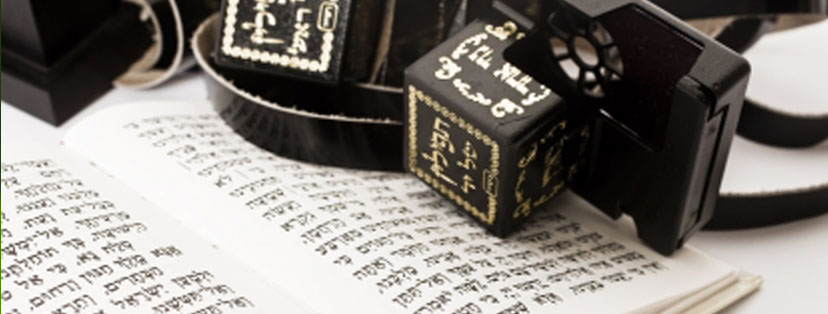
Thus, David is connected with His holy name. Moreover, it is a tie of Tefillin. David is the tie of Tefillin of the Creator, the NukvadeZA. Certainly, the Dalet of Yehuda is King David, and this is why David was tied to His holy name, since in the name Yehuda, there is HaVaYaH, which is ZA, and there is Dalet, which is King David, the NukvadeZA.
310) “But the Lord is in His holy temple; let all the earth keep silent before Him.” When the Creator, Bina, wished to create the world, ZON, which are called “heaven and earth,” He looked into the thought—Hochma, the Torah—inscribed inscriptions, and extended the light of Hochma to ZON, to heaven and earth. But the world could not stand because they could not receive the light due to the force of Tzimtzum [restriction] and Din that was in Malchut.
Then He created penance, the hidden inner and high Heichal [palace]. “Until He created penance” means until He elevated Malchut to Bina, at which time Bina is called “penance,” for Bina was diminished into a point in the Heichal. By that, Midat ha Din [quality of judgment] in Malchut was mitigated in Bina and became fit for reception of the light of Hochma. It writes that it is “The hidden inner and high Heichal.” This is so because the Heichal was made hidden by the letter Yod, which entered the light of the Heichal and the light became Avir [air]. And there, in the above-mentioned Heichal, the letters—which are ZON—were inscribed and took shape in their engravings. Thus, they became fit for reception of Mochin from there.
311) When this Heichal was created, meaning at a point in the Heichal, He looked at the Heichal and inscribed before Him drawings, meaning Mochin, of the whole world. All the qualities of the Mochin are from here. When He wishes to impart Mochin deKatnut to ZON, He raises the Yod to the Ohr [light] of the Heichal and it becomes Avir [air], meaning Mochin of VAK and Ruach. And when He wishes to impart GAR, He takes the Yod out of the Avir of the Heichal and it returns to being Ohr [light], as it is written, “But the Lord is in His holy temple,” where “The Lord” is Bina, and “In His holy temple” is a point in the Heichal.
It is written, “Let all the earth keep silent before Him.” This means that He inscribed before Him inscriptions and drawings of the whole world. Inscriptions are Mochin deVAK, and drawings are Mochin deGAR. ZON are called “world,” and it is on this Heichal that the measures of all the Mochin depend.
He wished to create the heavens, ZA. He looked at the first light, the first Heichal, AVI, wrapped Himself with it and created heaven, as it is written, “Who cover Yourself with light as with a garment.” Afterwards it writes, “Who stretches out the heavens like a curtain.” At that time, the Yod, Malchut, which entered the light of the Heichal and became Avir, is called “enveloped light,” and then two Heichalot [plural of Heichal] are made in Bina: The first Heichal, in GARdeBina, is called “upper AVI.” It always remains enveloped light because the Yod does not come out of the Avir of this Heichal.
The second Heichal is in ZATdeBina, and it is called YESHSUT. When He wishes to impart Hochma, He brings out the Yod from the Avir of this Heichal, the second one, and it returns to being Ohr, and then He imparts OhrHochma.
Also, it is known that ZA is always in covered Hassadim like AVI, the first Heichal. It is written, “Who cover Yourself with light as with a garment.” This means that in the beginning, He envelops Himself with enveloped light from upper AVI. Afterwards, it is written, “Who stretches out the heavens like a curtain,” which is ZA, since ZA is always in enveloped light.
312) He considered making the lower world, NukvadeZA, which needs the light of Hochma, which is not received from the first Heichal. He made another Heichal, YESHSUT, in which the Yod comes out of the Avir and enters it, and from it, He watched and inscribed before Him all the worlds below, all the measures of Mochin that they need, and created them.
It is written, “But the Lord is in His holy temple,” in the second Heichal. “Let all the earth keep silent before Him.” Has [“keep silent,” spelled—Hey–Samech] are received from His face. He wrote the number Hey–Samech (65) before Him, which is the number of points, Sefirot, in the whole world, the Nukva, which are sixty-five, such as the number Hey–Samech. Sixty are six Sefirot HGTNHY where each of which comprises ten, and five are half of Malchut, who is missing her last five, from the Chazeh down. He inscribed all those sixty-five points of the Nukva before Him to bestow upon her when He created the world, which is the Nukva.
When speaking of the Nukva from the fifty gates of Bina, it is calculated as forty-five types of lights in the Nukva. But here he counts sixty-five points because it speaks of her reception from ZAT, HGTNHYM. Thus, the glory of the Creator, Divinity, is only for those who know His proper ways in them in the path of truth, so they will not evoke a Zivug from the Chazeh of Malchut and below. This is so because due to the absence of the five above-mentioned points, it is not a place for Zivug there.
(înapoi la pagina ZOHAR CUPRINS / Lech Lecha – click)
(înapoi la pagina ZOHAR CUPRINS / Lech Lecha – click)
271) “The word of the Lord came unto Abram in a vision.” “In a vision” refers to that vision that is a degree in which all the forms are seen. Before Abraham was circumcised, only one degree spoke to him. This is the vision, the Nukva, of which it is written, “Who sees the vision of the Almighty.”
272) When he was circumcised, all the degrees were on that degree called, “vision.” And then He spoke to him, as it is written, “And I appeared unto Abraham,” which is Hesed, “Unto Isaac,” which is Gevura, “And unto Jacob,” Tifferet, “As God Almighty,” which are Yesod and Malchut. Thus, all the degrees from Hesed on shine in the Nukva. Before he was circumcised, those degrees were not on him, speaking with him, but only the Nukva, only the vision of the Almighty.
273) But it is written, “And the Lord appeared unto Abram,” which is the degree of Nefesh. And it is written, “And Abram journeyed, going and journeying toward the South,” which is Ruach. Also, it is written, “And he built there an altar,” which is Neshama. Thus, here we have the upper degrees that he attained, so why is it said that prior to his circumcision, the upper degrees were not on that degree, to speak with him?
274) But before he was circumcised, the Creator gave Hochma [wisdom] to Abraham, meaning the upper degrees, to know Hochma and to adhere to the Creator, and he obtained faith. However, he was not speaking with Him, but only the bottom degree, the Nukva, as in, “The vision of the Almighty.” When he was circumcised, all the upper degrees were on that lowest degree to speak with him, and then Abraham rose in all the degrees.
275) As long as one is not circumcised, he has no grip of the name of the Creator. Once he is circumcised, he enters His name and clings onto Him. But did Abraham not cling to Him before he was circumcised? Indeed, he clung to him, but not as it should be, since due to the sublime love that the Creator loved him, He brought him close to Him; this is why it was not as it should be.
276) Afterwards, the Creator commanded him to circumcise, and the covenant, meaning Yesod, was given to him, that is, the connection of all the upper degrees. A covenant is a connection, connecting all of them together, to integrate them in one another. A covenant is a connection, when everything connects with it. For this reason, before Abraham was circumcised, his words with Him were only in a vision. This means that he lacked the upper degrees because he was missing the covenant, that he was the connector of all the degrees together.
277) When the Creator created the world, He created it only with a covenant, as it is written, “Beresheet [In the beginning] God created.” Sheet is a covenant, since the Creator created the world with a covenant. Also, it is written, “If My covenant is not day and night, I have not appointed the ordinances of heaven and earth.” This is so because a covenant is a connection that day and night, which are ZA and Nukva, will not part.
278) When the Creator created the world, it was on the condition that if Israel came and received the Torah, they would exist. And if not, then I will turn you back to chaos. Indeed, the world did not exist until Israel stood at Mount Sinai and accepted the Torah, and then the world existed.
279) From that day forth, the Creator creates worlds. And who are they? They are the Zivugim [plural of Zivug] of people, since from that time, the Creator makes Zivugim and says, “The daughter of so and so with so and so.” And these are the worlds that He creates, since each Zivug is considered a world.
280) It is written, “After these things the word of the Lord came unto Abram in a vision.” These words are words of Torah, as it is written, “These words the Lord spoke.” As they are words of Torah there, they are words of Torah here. And the meaning of the words, after a man engages in these things in this world, the Creator announces the soul and bids it farewell, “I will protect you from all the wicked discernments in Hell,” as it is written, “Fear not, Abram, I am your shield, your reward shall be very great.”
281) “Your reward shall be very great” because anyone who engages in Torah in this world is rewarded with inheriting and inheritance and a lot in the next world, as it is written, “That I may cause those that love me to inherit substance.” “Substance” is the next world, “And that I may fill their treasuries” in this world from all the wealth and abundance in the world. One who goes to the right is rewarded with the next world, and one who goes to the left is rewarded with wealth in this world.
282) When Rabbi Abba came from Babel, he declared, “Whomever wishes for wealth and whomever wishes for long days in the next world will engage in the Torah!” The whole world gathered unto him to engage in the Torah.
A bachelor, a man vacant of a woman, was in his neighborhood. One day, he came to him and told him, “I want to learn Torah so as to have wealth.” Rabbi Abba told him, “You will certainly be rewarded with wealth through the Torah.” He sat, and engaged in the Torah.
283) In time, he said, “Rabbi, where is the wealth?” Rabbi Abba replied, “It means that you are not studying for the Creator,” and he walked into his room to consider what to do about him. He heard a voice saying, “Do not punish him, for he will be a great man.” He returned to him and told him, “Sit, my son, sit, and I will give you wealth.”
284) In the meantime, a man walked in holding a golden vessel. He took it out so it would be seen, and its shine radiated in the house. He said, “Rabbi, I want to be rewarded with the Torah. I myself have not been privileged with understanding the Torah, and I ask that someone will engage for me. I have great wealth, which my father had left for me.” While he was seated at his desk, he set up thirteen cups of gold on it. “I want to be rewarded with the Mitzva [good deed] of studying the Torah, and in return, I will give wealth.”
285) He said to that man, who did not have a wife, “You engage in Torah, and this man will give you wealth.” The man gave him that gold cup. Rabbi Abba said about him, “Gold or glass cannot equal it, nor can it be exchanged for articles of fine gold.” He sat and engaged in Torah, and that man was giving him wealth.
286) In time, the beauty of Torah came within him. One day, he was sitting and crying. His rabbi found him crying and asked him, “Why are you crying?” He replied, “And what am I neglecting for this wealth—the life of the next world! I do not want to study for the man any longer; I want to be rewarded with the Torah for myself.” Rabbi Abba said, “Now it means that he is already studying for the Creator.”
287) He called upon that man and told him, “Take your wealth and give it to orphans and poor, and I will give you a greater share in the Torah, in everything we learn.” He gave him back the gold cup. There is no better reward in the world than one who engages in Torah. And there is no need for anything in return for it, as it is written, “Gold or glass cannot equal it, nor can it be exchanged for articles of fine gold.”
288) “After these things the word of the Lord came unto Abram in a vision.” Wherever the Torah writes, “In a vision,” it is the name that appeared to the patriarchs, meaning God Almighty, as it is written, “And I appeared unto Abraham, unto Isaac, and unto Jacob, as God Almighty,” and as it is written, “Who sees the vision of the Almighty.” This is the vision in which all the upper visions are seen. It is like a glass mirror, in which all the shapes are seen. It is all one, the seeing and the vision are one, except one is a translation and the other is the holy tongue.
289) There are many Aramaic words in the Torah. This is why Onkelos was permitted to translate the Torah in the same language that the Creator revealed in the Torah. This language is hidden from the angels of the upper one and they did not know it when the Creator spoke with Abraham.
290) What is the reason that the Creator spoke with Abraham in a language that the angels did not know? It was that Abraham was not circumcised. He was uncircumcised, and with blocked flesh. This is why the speaking was in a translated language, which is hidden from the angels. It is the same as with Balaam, of whom it is written, “Who sees the vision of the Almighty.” “Who sees” is a word that is hidden from the serving angels; it is in Aramaic, so they would not be able to say that the Creator is speaking with that impure uncircumcised one. The holy angels do not need translation; hence, they did not know that the Creator spoke with Balaam.
291) But do the angels not know the translation? After all, Gabriel taught Joseph seventy languages, and the translation is one of the seventy languages! Indeed, they do know, but they do not fear for him and do not watch over him because in their eyes, this is the most loathsome of all the languages.
292) But if it is loathsome in the eyes of the angels of the upper one, why did Onkelos translate the Torah in that language, or Jonathan, son of Uziel, with the Bible [referring only to the Old Testament]? Indeed, it was only loathsome to them, and so it should be, so that the upper angels would not be envious of Israel. However, it is not loathsome to us. This is why the Torah and the Bible were translated into that language and it is not loathsome, since the Creator wrote in the Torah in several places using that language.
293) And because it is hidden from the upper, holy angels, it appeared to Abraham in a hidden way, so the holy angels would not look at him and would not slander that the Creator appeared to an uncircumcised man.
294) When was it revealed to him openly before the upper angels? When He gave him the sign of the holy covenant. At that time, it is written, “And God talked with him, saying.” “God” is a holy name. It does not write, “In a vision,” but a revealed name, which is God.
295) “Saying” means saying and declaring in every language that the Creator spoke with Abraham, meaning that he will no longer be hidden from the angels, and not in another language, which is a translation, but in the language that everyone speaks, so they can tell one another and will not be able to slander and talk. This is why it is written, “And God talked with him, saying.” “God” and not “In a vision,” since He admitted him into the holy covenant and brought him close to Him.
296) This is the reason why the sign of the Creator, which is Divinity, was not given to him until he was circumcised, since she is called “an actual covenant.” Hence, when he entered the covenant, the sign of the Creator was given to him in his name, as it is written, “As for Me, behold, My covenant is with you, and you shall be the father of a multitude of nations. Neither shall your name any more be called Abram.”
(înapoi la pagina ZOHAR CUPRINS / Lech Lecha – click)
(înapoi la pagina ZOHAR CUPRINS / Lech Lecha – click)
261) Through awakening below, there is awakening above, as it is written, “I am my beloved’s, and his desire is for me.” This is so because there is no awakening above before there is awakening below, and the blessings above are present only where there is substance, not in an empty place, without substance.
262) How do we know that? From Ovadiah’s wife, to whom Elisha said, “Tell me, what do you have in the house,” since there are no blessings above on an empty table or an empty place. This is why it is written about Ovadiah’s wife, “And she said, ‘Your maidservant has nothing in the house except a jar of oil.’” And why a jar? It is because it contained only enough for oiling the finger, meaning VAK without Rosh, which is called “the little finger,” as in a severed Vav.
263) Elisha said, “You have comforted me,” for I did not know how there would be blessings above in an empty place. But now that you have oil, it is a place in which there will be blessings because there are blessings in the oil.
264) But it is written, “It is like the dew of Hermon coming down upon the mountains of Zion.” This is adjacent to the words, “For there the Lord commanded the blessing.” And it does not say “oil” but “dew.” Thus, dew is the place of the blessing, not the oil. However, it is oil and it is dew, meaning they are both the same discernment, since this dew is what the Creator threw from the upper oil, and this oil comes out to the right side.
265) They are two, wine and oil, and they go to two sides—wine to the left and oil to the right. From the right, the blessings come out to the world. Also, the holy kingship is anointed from there to the kings of Israel. And because the oil was first corrected below—for she had only “a jar of oil,” an awakening below—oil came down from above, which is the emptying of the blessings from above, an awakening above.
266) Out of the awakening above of this oil, it is about to be emptied on David and Solomon, so they will both be blessed.
267) We learn from the table of the showbread, from which blessings and nourishments come forth to the world, that it must not be empty for even a moment so the blessings will not pass away from there. Similarly, it is forbidden to bless on an empty table since the blessings from above are not present on an empty table.
268) It is written, “I am my beloved’s, and his desire is for me.” In the beginning, “I am my beloved’s,” and afterwards, “And his desire is for me.” “I am my beloved’s” is to first set up a place for him with an awakening from below, and then, “And his desire is for me.”
269) Divinity is not present with the wicked. When a person comes to purify and bring himself closer to the Creator, Divinity is over him. It is written about it, “I am my beloved’s,” first, and then, “And his desire is for me,” since when one comes to purify, he is purified.
270) After these things, when Abraham chased the kings and the Creator killed them, Abraham was astonished. He said, “Perhaps I missed all of that reward when I was bringing people in penance to the Creator and held them to bring them closer to him, since now people were killed by me.
Promptly, the Creator told him, “Fear not, Abram, I am your shield, your reward shall be very great.” In other words, you are being rewarded for them, for them being killed, since all of them will never be rewarded with reforming their deeds.
(înapoi la pagina ZOHAR CUPRINS / Lech Lecha – click)