
A Spirit that Ascends and Descends Each Night

(înapoi la pagina ZOHAR CUPRINS / MIŞPATIM – click)
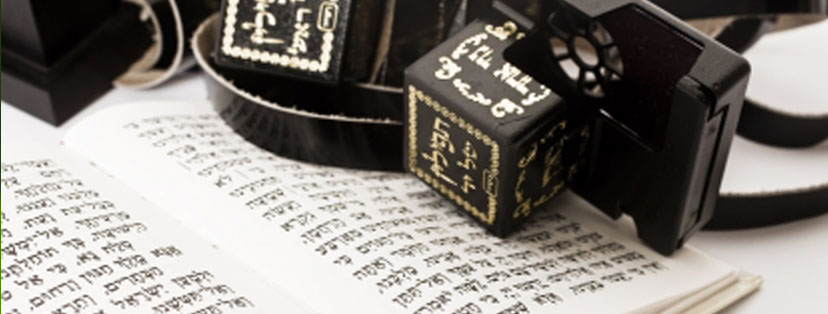
465) Moses said to Elijah: “Elijah, even an ordinary person who blesses, sanctifies, and unifies the queen has several camps of the queen rising with him, and camps of the King come down upon him. And they are all to keep him and to inform that spirit of several innovations and futures in a dream of prophecy, and several secrets. It is like Jacob, of whom it is written, “And behold the angels of God were ascending and descending on it.” Also, it is written about the camps of the King and the queen, “And he called the name of that place Mahanaim [two camps].” However, the King and the queen themselves do not come down there, unlike the one who repents—the Creator Himself comes down on his spirit.

466) So it is, but in each Mitzva there was your effort to unite the Creator and His Divinity in all the camps above and below, the Creator in His Divinity, and all His camps above and below unite in your spirit in each Mitzva like a prince whose father and mother love him and kiss him. And for their love, they do not believe their camps but guard him themselves.

467) Your spirit [Ruach] is from the side of the middle pillar, ZA, the letter Vav that comprises AVI, which are YodHey. Your soul [Nefesh] is an only daughter on the part of the letter Hey. The lower Divinity, Malchut, does not move from you. And as AVI [father and mother] keep the son, ZA, they also keep the daughter, Malchut, in the upper camps, which are Mahanaim.” Your Ruach is raised in the upper thought, Hochma, as we learn that Israel came up in the thought, which is Yod He Vav He. Your spirit comes up in the thought when he is complete. It is written about him, “The whole of the soul will praise Koh [the Lord],” and in that Nefesh [soul], which is the Hey de HaVaYaH, where the Nefesh ascends along with the Ruach.

468) “Thus says the Lord God, ‘Come wind from the four winds.’” If he consists of four winds, he is called Ruach HaVaYaHRuach HaVaYaH is Ruach HB, a spirit of counsel and might, a spirit of knowledge and the fear of God. And if he is whole with four letters HaVaYaH, he ascends in thought, Hochma, and the Cause of Causes crowns him with a crown. In all this glory, your spirit ascends and descends each night, and all the things that appeared to you in Hesed, of which it is written, “And you who cleave unto the Lord your God are alive everyone of you.” You, and not the nations of the world. This is why it is written, “He who sacrifices unto a god other than the Lord alone shall be ostracized.”

469) Happy is the holy nation, which is called “the flock of the Creator,” to offer themselves as sacrifice before Him, as it is written, “But for Your sake we are killed all day long; we are considered as sheep to be slaughtered.” They sacrifice themselves as sheep that are fasting, since the scantiness of milk and blood of the fasting is more important than a sacrifice of beasts, from which the blood and milk were diminishing. And all those inner parts and fat of the offerings were burning all through the night.

470) Happy are those who sacrifice their spirits as offering before the Creator. Each night, when their spirits rise to Him, if he ascends in Torah and Mitzva, in the Torah, which is the ten commandments that were given by the Yod of HaVaYaH—since the number, ten commandments, is from the two letters Hey of HaVaYaH, which are ten in Gematria. In Vav de HaVaYaH, six are the Five Books of Moses with the book Genesis. The five are the ones called “Five Books of Moses,” and he considers the two verses “And it came to pass when the ark set out…” “And when it came to rest…” as a book in itself. Also, there are five books from Exodus onward, and the sixth book is called Beresheet [Genesis]. If it appears in the thought, which is Yod He Vav He, in GAR, in which we learn, “Israel appeared in the thought,” and rose to Keter, where the Cause of Causes is wonderful and covered.

471) Happy is one who ascends in the Mitzvot of Tefillin, in which there are four portions, in which there is the name HaVaYaHYod de HaVaYaH is “Sanctify unto Me.” Hey de HaVaYaH is “And it shall be when the Lord brings you.” Vav de HaVaYaH is “Hear O Israel.” The bottom Hey de HaVaYaH is “And it shall come to pass that if you listen.” These are in thought, in GAR, in the Rosh.

Tying the thought to the hand, Divinity, is the hand Tefillin, since Divinity consists of act and speech, of six Sefirot and of thought. She consists of an act, which is the letter Hey, her Malchut, from speech, her Bina, from six Sefirot, her Tifferet, and from a thought, Yod He Vav He HaVaYaH. These are the fourteen letters, as the count of Yad [YodDalet, “hand,” 14 in Gematria], which are her GAR. These YodDalet are implied in four portions and in one box of the hand Tefillin, and in two straps, thus seven. And the two letters Shin on the right and on the left of the box of the Tefillin are nine. With the knot of the strap they are ten, and with the four portions in the hand Tefillin they are fourteen. This is why Divinity is called “the hand of the Lord [HaVaYaH].”

472) “In Your hand I commit my spirit.” The spirit [Ruach] is committed in her for HaVaYaH, and the Creator comes down to him to receive him in the place of Divinity, and the Creator and His Divinity keep him. This causes that in each and every Mitzva, he elevates Divinity to the Creator.

473) The seventy words in the psalm, “May the Lord answer you in the day of trouble,” which imply to the seventy voices that the woman who is in labor pangs makes, seventy voices that Divinity gives, from the affliction of Israel before the redemption. That time is a day of trouble. And why does she cry out? Indeed, there are those in Israel who are proficient in the Torah, and kings on the part of the morning star, Divinity. These are two degrees: morning, and morning star. It is written about them, “In Your right hand there are pleasures forever.” Morning, which is Abraham’s, Hesed, rises more on the day of redemption itself. But the morning star, Netzah, precedes the day of redemption, and Divinity on its part is called “the morning star.”

474) This is why “For the Leader,” written before “May the Lord answer you in the day of trouble” contains Netzah and contains LamedMem, since “For the Leader” [LaMenatzeah], comprises the letters LamedMem NetzahNetzah is the dominion of the morning star, which is NetzahLamedMem is Ayin [70] in Gematria, the seventy voices that the morning star cries out over her sons when darkness grows strong over them in exile, the darkness of the dawn in the last seventy years. At that time the verse, “As the pregnant woman approaches the time to give birth, she writhes and cries out in her labor pains, thus were we before You, O Lord,” will come true in Israel. For this reason, because Divinity is in pain with us, we hope unto You, the Lord our God that you will redeem us.

(înapoi la pagina ZOHAR CUPRINS / MIŞPATIM – click)

Written in the Signs of the Creator and His Divinity

(înapoi la pagina ZOHAR CUPRINS / MIŞPATIM – click)

456) All who are written in the signs of the Creator and His Divinity, which—on weekdays—are the letter of the Tefillin and the letter of a word, on the Sabbath they are written in “Remember” and “Keep.” They are written in the written Torah, which was given from the right, and in the oral Torah, which was given from the left.

The Creator is “Remember” on the right and “Keep” on the left. Divinity is remembering on the right and keeping on the left. The head Tefillin are on the right, and the one of the hand is on the left. Divinity is called “The perfect law of the Lord,” on the right, and the Mitzva is to her left. This is so on the part of the middle pillar, ZA, which comprises Din and Rachamim, “Remember” and “Keep,” and on whose part Malchut is called “remembering and keeping” because from the perspective of the Mitzvot, she is on a par with him.

457) However, on the part of Hesed, the Creator is “Remember” and Divinity is “Keep.” “Remember” is for the male, and “Keep” is for the bride because on the right and left from the Chazeh and above of ZA, the branches part like the lobes of the lungs, which are separated from above.

Opposite them are the animals: From Chazeh and below the Nukva is called Mitzva, and ZA and Malchut are united. This is why they are considered equal. And as ZA is called “Remember,” she is called “remembering” and “keeping.” But above the Chazeh, on the right and on the left, Malchut is called only “Remember” and not “Keep.” This is the reason why in the place of unification, the Guf [body], Malchut, she is similar to the spine of a palm branch: If its leaves are breached or separated, it is disqualified.

458) The Creator wrote Israel in several places so they would be recognized by the angels. Those of Israel who extend from the right depend on the Creator. Those on the left depend on Divinity, or those who depend on the Creator and His Divinity in one unification. Those in whom there is Torah are written on the right, Hesed; those in whom there is a Mitzva are written on the left, Gevura, and those who own the Tefillin, the token of the Sabbath and the token of the covenant, are written in Tzadik [righteous], Yesod.

459) Those of Israel who are beasts, uneducated, are written by removing the foreskin and the exposing, which are the two purity marks. There are also two signs in fowls, in the maw and in the peeled off gizzard. In removing the maw and the peel of the gizzard, they are written in fowls for eating.

The beasts are in two signs, “ruminants” and “ungulates.” They are all written in two signs, like the foreskin and the exposing, which are transferred from the holy people.

460) But the disciples of sages are all written above, in the throne, in Malchut, or in the angels, in the four animals that carry the throne, or in the stars and signs, or in qualities or Sefirot in which the Creator is known. Those who engage in Torah and Mitzvot for the Creator and His Divinity not in order to be rewarded, but as a son who must keep the glory of his father and mother, connect and register in the middle pillar—the Creator and His Divinity—as though they were one. And one in whom there is Torah without a Mitzva, or a Mitzva without Torah, it is as though they are separated in him. But in the Torah and Mitzva, it is as a tree whose branches part to the right and to the left, and the tree is the unification of the two of them in the middle.

461) The wicked are written without purity marks, or have no Tefillin on the head and on the arm, or are not written in Torah and Mitzvot, or do not keep “Remember” and “Keep,” and are not written in the azure and white of the Tzitzit. Those who are not written in these signs are abomination to you. They are not Israel but are nations of the land [a.k.a. uneducated]. As those who have no purity marks are abomination and vermin, they, too, are abomination and vermin, as we learn, “The nations of the land are abomination, and their wives are vermin.” It is also written about their daughters, “Cursed is he who lies with a beast.”

462) Their death is death in exposure, and there is no death but poverty. Their death of poverty will not be in secret, like fowls, who imply to keepers of Mitzvot, who cover their blood, but rather openly, before the eyes of the people. It is so because a poor man is as important as a dead one. There is poverty that is covered from the eyes of people, and there is poverty in front of everyone, such as throwing the blood of a beast, whose throwing is in front of everyone, meaning that the blood is spilled before everyone. So are the poor, whose blood is spilled before them in the eyes of people and they become as green as dead.

463) And if they repent and do not open their mouths to throw matters upward, and their death is by closing of the mouth, like a beast, who dies and has neither voice nor speech, in their confession they will say, “I have no mouth with which to reply or a forehead to raise the head.” He will confess and make unifications to the Creator each day and take upon himself that his death will be in one, such as the slaughtering of a beast in twelve examinations of the slaughtering knife, which are thirteen with the knife itself, and count as one.

464) He blesses and sanctifies the Creator each day in his blessing and sanctity, and in each eating and drinking of his, as the priest—Hesed—blesses, “Blessed are You”—blessing—“Who sanctified us”—sanctification. When the spirit blesses the Creator each day with “Bless,” sanctifies with sanctity, and unites in the unification of His Divinity, the Creator comes down on the spirit in several camps.

(înapoi la pagina ZOHAR CUPRINS / MIŞPATIM – click)

The Order of Judgments in Laws of Torts [damages]

(înapoi la pagina ZOHAR CUPRINS / MIŞPATIM – click)

445) Rise Moses, to establish sentences in lows of torts in the order of HaVaYaH. It is as it is written, “The chariots of God are myriads, thousands upon thousands,” which are ox, eagle, lion, and man. On the right, where there is HaVaYaH, it is so in the order of the four animals: Man, lion, eagle, and ox, where ox, Gevura, is last. According to the change that is done in them is the movement and the order of the animals. The animals of the other side, the torts on the left, their order is as follows: SHANAAN [translated as “Thousands upon thousands”] is ox, eagle, lion, and man. This is the reason why their beginning, the ox, ties to the four primary torts: ox, pit, uncovering, and burning, and their conclusion: man—who is always stumbling.

446) “ADNI [Lord], open my lips, that my mouth may declare Your praise.” ADNI with its letters reversed is DINA [Aramaic: Din]. Because Malchut is called ADNI, with the letters of DINA, all the Dinim are sentenced under that name. They are sentenced in four and in three. In four is the Divinity that corresponds to the three patriarchs, and she is the fourth in regard to them. In three is the middle pillar, ZAHGT, a true arbiter. It is an arbiter to judge on the part of ADNIMalchut, where there is the true arbiter. On the part of the name ElokimBina, it is a judge, as it is written, “For God judges.”

447) The Dinim are 1) to discuss ox damages; 2) to discuss pit damages; 3) to discuss fire damages; 4) to discuss human damages; and 5) to discuss the sentence of four guards—who guards for nothing, who guards for pay, who borrows, and who rents. Accordingly, there are four laws—the law of division among partners, the law of land division, the laws of menservants and maidservants, and the laws of plaintiff and defendant in several kinds of lawsuits concerning money, theft, loss, or damage to one’s neighbor, and killing him in one of the four executions of the court.

448) The Master is the Creator, in ADNI, since Master [Adon] comes from the word “judgment” [Din], discussing all kinds of sentences, meaning for an evil maidservant that is heir to her mistress, from whom come all the damages, which are harm-doing angels, from whom come the souls of the wicked. The souls of the wicked are the harm-doers in the world. Another god is a wicked, thieving harm-doer, and his mate is the potion of death.

449) The tort of cessation, shame, and healing must be paid to Divinity and her sons, who are Israel. Cessation means cancellation of Torah, when the Sitra Achra cancels her from the sons. Healing means that she caused them to be healed from words of Torah. Torts are several damages of harm-doing angels, saboteurs, anger, and wrath. Shame means that they would despise Divinity with their false idols, and would say, “Where is your God.” How many thefts did the evil maidservant steal, as it is written about her, “The plunder of the poor is in your houses.”

450) How many blessings did the evil maidservant steal from Divinity by weight of the tax and by weight of several odd sentences on her sons? Also, how many offerings of the Temple did she revoke from the queen? The shame of the queen who remained naked from the four garments of gold that illuminate from the four lines of stone, HG TM, in twelve gemstones, where each of the HG TM consists of three lines, hence they are twelve. A coat of several crows and pomegranates, and the four white garments in which the queen would adorn herself before the King, as it is written, “And I will look upon it to remember the everlasting covenant.” And the stealing of the queen, Divinity, several foods of the offerings.

451) A prone ox, the evil maidservant’s husband, enters the house of the King, his master, in his four primary torts—iniquity, saboteur, anger, and wrath—all of which are intended to spoil. With his body, he strikes the vessels of the altar, the Menorah [the Temple candelabrum], the table, and the rest of the vessels, crouches on them and breaks them. With its tooth, it eats all the offerings and the foods on the table, and tramples the rest with its feet. In its horn, it kills priests and Levites, and ruins everything, desecrating a kingdom and its ministers.

452) The pit is the evil female, Lilit, in her house, the prison. The evil maidservant kidnapped the queen and her sons, Israel, in her exile, placed them under several chains, and imprisoned her sons, their hands tied behind them, as it is written, “She dwells among the nations.” Furthermore, “All who honored her despise her.”

453) The evil Klipa [shell] is a whore, flaring, fire, as it is written, “And He has kindled a fire in Zion.” Afterwards came an evil man, a wicked one, a fourth to the primary torts, the uncovering, of whom we learn, “A man forever fails, whether he is awake or whether he is asleep.” “And lets his beast loose,” meaning his camps, and it eats, consumes, chops the vineyards and orchards of Jerusalem, and destroys everything.

454) Master of the world, You are true and Your law is true. You have given us the Mitzva of Tefillin, which, to the complete righteous, are rewards according to their actions, and are stateliness on their heads. By that, they serve their father and mother, ZON, like the body whose every organ serves the head. Similarly, the woman, the Malchut and the hand Tefillin, serves her husband, ZA.

455) There are angels who serve the body, and angels who serve the soul. As is the difference between the body and the soul, so is the difference between the angels of the body and the angels of the soul.

Also, there is a soul to a soul, and angels to angels. These soul to a soul [Neshama to Neshama] from Atzilut are all one; there is no separation among them. Allegorically, each inferior degree in relation to its superior one is as a body toward a soul, since they receive from one another. So is Divinity: Even though she corresponds to the rest of the lights in the world of Beria, she is as a body to a soul because they receive from one another. And so is Divinity, even though she corresponds to the rest of the lights in the world of Beria, as a body to a soul, in regard to the Creator, ZA, she is regarded as a body. However, here the body and the soul are one. But in man, the body and the soul are separated—one is matter and one is mind, one is life and one is death. But the Creator is life, and His Divinity is life, as it is written, “She is a tree of life to them who hold her.”

(înapoi la pagina ZOHAR CUPRINS / MIŞPATIM – click)

Keep Away from a False Matter

(înapoi la pagina ZOHAR CUPRINS / MIŞPATIM – click)

436) “Keep away from a false matter, and do not kill the clean and the righteous.” It is a Mitzva [commandment] to equalize the litigators and to keep away from a false matter, so they will not say that there is bias in the matter. This is so because it is written of the Creator, “Who does not show partiality nor take a bribe.” At the ends of the letters there is one. This judge should be like the one who is one HaVaYaH, who will not take a bribe, meaning be in His form.

437) Similarly, in judging, the two litigators should be equalized as one so the judgment will not lean to one more than to the other. Rather, they will be of equal weight until they accept the judgment. Afterwards, each is judged according to his actions.

438) A righteous is judged by the good inclination. A wicked is judged by the evil inclination. An intermediate, both judge him. One who is from the tree of life, which extends from ZA, is not judged at all, for he has no evil inclination. He is a complete righteous. This is, “A righteous who is happy.” And there is no good except the Torah, as it is written, “For I give you good doctrine; do not forsake My teaching.” And a righteous who is suffering is from the tree of knowledge of good and evil, Malchut. He is called “righteous” although he is suffering, which is the evil inclination. But because the good inclination governs him, he is called “A righteous who is suffering,” for he suffers under its authority.

439) A wicked who is happy. The Torah is called “good.” He is called “evil” because he rose to being a Rosh in his evil inclination, and the good is under his dominion as a slave under his master. And even though a wicked is crowning the righteous, and a complete righteous can punish him, it is not good to punish the righteous, too, since because that good one is under the feet of the wicked, he must not be punished, for perhaps he will repent and overcome his inclination, and the evil inclination will be dust under his feet.

440) From the perspective of a wicked who is happy, Divinity lays, as it is written, “And uncovered his feet and lay down.” This is “And a maidservant that is heir to her mistress,” a maidservant of the evil inclination. The evil inclination is a male, for whom it is said, “I will not give My honor to another,” and “But the stranger who comes near shall be put to death,” since the evil inclination is called “other” and called “stranger.”

441) On the part of the righteous who is suffering, Divinity is a crown on a man’s head, and the maidservant, the evil inclination, surrenders under her mistress. And on the part of the complete righteous, there are neither foreigner nor evil inclination. And on the part of the complete wicked, he has no part in Divinity, for man has no part of Divinity except on the part of the good.

442) The Divinities are not the same because the Divinity of the tree of knowledge of good and evil, the throne, is in the world of Beria or in man’s body. But the Divinity of the tree of life is in the world of Atzilut. It is written about her, “Evil shall not dwell with you.” But because it is written in regard to her, “And His kingdom rules over all,” one who flaws her place in Beria or in man’s body, it is regarded as though he has disgraced the queen herself, in Atzilut, for the disgrace of the queen is one who has contempt for her place. Also, scorn for the queen is scorn for the King, ZA, thus he flaws ZA, too.

443) It is even more so for one who removes her from her place in Beria, and places a maidservant in her place. This is because in every place that he flaws, the queen is not present, but the maidservant, who is flawed and dwells in a flawed place. And man’s flaw due to his iniquities flaws all of his organs until the queen finds no place to dwell there. Thus, he cannot be corrected until he reinstalls her over all his organs, when he repents on all his iniquities.

444) Rabbi Shimon said, “Moses, this is why you establish in this composition of the 248 Mitzvot, to enthrone the Creator over all the organs of Divinity in each and every Mitzva, and you have no concern for your own honor. Happy are you, for as you enthrone the Creator over all the organs of Divinity, who are the virtuous ones in all of Israel—for the virtuous ones are the organs of Divinity—so the Creator works to instill His name over you and will enthrone you over all the camps above and below.

(înapoi la pagina ZOHAR CUPRINS / MIŞPATIM – click)

You Shall Not Follow the Masses in Doing Evil

(înapoi la pagina ZOHAR CUPRINS / MIŞPATIM – click)

429) “You shall not follow the masses in doing evil, nor shall you testify in a dispute so as to turn aside after a multitude in order to pervert.” “Turn aside after a multitude in order to pervert.” There is no multitude of less than three. If there are no court of three, it is forbidden to follow its sentence. The court is Divinity. Three are the three animals of her Merkava [chariot/assembly], HGT. Divinity is called “the law of Torah,” the true law, where the middle pillar, ZA, is called “truth,” and Divinity is his Din. Any judge that does not judge truthfully, it is as though he made SAM govern the world, as it is written, “And truth shall be cast to the ground,” meaning ZA, who drops Divinity with him. He raises Hell, SAM’s partner, along with SAM. In a place of true judgment, He establishes the language of falsehood. A true judgment is the middle pillar, the language of deceit, Hell, and SAM.

430) For this reason, when the judge judges, Hell is open before him on the left, SAM’s mate, and a sword is on his throat, which is the angel of death. SAM is behind the neck, the Garden of Eden is open to his right, and the tree of life is open before him on his head.

431) If he sentences falsely, the angel of death governs him and slaughters him, then burns him in Hell. If he sentences truthfully, the Creator brings him to the Garden of Eden and gives him a taste of the tree of life, of which it is written, “And he shall take also of the tree of life and eat and live forever.” It is the “forever” that is created in the Torah, of which it is written, “She is a tree of life to them who hold her.” The tree of life is Tifferet, and his life is HB, the life of the King.

432) The sentence of Malchut is always Din. The Din is in the heart, as we learn, “The heart sees.” This is why the judge has only what his eyes see. Also, there is no judge but the Creator, what His eyes see, “For the eyes of the Lord wander,” His eyes are on the ways of a man.

433) “Watching through the windows” means through man’s seven holes: the two eyes, the two ears, the two holes of the nose, and the mouth, thus the seven Sefirot of upper Ima. This is how He looks at his ways with seven, from the perspective of the lower Divinity: with the two hands and the neck, which are three, with a body and a covenant, Tifferet and Yesod, which are five, and with two legs, thus seven. These are the seven Sefirot of the lower Divinity: the two letters of the name YodHeyGAR, with the filling of YodVavDalet HeyAleph, which are seven letters.

Through these seven letters of His, He looks at the seven holes of the head. They are called “holes” after the female, upper Ima, whose holes are open to receive. The two letters VavHey in the Guf are the lower Divinity, with their letters of filling—VavAlephVav HeyAleph. They are seven letters, and in these seven letters of His, He looks at the seven organs below: hands, neck, body, circumcision, and legs, which are the correction of the body, in which there is the making of the Mitzvot.

434) The wife of ZA, Divinity, is similar to a body from which the body of the lower man extends. It is called “organs,” “248 organs,” after the Mitzvot, and it is called “body” after Divinity. This is so because on the other side, there is no body but only clothing, which is as it is written, “Clothe me with skin and flesh, and knit me together with bones and sinews.” In a place where there is no Divinity, it is not considered the body of that lower man, but it is called “man’s clothing,” ZA.

The Torah is called “man,” as it is written, “This is the law [Torah]: should a man die in a tent.” “As the beauty of man, to dwell in the house.” In a place where there is Mitzva, Divinity, it is called “the body of the lower man, “man’s body,” like the bodies of laws and sentences, which are the names of Divinity.

435) A judge, an arbiter, an officer, and a ruler. The Creator is a judge, the middle pillar. ZA from the side of Bina, the Mochin de GAR that extend from Bina, which is HaVaYaH, is called “a judge.” An arbiter is considered from the side of Malchut. An officer is a ruler, as it is written, “And Joseph is the ruler.” All the Sefirot are judges on the part of upper ImaBina, in whom there is the MochinTifferet, which extends from her, is a judge, and all the Sefirot are included in it. These are officers on the part of Malchut, in whom there is the domination, and the righteous is policing and ruling from there.

(înapoi la pagina ZOHAR CUPRINS / MIŞPATIM – click)

Watching Through the Windows

(înapoi la pagina ZOHAR CUPRINS / MIŞPATIM – click)

422) Rabbi Shimon said to Moses: “Although you cannot look at the people of the world with eyes and not with angels, it is even more so with the Creator and His Divinity. However, you see everything with the mind’s eye of your heart, the people of the next world, the angels, and the Creator and His Divinity who surround you.” This is why Solomon, of whom it is written, “For he was wiser than all men,” said, “My heart has seen much wisdom,” with the mind’s eye.

423) Yet, in prophecy, a prophet has no permission to look in it with the mind’s eye, but with the eyes, which is a sight and a vision of the eyes, as it is written, “I … shall make Myself known to him in a vision,” and moreover, in a night’s sight. A vision is during the day; a sight is at night. Everything is in the eyes, and not in the mind’s eye of the heart.

Also, the two eyes are two mediators of the heart, mediating between the evil inclination in the heart and the man, and serving him, while he is the king between them. For this reason, a wise man, who sees with the eyes of the heart, is better than a prophet, who sees with the eyes. Also, the two ears are two servants of the heart.

424) For this reason, the heart sees, the heart hears, the heart understands, and the heart knows. “And in the heart of every wise-hearted I have placed wisdom.” Thus, wisdom, intelligence, and knowledge are in the heart, for in them the heaven, the earth, and the deeps were made, and in them was the tabernacle made.

425) Moses, in whom it is all in his heart, saw more than a prophet. It is even more so with your thought, which is endless. With it, you will look at He in whom there is no end, what you were initially forbidden to look at with the eyes, as it is written, “You shall see My back, but My face shall not be seen.”

426) The foolish-hearted ones are dead. They are blind in those shells of the body. But for you, they are of no importance whatsoever. They do not separate you from the Creator and His Divinity, or between all those who are in the next world and the angels, for so he will come to you with those windows of the eyes, the ears, the hollows in the nose, and the mouth, as a king who secretly comes into hidden rooms to speak with his son. This is why Israel pray in their prayer, “You search all innermost parts, see the mind and the heart, and nothing is hidden from you.”

427) This is why Solomon said, “Watching through the windows,” the windows of the eyes, the ears, the holes in the nose, and the mouth. By these seven holes the soul rises in seven kinds of perfumes. Also, the prayer rises in these seven kinds of perfumes, which are spikenard, turmeric, bamboo, cinnamon with all the trees of incense, myrrh, and tents with all the heads of the perfumes. During the prayer, it rises so: perfumed with myrrh and frankincense. The Creator asks about her: “Who is this who comes up out of the desert like pillars of smoke, perfumed with myrrh and frankincense?” “Who is this” is from the side of MIBina, comprising seven kinds of perfumes, her HGT NHY, which illuminate in scent—illumination of Hochma.

428) This Shema reading comprises the fifty gates in Bina, which are 25 letters in the Shema reading of the morning, and 25 letters in the Shema reading of the evening. They consist of seven blessings. At dawn, two are before it and one is behind it. In the evening, two are before it and two are behind it. These are the seven Sefirot: The great, GevuraTifferetNetzahHod, “For everything that is in the heavens and the earth,” Yesod, up to “Yours, O Lord, is the kingdom,” Malchut, comprising three perfumes: incense of myrrh is Keter, frankincense is Hochma, and every dust of the merchant is Bina.

(înapoi la pagina ZOHAR CUPRINS / MIŞPATIM – click)

Barn and Winery

(înapoi la pagina ZOHAR CUPRINS / MIŞPATIM – click)

413) Moses, the loyal servant, a Hebrew slave is upon you. It is written, “You will surely give to him.” “You will give to him” means give to his sons these hidden things. “And from your threshing-floor” in the threshing-floor of your Torah, “And from your winepress.” In the barn and winery, the verse speaks as the authors of the Mishnah taught. The verse speaks of the waste of barn and winery.

A barn is a male, ZA. The waste of the barn is Dinim de Dechura [male Dinim], which extend from the Shuruk. A winery is NukvaMalchut. The waste of the winery are Dinim de Nukva [female Dinim], which extend from the Hirik.

414) YeKeV [winery] is an acronym for Yihud, Kedusha, Beracha [unification, holiness, blessing, respectively] of the Creator. Divinity, Malchut, is the Creator’s blessing when she is on the right, Hassadim. She is the Creator’s Kedusha when she is on His left, in Hochma, and she is the Creator’s unification when she is in the middle line. The letters of the Creator add up to the number 112, the letters of YeKeV. The Creator has the number of 112 because the Creator is ZA, and Nukva is the calculation of ZA.

415) One who is proficient, meaning who is the letters YeKeV in his law, in Divinity, the Creator is with him, since thanks to it He will never move from him. There is a law that is a maiden, serving her on the part of the lad, Matat in Beria. It was said that the law about her is as his, concerning her maiden. However, it is a law of Moses, of which it was said, “It is a law to Moses out of Sinai,” that the Creator gave you His daughter, Divinity, by Himself.

416) This is why it is written about other laws, “Many daughters have done nobly.” It is written about your law, “But you excel them all,” meaning she prevailed over all of them with Gevura. “The Lord is with you, you mighty man of valor.” Be corrected in you and complete the King’s construction, Divinity, since He builds His building by you and through you.

417) Moses started and said, “The angel that redeems me from all evil is Divinity, of whom it is written, ‘And the angel of God journeyed,’ will bless you in the next world, Bina. ‘And may they grow into a multitude in the midst of the earth,’ in this world, Malchut. That is, may your governance be in the two worlds where you live. My name is from this world, Malchut. It is called ‘Living,’ as it is written, ‘She is a tree of life to them who hold her.’ Life is in Bina. Life here is in Malchut.”

418) But one who is not clothed in shells of skin and flesh, bones and tendons of the lowly body, where the spirit is dead, is like a dead person who does not see, does not hear, does not speak, and has no motion in any of his organs, the spirit does not see what is above it. We learn about them, “Know what is above you; the eye sees, the ear hears, and all your deeds are written in the book.”

419) Several angels go with him, as it is written, “For He will give His angels charge concerning you,” and He has no authority in this body, to look at them and to hear their voices, for they are animals of fire, speaking, sanctifying, and blessing both the Creator and Israel. It is all the more so for Divinity, which is over them, and even more so for the Creator, who is above Divinity, in which He receives the prayers of Israel.

420) For the iniquities, they would clothe in these Klipot like a man that the iniquities of their fathers are in their hands, gripping the act of their fathers in their hands.

421) In the future, it is written, “Your Teacher will no longer hide Himself, but your eyes will behold your Teacher.” It is so because when you are in this world, Malchut, and have no shells or skins, you have permission to look at the people of the world, and the people of the world are permitted to look at you. This is why it was said about you that you are alive and that your world is the world of the living. However, this lowly world is the world of the dead because except for the Creator, the gods of the nations of the world are all dead.

(înapoi la pagina ZOHAR CUPRINS / MIŞPATIM – click)

A Vow and an Oath

(înapoi la pagina ZOHAR CUPRINS / MIŞPATIM – click)

401) The oath of the Creator is Divinity, the only daughter. It is with good reason that they determined that three people break an oath, for it is the Shin [] of Shabbat [Sabbath], where the three branches of the Shin are three patriarchs, HGT, and the thick line that connects the three branches from below is the only daughter, an oath that partakes in the three branches in the ShinMalchut is called “an oath” when she is connected with HGT de ZA, who—above his Chazeh—is the fourth leg of the upper throne. This is what the Shin of Shabbat implies. Hence, three people—corresponding to HGT—can break the oath.

402) The oath applies only to something that is real. A vow applies even to something that is unreal. Vows are more important than oaths because anyone who takes an oath swears in the King himself, in Malchut, while one who makes a vow, it is as though he vows in the King’s life, Bina, from which life—Mochin—extends to Malchut.

In GARHochma can shine without clothing of Hassadim. But in ZATHochma does not shine without Hassadim. The oath applies only to something that is real because the oath, Malchut that extends Hochma above Chazeh de ZA, is fourth to the patriarchs and does not exist there for lack of Hassadim. Instead, she must descend from the Chazeh and receive Hassadim from Yesod de ZA to clothe the Hochma in them, and then the oath applies, meaning exists.

This Masach of Yesod, which extends Hassadim, is called “something real,” Aviut [thickness]. But a vow, which is Bina and GAR, applies even to something that is unreal, which does not need a Masach for bestowal of Hassadim, since in GARHochma can shine even without Hassadim.

403) The one who each day and always renews the act of creation will innovate innovations for us, since there is nothing new under the sun, ZA. However, there are innovations above the sun. In the secrets of Torah, “For the Lord God of hosts is a sun and shield,” there are shining and protecting even under the sun in the world of Atzilut, and not in the three worlds BYA, where there are the Klipot that deny His uniqueness.

And even though God has made them one opposite the other, meaning that the Klipot are the work of God, since from out of the darkness, the Klipot, comes out light—by people overcoming them, they are still regarded as the world of the uneducated, and the light of the sun, ZA de Atzilut, does not extend to protect them.

404) The next world, Bina, above the sun, is the middle pillar, ZA. For this reason, vows from there are more important than an oath and apply to something that is unreal, in which the Masach does not extend Hassadim. And because an oath, this world, Malchut, exists only on Yesod, which carries the Masach de Hassadim, which is real, as it is written, “A righteous is the foundation of the world,” it follows that it applies only to something that is real.

405) We swear by Yesod, as it is written, “As the Lord lives, lie down until the morning.” Yesod is called “living.” The bottom Divinity, which is called “the Western Wall,” Malchut, is its dwelling place, since it is a mound to which everyone turns.

A wall comprises the letters ChafVav TavLamed [Kotel]. HaVaYaHZA, is 26 in Gematria. Divinity is certainly the mound of ZA, after the verse, “His locks are curled, and black as a raven,” where on every curl there are mounds over mounds of laws. The Dalet of Ehad [“one” in the Shema reading] is a mound to which everyone turns, Malchut. The tip of the Dalet [] is Yesod, which distinguishes her from the shape of the Reish [], gripping between the AlephHet of EhadZA, and the Dalet of EhadMalchut, as it is written, “For everything that is in the heavens and the earth.” “For everything” is Yesod, clinging to ZA, the heaven, and to Malchut, the earth.

406) The world stands on the Yesod [foundation], on a pillar whose name is Tzadik [righteous], as it is written, “A righteous is the foundation of the world.” He is the covenant of the oath, Malchut, since the AlephHet Dalet stand on him, the heaven and earth, as it is written, “If My covenant be not day and night, I have not put the ordinances of heaven and earth.” AlephHet are heaven, ZA, and Dalet is earth, Malchut.

407) The covenant, Yesod, is gripped between heaven and earth, ZON, and in it is the oath, Malchut. It is written about it, “As the Lord lives, lie down until the morning,” since the oath depends on Yesod, who is called “living.” One who swears in His name in vain, it is as though he destroyed the structure of heaven and earth and reverted the world to chaos, for if a person removes the tip, Yesod, from the Dalet of EhadMalchut, it will leave Aher [other], SAM, in whose place there is falsehood. It is as though one builds heaven and earth on falsehood. Truth stands, and a lie does not stand and will ultimately be revoked. Thus, he destroyed the building and the heaven and earth fell.

408) One who swears falsely, it is as though he threw the glory of Israel from heaven to earth. Divinity is earth, and Tifferet [glory] is heaven. He did not part from it even in her falling, to keep in her the words “I am the Lord, it is My name, and I will not give My honor to another.” Truth, ZA, fell with her, as it is written, “And truth shall be cast to the ground.” Thus, the cause of Malchut’s fall also causes the fall of ZA. This is why one who swears in vain causes the fall of heaven and earth, and one who swears in truth keeps the verse, “Truth shall grow out of the earth,” the middle pillar, ZA, which is called “truth,” in which the building stands. Thus, the construction of heaven and earth is established on truth.

409) And because the oath is the structure of this world, Malchut, it cannot exist without Yesod [a foundation], something that is real, which carries the Masach on which the Zivug of Hassadim comes out. A vow is the next world, Bina. It is higher than an oath and applies to things that are unreal, since Bina does not need a Yesod on which to exist, a covenant, in which there is coupling, since in GAR the Hochma does not need Hassadim to clothe in. This is why on Yom Kippur [Day of Atonement], which is the next world, Bina, in which they set up the Kol Nidrey [a prayer called “All the vows”] the coupling is forbidden because the vow is from Bina and there is no Zivug de Yesodot in Bina.

410) The letter of the covenant, Yod, is in BinaYesod de Bina, the crown of a book of Torah, which is a TzadikYesod de ZA. There is neither eating nor drinking in the next world, nor is there coupling. Rather, the righteous sit with their crowns on their heads.

411) Because there is no use of this world, Malchut, in the crown on the head of a Tzadik, which applies only in Bina, all who use the crown pass away from the world. This is so because the crown in this world is below the Yesod and is not on the head of the Tzadik. The points are for using the letters, but in the next world, Bina, there is no use for the letters, which imply to ZON. For this reason, there are no points [punctuation marks] in letters in a book of Torah, but tags that extend from Bina, and they are a crown at the top of the letters, which are ZON. For this reason, one who uses a book of Torah passes away from the world. And so they say of one who studies the laws that one who uses the crown passes.

(înapoi la pagina ZOHAR CUPRINS / MIŞPATIM – click)

Doubled-Edged Sword

(înapoi la pagina ZOHAR CUPRINS / MIŞPATIM – click)

398) When the heads of the seminaries who came down with Rabbi Shimon heard the words, they started and said to Moses: “Moses, you are the mouth of the upper and lower Divinity, Bina and Malchut, in both of which the Creator has spoken to you mouth-to-mouth in the Shema reading, as it is written, ‘The high praises of God be in their mouth, and a two-edged sword in their hand.’” It is so because Yod de HaVaYaH is the head of the sword that surrounds your lip. Vav de HaVaYaH is the tongue of your sword, the HeyHey de HaVaYaH are the two edges in your lips, and certainly, the name of your Master, Divinity speaks from your mouth. YodHeVavHe is in your thought, eliciting these fifty gates of Bina from your mouth.

Torah is the Mochin that appear from Bina in Daat to ZON and to BYA. This is the sword that subdues and destroys the Sitra Achra, and which is revealed associating Malchut with Bina, which equalizes their forms to one another. During the KatnutBina has the form of Malchut, and during the GadlutMalchut has the form of Bina, meaning she obtains her Mochin. For this reason, they both have the same letter Hey in the name HaVaYaH, for they are of one form in the sword’s mouth, and they are considered the two mouths of the sword, which is the Torah.

The force of the sword is primarily in them because were it not for the equivalence, there would not be disclosure to the Torah there. It follows that they are the primary ones who act to destroy the Sitra Achra, like the tip of the sword, which is the primary operator of the sword. Also, they are of one form in the mouth, which is the place of disclosure of the Mochin through the speech, where Bina is the upper lip and Malchut is the lower lip.

This is why they said, “Moses, you are the mouth of the upper and lower Divinity,” for he became a mouth to the two of them together, which is the only possibility for the disclosure of the Torah. “In both of which the Creator has spoken to you mouth-to-mouth in the Shema reading.” There are fifty letters in the verse, “Hear…” These are the gates of Bina, from which there are all the Mochin that come in the revelation of the Torah.

“The high praises of God be in their mouth, and a two-edged sword in their hand” writes of Moses’ mouth. Yod de HaVaYaH is Hochma that mates with the upper lip, which is Bina and the first Hey de HaVaYaH, the head of the sword, GARVav de HaVaYaH is the tongue in the mouth, and Moses’ sword, the Daat that extends from the Zivug of YodHey, the Torah.

The HeyHey de HaVaYaH are two edges in your lips: the upper lip is Bina and the lower lip is Malchut. They act to disclose the Mochin in the correction of equalizing their forms to one another. And when Malchut is corrected in this manner it is called “the name of Heaven.” This is why they said, “Indeed, the name of your Master, Divinity, speaks in your mouth,” meaning that Malchut speaks and reveals the Mochin from BinaYodHeVavHe in your thought is the middle line in the thought, which is GAR that elicits fifty gates of Bina from Moses’ mouth in Shema.

399) The root of these matters is the correction of Malchut in Bina and their equivalence of form with one another. This is the reason why Elijah is detained above, imprisoned there as though in prison, and does not come down to you. This is because he would come down to you with great wealth, and he is imprisoned above and does not come down to you because your poverty is redemption for Israel. This is why the Messiah said, “Until the poor man arrives,” as it is written, “And by His scourging we are healed.”

Because of the mitigation of Malchut in BinaMalchut de Midat ha Din [quality of judgment], was concealed. She is the fiftieth gate, which is hidden by this concealing. For this reason, the fifty gates of Bina were given to Moses minus one, the fiftieth gate. This is Moses’ poverty, for there is none who is poor, except in knowledge, meaning who lacks the fiftieth gate. And the fiftieth gate appears with the revelation of Elijah, since due to the mitigation of Malchut in Bina, in the double-edged sword, Malchut of Midat ha Din was concealed, meaning the fiftieth gate, and Elijah, who is the disclosure of the fiftieth gate, is detained above like a prisoner in prison and cannot come down and disclose it.

He would come down to you with great wealth, the richness of knowledge that reveals the fiftieth gate. And yet, he is imprisoned above because your poverty is redemption for Israel, for were it not for the mitigation of Malchut in Bina and the concealing of Malchut of Midat ha DinZON and the worlds would not be fit for Mochin de GAR. It follows that Moses’ poverty, which is the disappearance of the fiftieth gate due to the concealing, is Israel’s redemption. By that, ZON and the worlds became fit for Mochin de GAR, to bestow upon Israel, on which the redemption and the end of correction depend. This is why Elijah is imprisoned above and cannot disclose the fiftieth gate before Israel receive all the Mochin that should be revealed by this mitigation of Malchut in Bina.

For this reason, Elijah is necessarily imprisoned above and cannot come down to disclose the fiftieth gate. Redemption depends on the arrival of the poor man, Moses, from the fiftieth gate, revealing all the Mochin that must be revealed. “And by His scourging we are healed,” since that pain and scourging of the deficiency on the fiftieth gate, he reveals all the Mochin and heals Israel from all their deficiencies.

400) Permission was given to him and he came down to me, since he is more important to me than all the silver in the world. And I absolve him and release him and break his oath for him. You, too, break it for him, and if he needs further release, we will try with his release so he may come down to me.

(înapoi la pagina ZOHAR CUPRINS / MIŞPATIM – click)

Redeeming a Hebrew Slave

(înapoi la pagina ZOHAR CUPRINS / MIŞPATIM – click)

391) The subsequent Mitzva is to redeem a Hebrew slave and a Hebrew maidservant, to designate the Hebrew maidservant, to discuss the possession of a Hebrew slave, you shall surely give him. It is written about it, “If you buy a Hebrew slave, he shall serve for six years.” Angel Matat is the servant of the Creator, and includes VAKHGT NHY, as the number of his six letters, which are the six Orders of the Mishnah, and by which one should serve his Master, be a slave to Him, and become the possession of His silver. Silver is right, Abraham, whose degree is Hesed. The Torah is given from there.

392) One who engages in the Torah to be rewarded with the next world, it is called “possession.” His silver is named after the world of pleasure, possession, after the words, “God Most High, Possessor of heaven and earth,” and the verse, “Acquire wisdom [Hochma]! Acquire understanding [Bina]!”

393) Once he has bought it, he will have redemption. There are those who are bought forever, and those who are bought for six years. It is written about those who are bought forever, “And his master shall pierce his ear with an awl; and he shall serve him forever.” There is no world but the world of YovelBina, fifty, the Shema reading, in which there are 25 letters in the evening prayer and 25 in the morning prayer, which are the fifty gates of Bina.

394) After a man unites the Creator in them, he is His servant with a burden of Tefillin on his head and with his ear pierced, meaning open to hear the Shema reading, since he has heard that he must understand the meaning of the Shema reading, which is the unification.

395) One whose redemption depends on the Shema reading, the fiftieth, Bina, has no redemption in an incarnation by another, since he is pierced to his master. Here it does not say, “Or his uncle or cousin will redeem him,” since in man’s prayer he is as a servant, in whom it is written, “He shall serve six years, and there is no work but prayer.

“Six years he shall serve,” the first three and the last three in the Eighteen prayer, when the leader in the prayer exempts a man for those who do not know how to pray in them. Thus, he has redemption through another, since the leader in the prayer redeems him, that the righteous one who lives forever, Yesod, the leader in the prayer, is called by them after the name of the one who does not know how to pray, meaning by the name Boaz, Tzadik, near redeemer, and loyal. The meaning of these names is that they help and redeem those who cannot help themselves. This is the marriage to the brother and the incarnation.

396) The Lord is near to all who call upon Him.” “Better is a neighbor who is near than a brother who is far” is the middle pillar, TifferetYesod is a neighbor who is near, and Tifferet is a brother who is far, son of Koh, who rose to Bina. This is so because a world is the world of Yovel, the fifty letters of the unification of the Shema reading, fifty gates of Bina. In this world, Malchut, a man can have redemption from a Tzadik [righteous], Yesod, who is six years that include the first three blessings and the last three of the prayer. The small VavYesod, and this is the meaning of “Six years he shall serve.”

397) But in the next world, the world of YovelBina, where there are the fifty letters of the Shema reading, the leader in the prayer cannot exempt him because he has no redemption through others. For this reason Shema [Hear] in any language that you hear, but you must read by yourself. This is why “If I am not for me, who [MI] is for me.” “Me” is MalchutMI, the world of YovelBina. It implies to the Shema reading, when there is no me but MI.

(înapoi la pagina ZOHAR CUPRINS / MIŞPATIM – click)

error: Content is protected !!