
Go Forth to Correct Yourself

(înapoi la pagina ZOHAR CUPRINS / Lech Lecha – click)
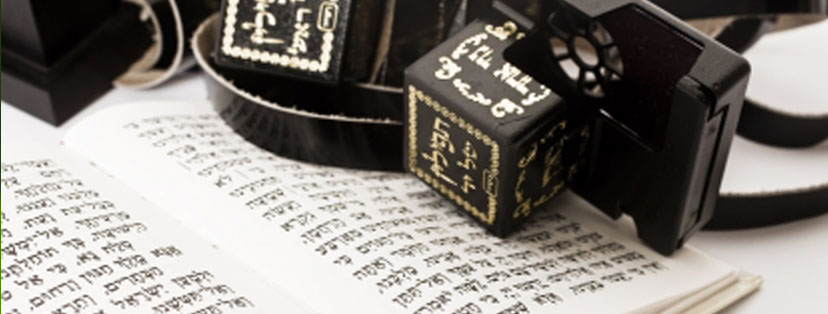
21) “And the Lord said unto Abram, ‘Go forth.’” “To you” [part of the verse in Hebrew] means “to yourself,” to correct yourself, meaning correct your degree. “Go forth,” since you should not be here among those wicked ones.

22) The meaning of the words, “Go forth” is that the Creator gave Abraham the spirit of wisdom and he knew and purified the spirits of the corrections of the world. He would observe them and weigh them in a scale, and he knew and attained the powers appointed over the spirits of correction.

Since it is written, “And they went forth with them from Ur of the Chaldees … and they came unto Haran, and sat there,” it means that they had already departed their land and kindred. Thus, why did the Creator tell him, “Go forth from your country and from your kindred”? Indeed, when we know the inner meaning of these words it will not be difficult for us at all. You should know what is the power of Nimrod over Abraham to throw him into the furnace, which is Ur [Aramaic: light, flame] of the Chaldees, and how he was saved from the furnace.

The thing is that all the Dinim and Klipot extend from the left line, the illumination of ShurukHochma without Hassadim, a burning fire. At the time, their leader was Nimrod, who began to gain strength in the land, as it is written that he was “A mighty hunter before the Lord.” Therefore, when Abraham extended these upper Mochin to him—which extend in three lines, one at a time, and came and received the illumination of the left line, which is the illumination of the point of Shuruk—he immediately fell under Nimrod’s rule. He, in turn, threw him into the furnace, which extends from the power of the illumination of Shuruk.

This is when the Creator helped him extend the illumination of the middle line over the Masach de Hirik, which decides and makes peace between the two lines—right and left. Then the Hochma on the left dresses and integrates with the Hassadim on the right, the Mochin shine in utter completeness, and the Dinim [judgments] are cancelled. Thus, Abraham was saved from the furnace, went out of Ur of the Chaldees, and was rewarded with the revelation of the Creator, as it is written, “And the Lord said unto Abram, ‘Go forth.’”

The Masach de Hirik on which the middle line comes out extends from Midat ha Din [quality of judgment] in Malchut, which was not mitigated by the Rachamim of Bina, which is called Man’ula. This is so because the right and left are in dispute, since they are two writings that deny one another. Since the left line extends from the illumination of the Shuruk, which extends from Bina that returned to Rosh AA, he has great strength and he wishes to revoke the illumination of the right, which extends from the point of Holam, from Bina when she was outside the Rosh of AA. And since the right line is the root of the left line, he wishes to revoke the strength of the left line and subdue it, as the root relates to its branch.

Therefore, the left line does not surrender to be included in the right line except by two issues that act in it: 1) The Masach de Hirik, which comes to diminish the left line from GAR to VAK de Hochma; 2) The middle line, the level of Hassadim, which comes out over this Masach. It comes to activate the Zivug de Hakaa with the upper light that was made on this Masach de Hirik, which elicits the level of Hassadim.

At that time, on one hand the level of the left line descended to VAK de Hochma so now its level is not higher than the right line. On the other hand, the Hassadim from the two sides of the left line increased—from the right line, called “Abraham,” and from the middle line, called “Jacob.” As a result, the left line, called “Isaac,” surrendered and was integrated in the Hassadim of the right and the middle. However, as long as the left line was not diminished from its GAR, no power can incorporate it in the right line.

For this reason, the middle line cannot subdue and unite the two lines before the Masach de Hirik can diminish the left line into VAK de Hochma. And when the two lines shine in the degree, Malchut de Nukva will necessarily be as the middle point of the correction, the Miftacha. This means that Malchut was completely mitigated in Bina and received Bina’s form, according to the rule that the mother lends her clothes to her daughter. Without it, the Malchut is unfit to receive any Ohr Yashar [Direct Light], which extends from above downwards.

Hence, when wishing to extend the Man’ula [lock] in her, which is the essence of Malchut that was not mitigated in Bina so she will diminish the left line to VAK de Hochma, four actions are required.

  1. To extend Tzimtzum Aleph [the first restriction], which was made on the Malchut so she would not receive light.
  2. To reveal the Dinim in Masach de Tzimtzum Aleph, which has now been completed with Malchut of Midat ha Din without the mitigation of Bina, who is called Man’ula.
  3. To elevate this Man’ula from Malchut’s place to Bina’s place, to diminish the left line from there into VAK de Hochma.
  4. Zivug that comes out on that Masach, by which the Mochin are completed entirely.

The Creator gave Abraham the spirit of Hochma [wisdom]. He received the spirit of Hochma in the two lines—right and left—because the illumination of the left that extends from the point of Shuruk will eventually disclose the spirit of Hochma. He knew and clarified the sides of correction of the world, the right side and the left side, which shine in Malchut in the place from the Chazeh down. This is called “the correction of the world” because this is where the Hochma appears, without which people are not made whole. But from the Chazeh and above of Malchut, it is not a place of correction because the lights of Hochma cannot shine to people there. Abraham observed the two lines and weighed them on a scale, meaning extended illumination of Hochma, whose extension is called “a scale,” and he knew the forces appointed over the sides of the correction, meaning he extended the illuminations on the right side and on the left side and he knew them.

23) When he came to the middle point of the correction, the point of Malchut of the Miftacha, he weighed with a scale but did not succeed. In other words, he raised MAN to extend the spirit of Hochma into there, but it was not extended for him. He observed so as to know the force appointed over it but his intention was not sufficient to attain it. Thus, after he extended the two lines, right and left, before he extended the middle line, the wicked Nimrod gripped him and threw him into the furnace, which is Ur of the Chaldees. This is why the Creator helped him extend the middle line, to save him from the furnace and to bring him out of Ur of the Chaldees.

He needed four actions to reveal the middle line. The first action was when Tzimtzum Aleph was revealed to him at the point of Malchut. He weighed with a scale and it did not succeed for him because after the power of Tzimtzum Aleph was over the Malchut, she could not receive any Ohr Yashar within her. And when he saw that she was not receiving light, he looked to see and to examine the power of the Miftacha that was controlling her, by which she became fit for reception of the lights. However, he could not obtain that force there anymore because the power of Tzimtzum Aleph was extended over her, which is the part of the point that is not mitigated in Bina. Yet, he still did not find the force of the Din there yet, since the force of the Din is not revealed in Tzimtzum Aleph itself, but only through the Masach that is erected there after the Tzimtzum, and this Masach is called Man’ula. This is what happened in the second action.

24) He weighed several times and saw that the whole world was planted and established from there. In other words, because he weighed many times and did not succeed in drawing light into there, by that, the force of the Din in her was disclosed, from the Masach that was made in Malchut after Tzimtzum Aleph. At that time he saw and recognized that the whole world was established from that Masach, meaning that Malchut, which is called “world,” was established in it.

He observed and clarified and weighed to know the issue, and he saw that the upper force over her is immeasurable, and that it is profound and abstruse. In other words, at the point of Malchut, he saw the upper force, called Man’ula, since it was now revealed to him that this force was governing her, and it is regarded as immeasurable and so profound and abstruse that it cannot be opened. This is so because there cannot be attainment and perception unless through clothing of the light. But wherever the force of Man’ula governs, it is impossible to extend the upper light to there, hence there is no attainment and perception there.

However, this is still not enough for a Masach de Hirik for the middle line, since this Masach controls only Malchut and not the upper nine. For this reason, it is still not strong enough to diminish the left line—which is from the upper nine—into VAK, which is all that is requested of this Masach. This is why he makes the precision that she is not like the Sefirot of correction, the upper nine, since the upper nine are still in the form of Miftacha and the point of Malchut is in the form of Man’ula. To affect the upper nine, too, of which the left line is a part, a third action is required.

25) He observed and weighed and knew that the middle point of correction, the Miftacha, rose to Bina and in consequence the whole world, from end to end, was planted from her. In consequence, she governs all the Sefirot of ZA and all the Sefirot of Nukva, called “the ends of the world,” since she is above them. He also knew that the force that is now over the point of Man’ula rose to Bina, too, and that for this reason, all the other forces—appointed over all the ends of the world—extend and emerge from her. In other words, since she rose to Bina, her ruling extended from there in all the Sefirot of ZA and all the Sefirot of Nukva, which are called “the ends of the world.” By that, the left line of Nukva was diminished, too, and became VAK de Hochma, which is not regarded as Ohr Yashar. Even so, the left line is from the upper nine, since by the ascent of the Man’ula above Bina, she governs and diminishes the upper nine of Ohr Yashar, the GAR.

Now all the Sefirot gripped to the point of Man’ula, and after the left line was diminished from GAR and declined into VAK, its merit is not higher than the right line, its ruling power expired, and Abraham was saved from the furnace and went out of Ur of the Chaldees. This is because now that he has fallen to VAK, he surrenders to the right line. However, he does not completely surrender to being included in the Hassadim on the right before the Zivug with the upper light is made on this Masach de Hirik and educes the level of Hassadim.

26) Also, he observed and weighed and clarified to clearly stand in that place. But he did not know and could not stand on her in order to cling to her. In other words, the Dinim were doubled on him because now they were only Dinim by the illumination of the left, for he could not cling to its light because it was a burning fire due to the absence of Hassadim. But now after the Man’ula rose to Bina and diminished the left line to VAK—before the Zivug for extension of Hassadim was made—not only were the previous Dinim from the illumination of the left governing him, but now the Dinim of the cancellation of the GAR were added to it, and he didn’t know. Thus, now the Dinim were doubled.

When he saw the power of the Dinim of that place of the cancellation of the GAR and could not stand on it and struggle with it because the Dinim of the illumination of the left remained under their control, as well, and they are a burning fire, promptly, “And they came unto Haran, and sat there.” In other words, the name Haran indicates Haron Af [anger/wrath] for the doubling of the Dinim over him. Also, the text tells us that besides not coming to the land of Canaan, a fruit-bearing land, implying to the place from the Chazeh down of Nukva, he also came to the place, Haran, to Haron Af, since the Dinim on him were doubled, and they sat there.

27) Why was Abraham detained in Haran and did not go straight from there to the land of Canaan, since the writing says “And sat there”? Abraham knew and clarified all those rulers, the leaders of the world in all directions of the world. They come by the force of the Man’ula, the middle point of the world as a whole, and he would weigh and scrutinize those who govern the spirits of the world, the leaders of the stars and fortunes that come through the Miftacha, which extends from Bina, like a mother who lends her clothes to her daughter. Also, the illumination of GAR de Bina is called “stars,” and the illumination of ZAT de Bina is called “fortunes,” hence the rulers that come from the Miftacha lead them.

How strong are these over those? He would weigh those rulers that extend from the Man’ula compared to the power of the rulers that come from the Miftacha to know which was stronger so one could revoke the other. He did not go out of Ur of the Chaldees until after the Man’ula rose to Bina, at which time the rulers of the Man’ula overcame the rulers of the Miftacha, who govern the ends of the world, and diminished them into VAK. Because of them, the left line, too, was diminished into VAK and its power expired. And then he went out of Ur of the Chaldees and came to Haran.

And now that he came to Haran he repeated his inquiry and weighed the two kinds of rulers once more—which of them was stronger—and was able to revoke the other. This was because he still did not gain anything by his exit from Ur of the Chaldees. Moreover, Dinim from the cancellation of GAR were added to him. For this reason, he tried perhaps he could restore the GAR of the illumination of the left. This is why he weighed them against each other once again and hoped to see that the rulers of the Miftacha would be stronger than the rulers of the Man’ula and would not be diminished from GAR because of them.

He weighed all the corrections of the world, the upper nine, and succeeded. He succeeded in making it sufficiently clear that the rulers of the Miftacha are stronger than the rulers of the Man’ula and their GAR is not revoked because of them. But when he arrived at that place, the point of Malchut, he saw the power of the deep ones, the force of the Dinim de Man’ula, which grew stronger over the Miftacha and revoked the GAR. And he could not resist it; he could not cling to it because of the Dinim of the illumination of the left that have not been removed yet, and this brought back the doubling of the Dinim on him. And since he still did not decide concerning the establishment of the Masach de Hirik, which is the Masach de Man’ula, but was still trying to weigh the forces of the two rulers over one another, he was detained in Haran, in Haron Af [anger/wrath], as it is written, “And sat there.”

28) Since the Creator saw his awakening and his desire, He immediately revealed Himself to him and told him, “Go forth,” to know yourself and to correct yourself. Meaning, he should stop weighing the upper forces but raise MAN and extend a high Zivug on the Masach that appeared to him, by which he will be rewarded with extending Daat for himself and correct himself.

Here, the fourth action took place, when the level of Hassadim on the Masach de Hirik was extended, meaning the elicitation of the middle line that decides over the two lines—right and left—which includes them together. By that, the Mochin were completed and revealed to him, and all the blessings mentioned in this text.

29) “Go forth from your country,” from that side of the correction to which you clung, the right side, without integration with the left. “And from your kindred,” from that Hochma with which you would observe and weigh your consequence, and the moment and time when you were born, and that star and that fortune. All of that is illumination of the left without mingling of the right, and this illumination comes by the power of the Miftacha, from which come the leaders of the stars and fortunes.

And the reason why the illumination of the left is called “Your kindred,” and why it is written that he weighed the moment and time when he was born, is that the Mochin for begetting of souls extend only from the illumination of the left. Hence the negotiations in it, when Abraham weighed these forces one opposite the other. It is like a researcher who seeks to know the moment he was born, to see and to examine the level at which he was born, whether from GAR or from VAK, etc.

30) “And from your father’s house” means go forth and look no further at the house of your father, who is Haran. In other words, do not search if you have a root from your father’s house to succeed in the world. Do not weigh the two kinds of rulers one compared to the other anymore, and hope to restore the domination of the Miftacha that has vanished, whose action is the Klipa of Haran. Hence, “Go forth” from this wisdom and from this looking.

31) Why was he told, “Go forth from your country and from your kindred”? After all, he had already departed from Ur of the Chaldees, which was his country and kindred. However, “From your country” means from the illumination of the right without the left, and “From your kindred” means the illumination of the left without the right.

“To the land that I will show you.” “I will show you” what you could not perceive because of the Dinim of the illumination of the left. You could not know the power of that land, Malchut, which is profound and abstruse because of the Dinim of the cancellation of the GAR, and henceforth, I promise you that those two Dinim will be lifted from you, and the Mochin will shine for you in the whole of the GAR and the mitigation of the Dvekut.

(înapoi la pagina ZOHAR CUPRINS / Lech Lecha – click)

And They Went Forth with Them from Ur of the Chaldees

(înapoi la pagina ZOHAR CUPRINS / Lech Lecha – click)

16) “And Haran died in the presence of his father Terah.” In the presence” means when his father was alive. When Abram was thrown into the furnace, Haran was killed. This is why they went out of Ur of the Chaldees, and this is why it is written, “In the presence of his father Terah,” meaning that it caused his departure from there.

17) “And they went forth with them from Ur of the Chaldees.” It should have written, “With Terah.” However, Terah, Lot, Abraham, and Sarah went out because they wanted primarily to come out from among the wicked. After Terah saw that Abraham his son saved him from the furnace, he returned to doing Abraham’s will, and because of it, Terah and Lot went out with them.

18) When they came out, it is written about them, “To go into the land of Canaan,” since they wished to go there. From here we learn that anyone who comes to be purified is aided. This is why when it writes, “To go into the land of Canaan,” it promptly writes, “And the Lord said unto Abram, ‘Go forth,’” and before he awakened by himself first, “To go into the land of Canaan,” it does not say, “Go forth.” Thus, one who comes and awakens himself from below is aided from above. But without the awakening from below, there is no awakening from above.

19) Nothing above awakens if the thing upon which the thing from above is placed does not awaken below first. This is the meaning of the black light in the candle, the Nukva, who does not grip the white light in the candle, ZA, before she awakens first. When she awakens first, the white light immediately comes over her because the lower one must awaken first.

20) This is why it is written, “O God, do not keep silent,” so the white light will not cease from the world. God is the Nukva, a black light, and if you do not keep silent and do not rest from awakening from below, the white light, ZA, will always be gripping her from above.

Also, “You who remind the Lord, take no rest for yourselves,” to awaken below that upon which the awakening above will be. And also, when man awakens the awakening from below first, the awakening from above awakens upon him. For this reason, since it is written, “And they went forth with them from Ur of the Chaldees to go into the land of Canaan,” it means that they made an awakening from below. Promptly, “And the Lord said unto Abram” that He would be assisted from above. This is so because there must be a crude thing below where the light can grip, and that crude thing depends entirely upon the lower one.

(înapoi la pagina ZOHAR CUPRINS / Lech Lecha – click)

And the Lord Said unto Abram

(înapoi la pagina ZOHAR CUPRINS / Lech Lecha – click)

10) The words, “And the Lord said unto Abram, ‘Go forth from your country,’” imply to the order of elicitation of the Neshama [soul] from ZA and Nukva until it comes into this world to clothe in a body. First he explains how ZA and Nukva receive the Mochin and emanate the soul. He says, “By the force of the King’s will,” Bina, “a tree was planted,” ZA, “great and mighty.” “Great” means Mochin of illumination of Hochma, and “mighty” means in Mochin de Hassadim. “Within the upper plantations,” the Sefirot of Bina, “a tree is planted,” ZA, “turning in twelve boundaries and its leg spreads to the four directions of the world.”

Because of Malchut’s ascent to Bina, a Parsa was spread under KH of all the degrees and Bina was diminished into VAK, which are MI de Elokim, which means lights of NR in Kelim of KH. And the three letters ELEH of Elokim, meaning BinaZA, and Nukva de Kelim, descended from her to ZA. During the Gadlut, when Bina lowers the Parsa to its place and brings her letters ELEH back to her, ZA rises along with them to the place of Bina and becomes like one of the Sefirot of Bina. As a result, it receives the lights of Bina there.

This is why it is written, “By the force of the King’s will,” for by the ascent of the King’s will, Malchut, to Bina, the letters ELEH fell into ZA and became equal to him. Hence, during the Gadlut, when she raises ELEH back to her, ZA, too, rises with them, since he is attached to them. It therefore follows that within the upper plantations, the Sefirot of Bina, there is a tree, ZA, which became one of the Sefirot of Bina and receives her lights just like her Sefirot.

Because of Malchut’s ascent and mitigation in Bina, the shape of the diagonal came out. When the four directions of the world, HB TM, are a square, like that [], and when Malchut rose from the west to Bina, who is north, the two directions—west and north—became absent from their places and connect, and the diagonal was made of them.

The four Sefirot HB TM became a triangle, like that [], and now you understand the twelve boundaries of the diagonal. The four directions are the four Sefirot HB TM, which are included in each other and each of them contains HB TM. But then there should be sixteen boundaries in them, since boundaries are like directions.

However, since Malchut and Bina were mingled as one, there are only three directions in each, which are twelve directions, twelve boundaries. This is so because the two directions, north and west, connected and became a diagonal, so the western direction does not have its own self, but only a diagonal. This is why they are called “the boundaries of the diagonal.”

When ZA turns in the twelve boundaries, in three places that extend from Malchut’s ascent to Bina, the three points, HolamShuruk, and Hirik—to receive illumination of Hochma—the four directions of the world in him consist of only twelve boundaries. Each of the four comes out only as a triangle, since only two directions are complete—east and south—but the two directions—north and west—merged and the diagonal was made of them. The west, Midat ha Din [quality of judgment] was swallowed in the north, Midat ha Rachamim [quality of mercy]. Had Malchut not been mitigated in Bina, the lower ZON would have been unfit for Mochin of illumination of Hochma.

It writes, “His leg spreads to the four directions of the world,” Malchut de ZA. This means that even though he is turning in twelve boundaries, and Malchut does not spread in any of the four directions of the world of ZA, but is included in the diagonal, all this is while ZA turns, receiving Hochma for the Nukva. But with respect to himself, it is not so because his leg spreads through the four directions of the world, meaning that Malchut spreads in him in each direction and he himself contains sixteen boundaries.

The reason for this is that each correction of the twelve boundaries of the diagonal was done only for the purpose of receiving Mochin de Hochma, and ZA receives for itself only Mochin de Hassadim. This is why he does not receive the same correction. And this explains the name Abram, which is the letters Av [father] Ram [high], where Av extends from the twelve boundaries and Ram extends from the sixteen boundaries.

11) He journeys 500 Parsas. All the desires of these Parsas, meaning the ways they bestow, depend on ZA. When he awakens, they all awaken with him. There is no one to change his will, and afterwards they all become in one desire with him. Parsas are Mochin of illumination of Hochma. They are called so because they come out due to the ascents and descents of the Parsa below the KH of Bina. When Parsa rises under the KH of Bina, the letters ELEH descend to ZA, and during Gadlut, she lowers the Parsa to her place and brings the letters ELEH back to her, along with ZA, who is attached to her.

It follows that if the Parsa did not rise to be under the KH of Bina, it would not be possible for ZA to rise to Bina. And since he rose to BinaZA became essentially Bina because the lower one that rises to the upper one becomes like him. And there, he receives the five Sefirot KHB TM de Bina, who became Hochma.

Each of those five Sefirot de Bina consists of 100, since the Sefirot of Bina are hundreds. This is the reason why they are called 500 Parsas. They are called Parsas after the source from which they came, since they come out in ZA due to the ascent and descent of the Parsa. And they are five hundred since they are from Bina.

When ZA journeys and rises to Bina, he receives there the five Sefirot KHB TM de Bina, which returned to Hochma, and they are called “five hundred Parsas.” All the desires of these Parsas, meaning their ways of bestowal, depend on ZA, although they are from Bina. When he awakens, they all awaken with him because the Sefirot de Bina cannot shine before ZA rises to them and decides between the two lines of Bina. It follows that when ZA awakens to decide between the lines of Bina, all five Sefirot de Bina shine along with him, and otherwise they do not.

Hence, none of those Parsas can change his will. In other words, since the way ZA bestows is considered VAK de Hochma, the Parsas, too, were unable to impart GAR de Hochma. Instead, they impart only VAK de HochmaZA receives all those Mochin de Hochma only so as to bestow upon the Nukva, and not for himself.

Afterwards, they all became in one desire with him. After he imparted those Mochin of VAK de Hochma to the Nukva, all those 500 Parsas—the five Sefirot that he received from Bina—were made in one desire with him, meaning they later became covered Hassadim in him, like him, since for himself, ZA receives only Hassadim that are covered from Hochma.

12) ZA rose from above, from Bina, after he received Mochin from Bina, and descended in his journeys into the sea, the Nukva, meaning gave them to the Nukva. The sea is filled by him; he is the source of all the lights that stem from the sea, all the primal waters divide under him, and the potion of the garden, Malchut, depends on ZA.

ZA gives the primal water—the Mochin that ZA receives from Bina that retuned to Hochma, which is called “the primal Bet”—to the Nukva, and they divide under him to KHBina, and TM in the Nukva, just as they first divided into MIELEH in Bina during the Katnut. Afterwards, he gives her the Gadlut, and this is the meaning of the potion of the garden, Malchut, being dependent upon ZA.

13) All the souls in the world stem from ZA and enter the garden, Nukva, to go down from there to this world and to clothe in a body. When the soul comes out from there to this world, she is blessed by seven blessings, so she can be a father to the body in the upper ascension. It is written, “And the Lord said unto Abram,” who is the high soul, called “Abram,” from the letters Av-Ram, since she is a father of the body in the ascent to the upper form, in Hassadim that extend from the ascent to AVI. This means that there are two kinds of illuminations in her—AvMochin de Hochma, and RamMochin de Hassadim—which extend to ZA from the upper ascent to AVI, for she is an offshoot of ZA, which contains those two kinds of illuminations.

14) When the soul comes to descend into this world, the Creator swears her to keep the Mitzvot [commandments] of the Torah and to do His will. He gives her 100 keys of blessings for each day, to complement the upper degrees, which number Lech Lecha [Go forth], and Lech Lecha is 100 in Gematria.

They are all given to the soul so she will use them to correct the garden, Nukva, “To cultivate it and keep it.” “From your country” is the Garden of Eden. The Creator, ZA, gives the soul the Mochin de Bina, whose numbers are hundreds.

A day is a Sefira. He gives her 100 keys of blessings for each day, where each day, each Sefira that He gives her, consists of 100 keys, meaning the possibility to extend 100 blessings, since they are from Bina, for the soul to be able to receive them and be complemented in the upper degrees of Bina. This is so because as long as she does not extend 100 blessings each day, they do not have the same wholeness as when they are in Bina.

And the reason why the keys to the blessings are implied in the words, Lech Lecha, is that “From your country” is from the Garden of Eden. The Nukva, called “garden,” rises and dresses the Bina that returns to Hochma, who is called “Eden,” and at that time, the Nukva is in the form of Bina, whose numbers are hundreds, and these are the 100 keys. Also, since the soul comes and goes to this world from the Garden of Eden, “From your country,” she has the strength to extend 100 blessings each day, like the Sefirot in the Garden of Eden.

15) “And from your kindred, and from your father’s house to the land that I will show you.” “From your kindred” means from the Guf [body], which is ZA, the tree of life, which includes the twelve upper tribes, which are twelve zones. Thus, the Neshama [soul] is an offshoot of ZA and stems from him.

“And from your father’s house,” Divinity is called “house,” and “Your father” is the Creator, ZA, as it is written, “He who robs his father or his mother and says, ‘It is not a transgression.’” His father is the Creator and his mother is the assembly of Israel, Nukva.

“To the land that I will show you” is this world, where the soul was sent. When it writes, “And the Lord said unto Abram, Abram is the soul. Like ZA, she has two kinds of Mochin: 1) twelve zones, Av; 2) his leg spreads to the four sides of the world, Ram.

This is the reason why the soul is called Av Ram. “And the Lord said” means that the Creator swears her to keep the Mitzvot of the Torah and to do His will. “Go forth from your country” implies giving 100 keys of blessings, as there are in the Sefirot of the Garden of Eden, called “Your country.” “And from your kindred” implies to her emanation from ZA. “And from your father’s house” implies her creation from the Nukva. “To the land that I will show you” points to the coming of the soul in a body of this world.

(înapoi la pagina ZOHAR CUPRINS / Lech Lecha – click)

What the World Stands On

(înapoi la pagina ZOHAR CUPRINS / Lech Lecha – click)

4) People should observe the work of the Creator. After all, all the people do not know and do not consider what the world stands on and what they themselves stand on. And those two things are clarified in the essay below.

When the Creator created the world, He made the heaven from fire and water, and they were mingled together and did not freeze. Afterwards, it froze and stood in the upper Ruach. This is so because in the order of elicitation of the Mochin, first the two lines—right and left—come out. These are the two points—Holam and Shuruk, which are called “water” and “fire.” They are disputed with each other, which means that each infiltrates the boundary of the other and wishes to subdue him under himself, like two moist things that mingle with one another. Finally, the level of Hassadim appears on the Masach de Tifferet, the third line, which decides between them so that each will illuminate according to its own way and they will no longer mingle with one another. This is considered that the two lines that were moist and mingled with one another have now been frozen by the middle line, which is Tifferet, and will no longer mingle with one another.

It was said that when the Creator, Bina, created the world, Nukva, He made heaven, ZA, from fire, which is the left line, and from water, which is the right line. They mingled together and did not freeze, for they were disputed among themselves and each interfered with the other’s boundary to subdue him under himself, as is the nature of liquids that mix with one another. After the middle line came out, the two lines froze and stood because of the middle line, TifferetRuach. It became like solid objects, where one cannot penetrate the boundary of the other.

From there, from ZA, He planted the world, Nukva, to stand on plinths—the three lines of Nukva that stand in that Ruach, meaning the middle line in them. And when the Ruach departs, they all become loose and shake, and the world trembles. This is so because as the lines of ZA froze and stood in the upper Ruach, the lines of Nukva that extend from ZA stand only in that Ruach, since without the middle line, there is no sustenance to the illumination of the two lines whatsoever.

Everything stands on Torah, since when Israel engage in Torah, when they raise MAN to ZON and extend the middle line, which is the Torah, the world exists and those pillars and plinths—the three lines of ZA that are called “pillars” and the three lines of the Nukva, which are called “plinths’—are in complete sustenance. At that time, it is said about the Nukva, “How lovely are Your tabernacles,” since the tabernacle is the Nukva, and the world stands on the Ruach, the middle line.

Henceforth, he explains how people stand and persist only on the middle line.

5) When midnight awakens and the Creator enters the Garden of Eden to play with the righteous, all the trees in the Garden of Eden sing and praise before Him, as it is written, “Then shall all the trees of the wood sing for joy before the Lord, for He has come.” The night is the Nukva with respect to her own dominion. She is essentially the illumination of the left line, from the illumination of Hochma that extends from the point of Shuruk in Ima. Also, Hochma shines only from the Chazeh down because the Man’ula [lock] governs from the Chazeh and above of each Partzuf, and the illumination of Hochma cannot appear there. This is the division of the night into two halves, since the point of midnight is the point of Chazeh.

The first midnight is from the Chazeh of Nukva and above. And because the Man’ula governs there, she is Dinim [judgments]. The second midnight is from the Chazeh of Nukva and below, where the Malchut that is mitigated in Bina governs, the Miftacha [key]. Hence, the illumination of Hochma that is in the Nukva appears there. This is the meaning of “She rises while it is still night.” In that respect, too, the Nukva is called “the Garden of Eden,” since from the Chazeh down her own essence is absent, meaning the Malchut of Midat ha Din [Malchut of the quality of judgment]. Hence, she is completely mitigated and becomes like Ima, who is called “Eden” when Bina returns to Hochma. This is why she is called “the Garden of Eden.”

When the middle of the night, the Nukva, awakens to receive the mitigation of Bina, to shine from the Chazeh down in her, which is the Garden of Eden, the Creator enters the Garden of Eden to play with the righteous. In other words, the righteous raise MAN and extend illumination of the middle line there, which is the Creator who shines in the Garden of Eden.

All the trees in the Garden of Eden sing and praise before Him, as it is written, “Then shall all the trees of the wood sing for joy.” “The trees of the wood” are infertile trees, which do not bear fruit. Before the coming of the Creator, the Sefirot of Nukva were regarded as the trees of the wood, which have no fruits to them. After the illumination of the Creator enters there through the righteous, “The trees of the wood sing for joy before the Lord, for He has come,” and bear fruit.

6) At that time, a herald comes out and declares aloud, “To you, holy heroes, to those of you who allowed spirit in their ears so they can hear, whose eyes are open to see, and whose hearts are open to know.” Through this herald, the righteous awaken to rise from their slumber to engage in Torah, and they extend the middle line.

Ears are Bina, and their light is called “hearing.” Eyes are Hochma, and their light is called “seeing.” At night, the eyes are shut since they cannot shine due to the Dinim. At midnight, the illumination of the left from Ima arrives. While it is illumination of Hochma from the point of Shuruk in Ima, although the force of seeing is already there, it is still impossible to open the eyes because the light of Hassadim is still absent and Hochma does not shine without Hassadim.

At that time, the righteous arise to engage in Torah and raise MAN to ZON, and ZA rises for MAN to the two lines that extend there from the two points, Holam Shuruk in Bina. Then the level of Hassadim extends over the Masach de ZA, which decides between the two lines and they are included in one another, the Hochma in the left dresses in the Hassadim in the right and she can shine. This is when the eyes open.

“Those among you who put spirit in his eyes so as to hear,” since the righteous raise MAN in the engagement in Torah and instill the Ruach, the middle line, ZA, to the ears, which are the two lines in Bina, through which the Hochma in the left dresses in the Hassadim on the right. At that time, the eyes, Hochma, open to see, since they can shine once they have been clothed in Hassadim.

The middle line is called Daat, and then these three lines become HBD in Bina, from which they are extended to HBD de ZON, and from there to HBD of the souls of the righteous. All those Mochin come out through their engagement in Torah. And this Daat, which is the deciding line in the HB of the Rosh [head], overturns and shines from above downwards, to the Guf [body]. And the Daat in the Rosh spreads downwards and fills the heart and the whole body.

This is the herald that comes at midnight, at the start of the illumination of the left line from the point of Shuruk for the righteous to raise MAN for extension of the middle line. The herald comes out and calls aloud because it is in the blocking of the Dinim of the point of Shuruk. This is why it is discerned that he comes out with great force and calls upon the righteous to correct him.

Before us is the clarification of the order of extension of the three lines from Bina to ZA, from ZA to Nukva, and from Nukva to the souls of the righteous.

When the wind that is the root of all winds raises the sweetness of the soul, and the voice that is the root of all voices comes from there, the forces spread to the four directions of the world. ZA, which rises and decides between the two lines in Bina, is called the Ruach of all the Ruchot [plural of Ruach] because it is the root middle line from whom the middle lines extend to all the degrees.

Neshama is Bina because the light of Bina is called Neshama, and once the RuachZA, rises to the Awznayim [ears], which are Bina, and decided between the two lines in her, the Ruach became an audible sound. This means that prior to the decision of the Ruach, no lights were heard in Bina, which is called Awznayim, and the Ruach activated the hearing in them because they were completed through it and they shine outwards.

When ZA rose to Bina and raised the mitigation of the lights of Bina, called Neshama, to there, it means that he revealed the three lines HBD there. After the Ruach revealed the three lines and a voice was made, it comes out of there and becomes the root of all the voices because it comes out and spreads downward. Its powers spread and scatter to the four directions of the world, to ZA and Nukva below the Bina because south, north, and east, are ZA, and west is the Nukva.

7) One rises to the right side of ZA. This is south, which extends from the point of Holam of Bina. Another descends to the left side of ZA, which is north, extending from the point of Shuruk in Bina. One that enters between two is the middle line of ZA, east, which extends from the point of Hirik in Bina, meaning from ZA, to decide between the two lines in Bina.

Those three sides—south, north, and east—are HGT in ZA. And what he says concerning the illumination of the right—that one rises—means that its illumination rises from below upwards. And when he says, concerning the illumination of the left, that one descends, it means that its illumination descends from above downwards, since it concerns the order of their elicitation before the emergence of the middle line.

In the beginning, the right line comes out in VAK without a RoshMI. Afterwards, the left line, ELEH, returns to the MI and the name Elokim in blocking is completed. At that time the right shines from below upwards, as is the nature of illumination of VAK, and the left shines from above downwards like GAR. However, they are blocked due to absence of Hassadim.

However, after the elicitation of the middle line and their inclusion in one another, the order of their illumination is reversed: the one that rose descends and the one that descended rises. Thus, the right shines from above downwards and the left only from below upwards. And the reason why he does not count the HBD de ZA is that HBD de ZA are not real HBD but are only HGT that became HBD.

The two are crowned and illuminate, meaning they became three—HGT—through the middle line that decided between them. Hence, three enter into one because the middle line, Tifferet, receives and spreads into three other lines by itself—NHY. This is so because the lower one is rewarded with the full measure that it causes in the illumination of the upper one, since it is its cause. Hence, since ZA rose and decided in Bina and became the middle line there, ZA himself was rewarded with the three lines that emerged in Bina because of him, and he himself expanded into three lines—HGT.

Similarly, Tifferet de ZA, which is the middle line that decides between the two lines—HG de ZA—was himself rewarded with all three lines and the Tifferet expanded into the three lines—NHY. This was so because the two—HG de ZA—became two lines through Tifferet, hence all three entered the one, which is Tifferet, and he himself spread into three other lines, which are NHY. Thus, six SefirotHGT NHY, came out in ZA.

The one that decides, Tifferet de ZA, elicited colors. He emanated the Sefirot of the Nukva, which are called “colors”: six of them, HGT NHY, to one side, to the right, and six of them, HGT NHY, to the other side, to the left. It follows that the six, HGT NHY, entered twelve Sefirot. The six Sefirot of ZA spread in the Nukva and became twelve Sefirot, six to her right and six to her left, and all those twelve Sefirot are from her Chazeh and above.

Also, they are doubled because from her Chazeh and above, the Nukva comprises two Yesodot [plural of Yesod] that extend from two points, which are called Miftacha [key] and Man’ula [lock]. Hence, two levels of HGT NHY emerge in her—one from Miftacha, in illumination of Hochma, and another of HGT NHY, from Man’ula, without illumination of Hochma, but covered Hassadim. Therefore, the six of ZA became twelve in her, two levels of HGT NHY.

The twelve Sefirot from the Chazeh and above spread from the Chazeh of Nukva down and become twenty-two Sefirot. This is so because the six of ZA do not become twelve here, but consist of ten, since ten stand in one. This is so because the Nukva has no Zivug from her Chazeh down due to the absence of Yesod de Man’ula, the face of a man. It is therefore considered that only two times HGT NH are extended down, and not the Yesodot, since although the Yesod de Miftacha extends from the Chazeh down, he is unfit for a Zivug because he doesn’t have Yesod de Man’ula to be included in. Thus, he is not considered a Sefira and she has only ten Sefirot from the Chazeh down.

Thus, the six of ZA from the Chazeh down consist of only ten Sefirot, which are two times HGT NH, and not twelve Sefirot because ten stand in one. Because these ten Sefirot stand only in one Yesod de Miftacha, and he cannot be included in the Man’ula, he is unfit for a Zivug and is seemingly absent. This is why two Yesodot are missing here and there are only two times HGT NH here, which are ten Sefirot. However, all the illumination of Hochma appears only in those ten Sefirot from the Chazeh down. But the Zivug is carried out from the Chazeh and above, and the level of the Zivug extends in ten Sefirot from the Chazeh down, and from there the souls of the righteous receive.

8) Woe unto those who are asleep, that sleep is in the holes of their eyes, who do not rise from their slumber to engage in Torah, to extend the middle line. Thus, the illumination of the left blocks their sight and they sleep. They have no eyes, Mochin, but sleep is in the holes of their eyes. They do not know and do not look into how they will rise in Din [judgment], that they will be called upon to give an account when the body is defiled and the soul roams over the noon air, rising and falling, and the gates do not open to her. They roll like stones in the hollow of a sling. Who will ask for them when they do not rise in this refinement and the places of pleasure of the righteous are absent? They will be given into the hands of Angel Dumah; they will go down to Hell and they will not rise, and it is written about them, “As the cloud is consumed and vanishes, so he that goes down to the grave shall come up no more.”

9) At that time, at midnight, a flame awakens from the north and strikes the four directions of the world, for then the illumination of the left spreads out in the world, meaning Din, and descends and comes between the wings of the rooster, Gabriel. And that flame awakens in him and he calls. This is the herald that comes out and calls aloud, and there is none to be awakened by the sound of the calling except those true righteous who rise at that time and engage in Torah, extending the middle line. Then the Creator and all the righteous in the Garden of Eden listen to their voices, as it is written, “You who sits in the gardens, friends are listening for your voice; let me hear it.”

This explains how the existence of all the people is on the middle line, which is extended only by engagement in the Torah. Were it not for the middle line, they would have no existence whatsoever. Rather, they would be given into the hands of Dumah and would go down to Hell and be gone.

(înapoi la pagina ZOHAR CUPRINS / Lech Lecha – click)

Listen to Me, You Stubborn-Minded

(înapoi la pagina ZOHAR CUPRINS / Lech Lecha – click)

1) Why was Abraham rewarded more than all his contemporaries with the Creator telling him, “Go forth”? And He said, “Listen to Me, you stubborn-minded, who are far from righteousness.” Listen to Me, you stubborn-minded,” meaning how hard are the hearts of the wicked, who see the trails and ways of Torah, the internality and externality of the Torah—the trails are the internality and the ways are the externality—and do not look at them. Their hearts are hard since they do not return to their Maker in repentance. This is why they are called, “Stubborn-hearted who are far from righteousness,” meaning far from the Torah, and hence far from righteousness.

2) They are called “Stubborn-hearted because they are far from the Creator. It writes, “Who are far from righteousness” because they do not wish to draw near the Creator. And since they are far from righteousness, they are far from peace, as it is written, “‘There is no peace,’ said the Lord to the wicked,” since they are far from righteousness.

From the side of her Din [judgment], Malchut is called Tzedek [justice], without the letter Hey [at the end of Tzedek, which would make it Tzedakah, righteousness]. In the great Zivug of Tzadik and Tzedek, when the Nukva rises and clothes Ima, she is called Tzedakah [righteousness]. In other words, she becomes Rachamim. This is so because she received the letter Hey of Ima, since she clothes her. And through the MAN that the righteous raise to the Nukva while she is called Tzedek, they cause a high Zivug, and Tzedek turns into Tzedakah, that is, the Din becomes Rachamim [mercy].

This is the meaning of the words, “Listen to Me, you stubborn-minded.” Because they are stubborn-hearted and do not raise MAN by looking in the Torah and by penance, they are remote from Tzedakah, since they are in Dinim de [of] Tzedek, without the letter Hey—the Mochin de Ima.

And because they draw far from the Torah and do not raise MAN for the high Zivug, they are far from Tzedakah [righteousness] and are in Dinim de Tzedek. Thus, they have no love for the Creator and they are far from turning the Tzedek into Tzedakah, meaning the Din into Rachamim, for they are not raising MAN for Zivug. And because they are far from Tzedakah, they are far from peace. Also, because they do not raise MAN to turn the Tzedek into Tzedakah, they have no peace, since they do not cause the high Zivug called “peace.” Thus, peace does not shine upon them.

3) Abraham wanted to bring himself closer to the Creator, and he did, as it is written, “You have loved Tzedek [justice/rightness] and hated wickedness.” Because he loved Tzedek and hated wickedness, he grew closer to Tzedakah [righteousness]. In other words, because he loved Tzedek, he raised MAN for a high Zivug and the Tzedek became Tzedakah for him. This is why it is written, “Abraham who loves Me,” since it is written about him, “You have loved righteousness,” which is the love of the Creator, for Abraham loved Him more than all his contemporaries, who were stubborn-hearted and far from righteousness.

(înapoi la pagina ZOHAR CUPRINS / Lech Lecha – click)

And the Lord said, “Behold, they are one people”

(înapoi la pagina ZOHAR CUPRINS / Noah – click)

368) “And the Lord said, ‘Behold, they are one people, and they have all one language.’” Because they are all as one, in unity, they will do and succeed in their works. Therefore, each degree will be dispersed to its own direction, and for this reason all those nations of below will be scattered, as they are the branches of those degrees. It is written, “And the Lord scattered them from there,” meaning that the Creator executed the judgment [Din] in their upper roots, and the branches follow them.

369) But why was their language confused? While they were all speaking the holy language, that language helped them by the oaths that they were making to the upper degrees, since these matters depend on act and on speech, to attain the intention of the heart. By the force of the intention they made assistance and strengthening to that place which they wanted to establish.

It is so because through the oaths they had made, they added strength to the angels they swore in. The measure that they added to the upper angels, the ones who swore them in were rewarded with it, too, because they were the cause. However, it is all only if the swearing is done in the holy language, for then the intention of the heart strengthens and the angels need it.

370) This is why their language was mixed up and they could no longer strengthen their intention with the holy language. And also, because their language had changed, they did not succeed in their actions because the upper forces do not know or recognize anything but the holy language. For this reason, when their language was mixed up, their force waned down and their power broke. That is, the confusion of the language weakened their strength below so they could not aim their hearts, as well as broke their power above.

371) The swearing that the lower ones say in the holy tongue, all the hosts of heaven know it and are strengthened by it, receiving an addition of strength. They do not know or recognize another language, and therefore because their language was confused they promptly stopped building the city because their power broke and they could no longer do anything with their intention.

372) “May the name of the Creator be blessed from the world unto the world; wisdom and might are His.” It is so for because the Creator lowered the secrets of wisdom to the world, people were corrupted in it and wanted to provoke Him.

373) He gave the upper wisdom to Adam HaRishon, and through that wisdom that appeared to him he knew the degrees. He clung to the evil inclination until the fountains of wisdom disappeared from him, and then he returned to his Master and some of the degrees reappeared to him, but not as before. Afterward, in the book that Angel Raziel gave him, he learned wisdoms, then people came and sinned before the Creator through those wisdoms.

374) He gave Noah wisdom, and he worshipped the Creator with it. Afterward, “He drank from the wine and was intoxicated and uncovered.” He gave wisdom to Abraham, and he worshipped the Creator with it. Afterward Ishmael, who angered the Creator, came out of him. Likewise, Esau came out of Isaac. Jacob married two sisters.

375) He gave wisdom to Moses, about whom it is written, “In all My house, he is trusted.” There was none so faithful as Moses in all the degrees. His heart did not lean to one of them because of passion, but he rather properly stood in the upper faith.

376) He gave the upper wisdom to King Solomon. Afterward, it is written in the proverbs of Solomon, “The burden. The man says to Ithiel, to Ithiel and Ucal.” Solomon said, “God is with me and the wisdom is His. And I will be able, I will be able to do as I wish and I will not fail.” That is, although it is written in the Torah “He shall not multiply wives for himself, or his heart will turn away,” “I will multiply and my heart will not turn away, for God is with me and He has given me His wisdom.” Afterward it is written, “And the Lord raised up a Satan unto Solomon,” for as he grew old, his wives turned his heart away. He punished him.

377) Because of the wisdom that the generation of Babylon found from the wisdom of the first, they provoked the Creator and built a tower, and did all that they did until they were scattered from the face of the earth and no wisdom was left in them with which to do anything.

378) But in the future, the Creator will evoke wisdom in the world and He will be worshipped with it. And it is written, “I will place My spirit within you and I will make.” But not as the first, who corrupted the world with it, but as it is written, “I will make it that you will walk in My statutes and you will keep My ordinances and do them.”

379) It is written, “For the Lord your God is walking in the midst of your camp to deliver you and to defeat your enemies before you, therefore your camp must be holy; and He must not see anything indecent among you or He will turn away from you.” It is written, “walking.” Should it not have said, “walks?” It is as is written, “Walking in the garden in the wind of the day,” which was said about the tree, the Nukva, the tree of knowledge from which Adam HaRishon ate. “Walking” was said about the Nukva; “walks” was said about the male.

380) He is the Nukva who walked before the children of Israel when they were walking in the desert, as it is written, “And the Lord was walking before them by day in a pillar of cloud.” The Lord means He and His courthouse, the Nukva. So it is with one who walks before a person when he walks along the way. It is written, “Righteousness will go before Him and will make His footsteps into a way.” Righteousness is the Nukva, and so is He who walks before a person when he is rewarded, as it is written, “to deliver you and to defeat your enemies before you,” to save the man on the way so the Sitra Achra will not govern him.

381) For this reason, one must be careful from one’s sins and purify himself. Purification is as is written, “Your camp is holy.” They are organs of the body by which the body connects and becomes corrected. For this reason he says about him, “and He must not see anything indecent among you or He will turn away from you.”

382) What is “anything indecent”? It is incest, which the Creator loathes more than anything. It is written, “He must not see anything indecent among you.” These are the wicked of the world, who bring disgust and Tuma’a on themselves by that thing that they let out of their mouths, by swearing. This is the meaning of what he says, indecent thing [“thing” can also mean “word”]. By that The Zohar explains that purity means he should keep himself from incest, and keep his mouth from uttering indecencies.

383) Why is the Torah so meticulous? Because He, the Shechina, walks before you. And if you do so He will promptly turn away from you because He will not go with you and will turn away from you. And those who walk before Him on the way—before the Shechina—will engage in words of Torah, since the Torah crowns the head of a man who engages in it, and the Shechina does not depart from Him.

384) It is written, “And it came to pass when they journeyed from the east.” “From the east” means from the ancient one of the world. “And they found a valley,” they found a finding from the secrets of the wisdom of the first ones, the generation of the flood, who were shaken there. With this wisdom that they found they tried to do the work that they did, to rebel against the Creator. They would say with their mouths oaths to the upper ministers, and they would do the work, building the city and the tower.

385) “And the Lord said, ‘Behold, they are one people, and they have all one language.’” And because they are of one heart and one will, speaking the holy language, “Nothing which they purpose to do will be impossible for them.” “But,” said the Creator, “What will I do? I will mix the degrees of above, and their language below, and then their work will be thwarted.”

386) Because they were in one will and in one heart, and spoke in the holy tongue, it is written, “Nothing which they purpose to do will be impossible for them”; the upper Din could not rule over them. We, the friends who engage in Torah, are of one heart and of one will. It is even more so that nothing which we purpose to do will be impossible for us.

387) This means that all who dispute have no persistence, for as long as the people of the world were of one will and one heart, even though they rebelled against the Creator, the upper Din did not govern them as it happened during the generation of Babylon. And when they were divided, it was immediately written about them, “And the Lord scattered them abroad from there over the whole earth,” and they stopped building the city. Thus, those who dispute have no persistence.

388) This means that everything depends on the words of the mouth, for because their language was confused, promptly, “And the Lord scattered them from there.” But in the future, it is written, “For then will I turn to the peoples a clear language, that they may all call upon the name of the Lord to serve Him with one consent, and the Lord will be king over all the earth. In that day, the Lord will be one, and His name, One.”

(înapoi la pagina ZOHAR CUPRINS / Noah – click)

The Gate of the Inner Court

(înapoi la pagina ZOHAR CUPRINS / Noah – click)

361) “Thus says the Lord God, ‘The gate of the inner court facing east shall be closed the six secular [working] days.’” Why should it be closed?

362) However, these are the weekdays, and this gate will be closed so as to not mingle secular with holy. “But it shall be opened on the Sabbath day and opened on the day of the new month,” for then it is using holy in holy. At that time the moon, the Nukva, shines in order to connect with the sun, ZA.

The place of bestowal upon the lower ones is called a “gate.” The gate of the inner court is the place of imparting Ohr Hochma to the lower ones. Open means that it gives to the lower ones, and closed means that it is kept from the reach of the outer ones. Secular means that the Klipot can suck from it and it is not kept from them. Holy means that there is no suckling for the Klipot there whatsoever.

It is written that the gate of the inner court will be closed during the six working days, but will be opened on the Sabbath day. Why should it be closed during the six working days? It is to avoid mixing secular in holy, so the Sitra Achra will not mingle with Kedusha. As long as the Klipot have suckling, the abundance of holiness does not appear. Only on Sabbath and [new] month does it open, for then there is Zivug ZON, holy in holy. When ZON rise to AVI, which are the holy in holy, there is no suckling from there to the outer ones and the Klipot.

363) That gate does not open during the six working days because during the working days, the lower world is nourished, where the outer ones and the Klipot are found, and all those working days, which are the Sitra Achra, rule the world, except in the land of Israel.

364) These working days that rule abroad do not rule in the holy land because that gate is closed. But on the Sabbath day and the day of the [new] month, everyone, all the Klipot exit the world and do not govern, since that gate is open. Then the world is in gladness and is nourished from there, and the world is not given to another authority.

The name “land of Israel” is primarily when ZON rise and clothe AVI. At that time ZA is called “Israel,” and the Nukva—“the land of Israel” or “the holy land.” It is so because Mochin de AVI are called “holy.” At that time the forces of the Sitra Achra cannot suckle even on the six working days that extend from ZA—who clothes Abba, who is Mochin de Hassadim covered from Hochma. It is so because that gate of the inner court, which shines in illumination of Hochma, is closed in a pure ring from GAR de Bina de AA, and illuminates only in Hassadim covered from Hochma.

The ring that surrounds it round about so that no illumination of Hochma will enter it is pure. There is no deficiency there for because it is extended from GAR de Bina de AA, although it is Hassadim, it is regarded as GAR like the light of Hochma. For this reason, that ring chases away the Sitra Achra and her forces because the Sitra Achra runs from wholeness and is able to approach only in a place of deficiency.

During the six work days, this gate is closed with a pure ring that chases away the work days, which are forces of the Sitra Achra. The Sabbath and the month days extend from the Nukva that clothes ImaYESHSUT, the Mochin of illumination of Hochma. It is written, “But it shall be opened on the Sabbath day and opened on the day of the [new] month.” Thus, these Mochin completely remove the Sitra Achra and the week days from the place of Kedusha. But on the Sabbath and month days they all depart and do not rule because that gate, which is open in illumination of Hochma, completely removes the outer ones from the place of Kedusha.

Hence, there is no dominion to the week days, the forces of the Sitra Achra, in the land of Israel, neither in the six work days, which extend from ZA in the place of Abba, nor on the Sabbath and month days, which extend from the Nukva in the place of Ima. Neither in the six work days, since that gate is closed with a pure ring from GAR de Bina de AA, which chases away the outer ones, although it is closed from Hochma. Nor on the Sabbath day because then that gate is open in illumination of Hochma, hence the forces of the Sitra Achra and work days completely disappear. Thus, the week days have no governance in the land of Israel neither on Sabbath, nor on week days.

365) But did all those six days rule by themselves, since the value of the reception of ZA with respect to the reception of the Nukva is as the value of GAR with respect to VAK? Therefore, since the Mochin extend only on Sabbath and the month, which is the Nukva, only VAK de Hochma are extended. But if ZA, the six days, would be receiving the Mochin, too, GAR de Hochma would be extended. It is also known that the six days receive illumination of Hochma from the Sabbath day in a way that they can dominate her by themselves, without Hitkalelut in the Nukva, meaning that they illuminate like a male, GAR de Hochma.

But it is written, “facing east,” to before, before the Klipot were poised to rule, who was then always looking at the world, even during the six days. But it was not opened that the world would be nourished by holiness, except on the Sabbath and month days. Hence, now, too, it is impossible for the six work days to illuminate in illumination of Hochma by themselves, for then they will have no nourishments from holiness as before. Rather, all six work days cling to the Sabbath day and are nourished from there.

On Sabbath, all the gates are open and there is contentment to all—to the upper and to the lower. But the six days will not be able to illuminate if they do not cling to the Sabbath for lack of abundance of nourishments. It is written, “And the Lord came down to see.” He came down from holy to secular [week day], to look at what they built and established to sustain, the city and the tower, HB de Klipa, to evoke the world to worship them.

366) What did they see that they committed this folly of rebelling against the Creator, and they all were of one mind on that? It is written, “And it came to pass when they journeyed from the east.” They journeyed from above downward, from the land of Israel, and descended to Babylon. They said, “Here is the place to cling.” Previously they were in the land of Israel, where it is as is written, “One language and one speech,” where there is no place of contact to the outer ones, since on the six work days the gate is closed and chases away the outer ones. On the Sabbath day, the Mochin de Hochma remove the outer ones from the world, hence the generation of Babylon could not do anything there, since they had nowhere to cling.

But when they journeyed from the east, from the land of Israel to Babylon, abroad, where the week days govern, they said, “Here is the place to cling and to extend the Hochma from above downward, so they will illuminate during the six work days, too. It is so because there is no correction here where the inner gate is closed on the six work days, as in the land of Israel.

367) “And let us make us a name.” The help from below will connect in that place, outside the land, since there is no illumination of Hochma in the land of Israel except on Sabbath, on which all help from below is forbidden, which is the prohibition on performing work, since the Mochin extend only in the Nukva, in which there are no actions whatsoever. But we, “Let us make us a name” and extend the Mochin of male, in which awakening of below is possible.

This is why they said, “And the help from below will connect in that place, outside the land,” since when the Din comes to be in the world, that place will be opposite it. That is, by extending lights to this place from above downward, all the Dinim will be cancelled from the world, and the world will enjoy and be nourished from here, since above, from the illumination from below upward, the world is nourished by it sparingly.

Moreover, we will rise to the firmament and wage war against it so it does not bring down the flood to the world as before. The Parsa that was established below Atzilut is a special correction—to avoid extending illumination of Hochma from above downward. This is why they said, “We will rise to the firmament and wage war with it,” to cancel that boundary and extend the lights from above downward.

(înapoi la pagina ZOHAR CUPRINS / Noah – click)

A City and a Tower

(înapoi la pagina ZOHAR CUPRINS / Noah – click)

335) It is written, “And the whole earth was of one language and of one speech.” All the doubled organs, such as eyes, ears, and lips, come from the Hitkalelut [inclusion/mingling] of the two points—Bina and Malchut—in one another, one from Bina and one from Malchut. There was no disclosure to the point of Midat ha Din, iron tools. Rather, everything was done only at the point of Midat ha Rachamim. It follows that a Zivug de Hakaa that is done in the lips, speech, was not done in both lips, but only in the upper lip, the one from Midat ha Rachamim.

“And the whole earth was of one language” means that the Zivug de Hakaa, speech, still did not include both lips [Safa means both “lip” and “language”], both points. Rather, the Zivug de Hakaa was only in one lip. This is why “of one speech” means that there was still no separation in the worlds and everything was unified and united.

It is written, “And it came to pass that when they journeyed from the east.” They journeyed from the ancient one of the world, meaning extended illumination of the left line from above downward, which the ancient one of the world forbade them. Hence, “And they found a valley in the land of Shinar,” from which the Dinim spread to all sides. This is the beginning, the start of Malchut’s separation from the Kedusha, as it is written, “And God has made one opposite the other.” There are four Behinot HB TM in the Klipot, as well. The Klipa of Babylon is Hochma of the Klipa, the head of all the Klipot.

336) But it is written, “And a river came out of Eden to water the garden, and from there it parted.” How was it said that the valley in the land of Shinar is the beginning of the separation? The separation begins after Malchut de Atzilut, the garden. Because they went from there, from the garden, they found a valley in the land of Shinar and separation occurred. But when they are gathered there in the garden to suckle, and do not extend illumination of the left from there downward, then there is no separation there. This is why it is written about the garden, “And from there it parted.”

But separation occurs specifically upon journeying from the garden, as it is written, “And it came to pass when they journeyed from the east,” from the garden, “And they found a valley.” Had they not journeyed from there, they would not find a valley in the land of Shinar, and they would not be parted from the Kedusha. This is why the valley in the land of Shinar is regarded as the beginning of the separation.

337) “And the whole earth was of one language and of one speech.” At that time the world was in Yesod, in the essence, and in one root, in Midat ha Rachamim, and they were of one faith, in the Creator, to not sin before Him. “And it came to pass when they journeyed from the east” means that they journeyed from the east and the essence of the world, the faith of all. “They found a valley” means that they found such a find that caused them to exit the upper faith.

338) “And the beginning of his (Nimrod’s) kingdom was Babel,” since from there he took strength to cling to the domain of the Sitra Achra. “And they found a valley in the land of Shinar” means that from there they took the desire in their hearts to exit the domain of the upper one into the domain of the other. Thus, the land of Shinar is Babylon, the beginning and the root of separation from the Creator.

It is so because the building of the Klipot began with the sin of the tree of knowledge. And although they exited prior to the sin of the tree of knowledge, too, since the Klipot are only measures of disclosure of deficiencies in Kedusha, hence since Tzimtzum Aleph, when the deficiency of reception appeared in Malchut and she avoided receiving Ohr Yashar into her, Malchut de Klipot emerged opposite her. And to the extent that that Malchut de Kedusha was included in ZAZA de Klipa emerged, as well.

But ZON de Klipot have no actual power to separate; they are only presence without any power, since that diminution in Malchut de Kedusha, from which they emerged, was not a diminution whatsoever. On the contrary, through that diminution, Malchut was established in Zivug de Hakaa and emanated all the worlds; it is all splendor and glory. Therefore, although ZON de Klipot were made due to Tzimtzum Aleph, it was without any force of harm or separation.

The beginning of the force of separation appeared in them in the sin of the tree of knowledge. Once Malchut was built with the Kelim de Bina and received Ohr Yashar in them, and through the sin of the tree of knowledge the Midat ha Din in her reappeared—that she is unfit to receive and all the lights fled from her—an actual flaw appeared in Malchut. And since Bina was included with her, that flaw reached Bina, too. And to the extent that that Bina returned to Hochma in order to bestow Hochma upon ZON, some of the flaw reached Hochma, too.

The essence of the sin of the tree of knowledge was extension of illumination of Hochma from above downward. For this reason, four deficiencies in Kedusha appear here, corresponding to HB and ZON, and four Behinot HB TM de Klipot were built out of these flaws.

However, along with the punishment of the flood and the emergence of Noah and his sons from the ark, and the sacrificing of the sacrifice, much of the sin of the tree of knowledge was corrected, and the filth of the serpent was all but annulled, as in the giving of the Torah. For this reason, the Klipot were temporarily cancelled and were left without a root or existence in HB, but only in ZON, as prior to the sin of the tree of knowledge, as it is written, “And the whole earth was of one language and of one speech,” when there was no force of separation in the worlds.

“And it came to pass that when they journeyed from the east,” from the east and the essence of the world. That is, they agreed in their minds to sin by extending Hochma from above downward following the counsel of the serpent. “And they found a valley,” they found Bina de Klipa, who had already been cancelled and gone from the worlds. Now she has reappeared and they found it because they traveled from the ancient one of the world, and the filth of the serpent appeared in them.

For this reason, Bina de Klipa promptly appeared in them, but only with regard to the Katnut in her, called “valley,” a name that indicates the time of the fissuring of the degree, which was made in Bina by the Hitkalelut of Malchut within her. The flaw of Malchut mingles with BinaBina de Klipa was built out of that flaw, and in her they sinned and came out from under the upper faith, Bina, since Malchut is called “faith,” and Bina is called “the upper faith,” as it is written, “And they found a valley,” which is Katnut and a flaw.

“In the land of Shinar” is Bina de Klipa. “And dwelt there” means that they corrected her into a settlement, that they extended the completeness of the Kelim back to her in a way that she becomes worthy of Mochin de Hochma. The Katnut is regarded as a desert, uninhabitable for people. Gadlut is regarded as settling.

They promptly said, “Let us build us a city and a tower with its head in heaven,” meaning extend the GAR de HB to that Bina de Klipa, called “city” and “tower,” in a manner that they will illuminate from above downward through this world. By that they built the Hochma de Klipa. It now follows that the land of Shinar was built by their power to be Hochma de Klipa.

339) It is written, “And the wicked are like the troubled sea, for it cannot rest, and its waters cast up mire and dirt.” When the sea exits its place of correction and goes without limits, wishing to go past the sand, which is its limit, and pour into the land, its waters cast up and it exits its place like one who is drunken by wine. It does not sit in its place but rises and falls “for it cannot rest, and its waters cast up mire and dirt.” Its water emits all the dirt of the world and all the filth from the bottom of the sea to its shore.

340) It is similar with the wicked of the generation of Babylon, who departed from the corrected path, from the ancient one of the world, and went without correction, as though drunken by wine who have clung to Bina de Klipa. They departed from the straight path and onto a twisted path, to the valley in the land of Shinar, which is the flaw they had found there. “It cannot rest” because the curviness in their way, which is the flaw they had found in it, caused them to go without correction and without rest until they said, “Let us build us a city and a tower,” meaning that they built the HB of the Klipot.

341) Moreover, they filled with anger when they said, “Let us build us,” since by that they intended to satisfy their passion, and all who are greedy are angry. It is written, “And its waters cast up mire and dirt.” The Klipot are called “mire” and “dirt.” They all elicited grime and disgust from their mouths from the filth of the serpent that they extended by saying, “Let us build us,” until they were defiled with the filth of impurity of the serpent, and the serpent defiled them.

342) “Let us build us.” “Let us” is an invitation, speaking without acting. But the words they said caused the building of a city and a tower above, and they all came by the foul advice to rebel against the Creator, and came with nonsense and foolishness of the heart.

343) Nonsense has taken their heart, but they came with Hochma de Klipa in order to come out of the domain of the upper holy one into another domain, to the Klipot, and replace the glory of the Creator with the glory of a foreign God. There is sublime wisdom in this whole matter.

344) When they came and sat in that valley, a foreign domain, in the flaw of Bina de Klipa, it became revealed to them that that place is stuck among the fish of the sea, the degrees of Hochma. The wholeness of the Kelim of that Bina was revealed to them, that she was worthy of being inhabited by people, to receive Hochma. They said, “Here is the place,” to sit and toughen the heart, that they—the lower ones—would enjoy in, meaning to extend from above downward, which is the place of the Klipot. They promptly said, “Let us build us a city,” meaning establish in that place a city and a tower.

345) “And let us make us a name.” That place—the place of the Klipot—will be to us as God, and not another place. “To that place, we will build a city and a tower,” to extend HB de Klipot. “Why do we need to go up,” meaning extend from below upward, “when we cannot enjoy from there? Here is a place established to extend from above downward.” “And let us make us a name” means God, to work there, “lest we be scattered,” to other degrees and disperse to the four directions of the world.

346) The builders of the city and the tower were speaking the holy language, which the ministering angels knew. They did not speak a different language. This is why it is written, “And now nothing which they purpose to do will be impossible for them.” Had they been speaking a different language, which the high angels did not know, their thought which they contemplated to do would have been thwarted because an act of demons is only for a moment, only for people to see and not more.

It is written, “And the whole earth was one language.” “One language” means the holy language.” Because they spoke the holy language, they swore the high angels to assist them in their building. Therefore, “Nothing which they purpose to do will be impossible for them.” Had they not been speaking the holy language, they would not have had the assistance of the angels and their actions would have been as the actions of demons, which exist for only a moment and promptly fade by themselves.

347) They knew the upper degrees, each on its place. Also, their degree did not change, which is why it is written, “And of one speech.” That is, the degrees were as clear to them as one speech, in which there is no toil to know them. This is why they devised an ill counsel, the counsel of the Hochma, as it is written, “Let us build us a city and a tower,” regarded as Hochma de Klipot.

348) Everything is in Hochma. They wanted to enhance the Sitra Achra in the land and worship the worship of the Sitra Achra because they knew that all the evil Dinim descend from there to the worlds. By that they wanted to repel the degree of Kedusha.

349) “A city and a tower” is the upper Hochma. They knew that the holy name, Malchut, is not strengthened in the earth, but in a city and a tower. A city is as is written, “From the city of David is Zion.” A tower is as is written, “As the Tower of David is your neck.” Thus, the holy name, the kingdom of David, is also called by these names, “city” and “tower” when Malchut extends Hochma. They, too, worked in Hochma of the Sitra Achra to maintain the governance of the Sitra Achra in the land, being the opposite of Malchut, and to repel the Malchut called “Master of the whole earth,” from its place, and to make it a habitat and an abode for the Sitra Achra in the land.

350) “And let us make us a name” like the Kedusha there above. We will strengthen it among us so it becomes a name in the land. As the Kedusha shines from below upward, so we will extend from above downward to the earth. “Lest we be scattered.” They knew that they would be scattered on the face of the earth, hence they wisely united to do the work of a city and a tower.

351) The Sitra Achra is male and female. They are the force of the filth of the harsh Din. As Adam sinned in the tree of knowledge and by him the male and female of the Sitra Achra strengthened in the world, so they caused the Sitra Achra to grow stronger, as it is written, “Which the sons of men built,” the sons of Adam HaRishon, who brought and vested the Sitra Achra over the world.

He is the evil side. As the side of Kedusha has no governance in this world, but in a city and a tower, they also contemplated building a city and a tower to vest that evil side in the world.

352) “And the Lord came down to see the city and the tower which the sons of men had built.” That holy name came down to look at the works, at the building they had built. And they were speaking in the holy language to all the holy degrees. They were making oaths and were successful. Once the Kedusha descended, all those degrees were confused, the upper ones descended, the lower ones ascended, and they did not stand in the straight path as before. Hence, they could no longer make oaths because the names had changed for them. Subsequently, He mingled their language in seventy languages and they scattered to every direction.

353) There is an appointee in the firmament with whom there are all the keys to the deeds in the world. He stands ready for those who want him only at certain hours and moments of the day. They knew the wisdom and the secrets of that appointee, and with the words of their mouths they would open and close all the gates of all that is concealed. Through the oaths that they made with their mouths with the words of their mouths to that appointee they succeeded in building the city and the tower, as he was the minister of the world and its leader. Once the words in their mouths became confused, everything was prevented from them, since they no longer knew how to make oaths to that appointee.

354) They found a ready and fit place in that valley. It is the most concealed. “And they found a valley,” a suitable place for that evil side, which they wanted to enhance, and which was prevented from them. The power of that side remained hanging in that valley, to be avenged, until they journeyed and came there with hosts and camps, such as those that built the city and the tower, the sons of Ephraim. Then they were all given to that side and were killed there.

355) Those who did not want to go out at the end of the right, meaning the sons of Ephraim, who departed from Egypt prematurely, were startled and fell to the end of days, to that place whose force had already been weakened in that valley at the time of the generation of Babylon. Now, for their iniquity, it intensified once more and killed them. It is written about that, “and [He] set me down in the midst of the valley, and it was full of bones.”

356) The Sitra Achra strengthened in that image that Nebuchadnezzar established, then her power broke by those bones of the sons of Ephraim that Ezekiel revived. In that image, of the first ones, who were revived and rose to their feet, that image that Nebuchadnezzar made was broken.

357) Then all the people of the world knew that there is no God but the Creator. Also, the name was sanctified through Hanania, Mishael, and Azaria. That, too, caused the breaking of the power of the Sitra Achra.

All those were on the same day. This is why it is written, “They shall sanctify the Holy One of Jacob, and admire the God of Israel.” These three—Ezekiel’s revival of the dead, the sanctification of the name by Hanania, Mishael, and Azaria, and Nebuchadnezzar’s breaking of the image were all on the same day. Six miracles took place in that day.

358) “And the Lord came down to see the city and the tower.” This is one of those ten times when the Shechina came down to the earth. What did He need to see that He did not know before? Seeing means overseeing with Midat ha Din, as it is written, “He who fears the Lord will rule over you.”

359) It is not written, “To see the people,” but “To see the city and the tower.” When the Creator oversees to act in Din, He first oversees in the upper degree, the root, and then in the lower degree, the branch; first in the upper ones, then in the lower ones. Because the city and the tower reach all the way up to the upper worlds, the providence of above was in them first, meaning the city and tower in the upper worlds.

360) “Which the sons of men built.” “The sons of men” implies that they were the sons of Adam HaRishon, who rebelled against his Master and inflicted the death in the world. That is, they were taken after his actions. “Which the sons of men built.” Of course they built a building—although they said, “Let us build us,” which is only an invitation—because they said and caused it to be built above. That is, they said oaths in their mouths by which the city and the tower were built.

(înapoi la pagina ZOHAR CUPRINS / Noah – click)

And the House, While It Was Being Built

(înapoi la pagina ZOHAR CUPRINS / Noah – click)

323) “And the whole earth was of one language and of one speech.” It is written, “And the house, while it was being built, was built of a complete stone, a journey, and neither hammer nor axe nor any iron tool was heard in the house while it was being built.” “And the house, while it was being built” means that it was built by itself. But did Solomon and all the craftsmen who were there not build it?

324) So it is, as it is written, “Of one-piece work shall the candlestick be made.” If it is one piece, which means that the craftsmen were striking the anvil with a hammer, what does “shall … be made” mean? Does it mean that it would be done by itself? Indeed, everything was done by itself at the Temple, by tokens and by miracles. When the craftsman started to work, the work taught the craftsmen how to do it, which they did not know how to do before they started it.

325) It was because the blessing of the Creator was on their hands. This is why it is written, “While it was being built, that it was built by itself, since it taught the craftsmen the teaching, how to begin to do it, and the inscription of that work would not move from their very eyes and they would look at the inscription and work until the whole house was built.

326) “A complete stone, a journey.” It could be called “Solomon’s stone” and not a complete stone. The Nukva is called “a stone of the king that peace is his.” A journey means that the complete stone, the Nukva, journeyed from above and came and stayed on them, and the work was being done. A journey means that it moved the hands to do inadvertently. A journey means an outcome.

327) “And neither hammer nor axe nor any iron tool was heard in the house while it was being built.” It was so because a worm, called Shamir, fissured everything and nothing was heard, since they did not need to work with different tools. Everything was by a token and a miracle. They did not need a hammer or an axe to break the stones because they had a worm called “Shamir” that they placed on the stones, and they would break under them. He writes on them with an ink and shows them a Shamir from without, and they break by themselves.

The degrees are called stones, and the Dinim that break the degrees in their middle into KH and Bina and TM, are called Shamir. It is called so because it is kept from the grip of the outer ones, for it is Malchut that is completely mitigated in Bina, has become like the Bina, and has no grip in Bina. The iron tools are the Dinim of Atzmut of the restricted Malchut, the point of Midat ha Din. If her voice is heard, the Mochin promptly depart from the Nukva.

And because the breaking of the stones, the elicitation of Katnut of her degrees, is done by the Shamir, which is Katnut de Bina, their building—extension of Mochin de Gadlut—is done from Bina, too, and then the Nukva can ascend and clothe upper Bina. At that time the Nukva is called “the Temple” because she has received Mochin from AVI, called “holiness.” But if they did not have the Shamir and the sound of iron tools would be heard, meaning the point of Midat ha Din, the Nukva would not have received Mochin of holiness forever, and the Temple would not have been able to be built.

328) How lovely are the words of Torah. Happy is one who engages in them and knows how to walk in the path of truth. “And the house, while it was being built” means that when the Creator desired to honor His glory, it came up out of the desire to expand. Bina, which is a desire, emerged from Rosh de AA, a thought, and the Bina expanded from the place that is a blocked thought, from the place of HS de AA, which is unknown. It is so because Hochma de AA was blocked and is unknown in the degrees of Atzilut through the end of correction, and that Bina that emerged from Rosh AA is used to impart Hochma instead of HS de AA.

329) Finally, Bina expanded and was inside the Garon [throat] of AA, a place that is always emitting the spirit of life. Spirit [Ruach] means the level of VAK. Because Bina came out of Rosh de AA into the Garon, she became VAK without GAR. This is why it says that it is the spirit [Ruach] of life.

Subsequently, when that thought expanded, meaning Hochma de AA, and was in that place, in BinaBina returned and received GAR from Hochma de AA, and Bina became a thought once more, called “living God.” It is so because before Bina obtained GAR, she was only in the letters MI of Elokim, since the letters ELEH fell from her to ZON. When she returned to Rosh AA with the letters ELEH, the name Elokim was made in her again, except now it was blocked and no longer illuminated for lack of Hassadim. When she acquired the three lines, the name “living God” was made in her.

330) The emanator wanted to expand and appear from there, from Bina, even more. Fire, wind, and water emerged from Bina merged together, three lines, and Jacob, a wholehearted man, ZA, emerged, and he is one voice that came out and was heard. This means that the thought, which was blocked in secret, Bina, is heard so as to be revealed by Jacob, ZA.

331) That thought expanded even more, in order to be revealed, and that voice knocked and struck the lips. Then the speech came out, which complemented everything and disclosed everything. It means that everything is that concealed thought that was inside, and all is one.

It is known that there are five kinds of level, called NRNHY. They emerge through a Zivug de Hakaa in the five Behinot in the Masach, which are Shoresh [root] and the four Behinot HB TM. On the Behina of Shoresh emerges the level of Nefesh; on Behina Aleph emerges the level of Ruach; on Behina BetNeshama; on Behina GimelHaya; and on Behina DaletYechida. All the Partzufim of Atzilut receive from Peh de AA, each the level that belongs to it. It measures them according to the five Behinot Masach, called “five outlets of the mouth”: palate, throat, tongue, teeth, and lips.

Therefore, when Bina emerged from Rosh de AA, diminished, and could receive only NR, which are VAK without a Rosh, then AA gives her from the Zivug de Hakaa on the Masachim of palate and throat, and allots her from there the level of Ruach, called “the spirit of life.” This is the Katnut de Bina. From the level of Ruach onward they are Mochin de GadlutGAR.

Hence, there are three Behinot [discernments] of GARNeshamaHayaYechida, called “thought,” “voice,” “speech.” They emerge on the Masachim of Behina BetBehina Gimel, and Behina Dalet. The level of Bina, thought, emerges on the Masach of Behina Bet in the mouth, called “tongue.” After she obtains the level of Neshama, thought, from Peh de AABina is called “living God.” That level is regarded as being unheard, but is rather in secret, as it is written, “But her voice could not be heard.” It is so because illumination of Hochma does not appear at that level.

Therefore, although the illumination of Hochma is sufficient to be GAR and Rosh for Bina herself, since Bina does not need illumination of Hochma, still, the ZON cannot receive from her more than VAK without a Rosh because ZA needs specifically illumination of Hochma. This is why “her voice could not be heard,” ZA, called “voice,” is not disclosed outside, since the voice remains in VAK without a Rosh. This is why this illumination of GAR is regarded as being in secret.

The level of Haya, voice, emerges on Masach of Behina Gimel in the Peh, called “teeth.” On that level there is illumination of Hochma, hence ZA, voice, also receives from her and it becomes as GAR to him. Then he is heard outside, meaning begets souls to the lower ones.
At that time the level of Neshama, which did not illuminate GAR to ZA, as it is written, “But her voice could not be heard,” now her voice is heard.

The level of Yechida, speech, emerges on Masach of Behina Dalet in the Peh, called “lips.” It is so because once the Zivug de Hakaa is done in the lips, the level of Yechida, speech, came out, complementing everything and revealing everything. In it, all five lights NRNHY are completed, and in it is the wholeness of the disclosure of illumination of Hochma.

We learn from this that everything is that concealed thought that was inside, and it is all one. These entire NRNHY are of the blocked thought, the level of Bina that was inside and could not illuminate to the lower ones, ZON, and now that Bina has expanded from there and illuminates to ZON the two levels, Haya Yechida. Now they have become “voice” and “speech” by her, since ZON cannot receive from Peh de AA, but rather Bina receives the levels from AA, and gives them to ZON, who become voice and speech, in a way that they are only the expansion of the thought.

332) Because this expansion came from Bina and a speech has been made, which was attracted to the Nukva by the power of that voice, which is ZA, who receives from Bina and gives to the Nukva, it is written, “And the house, while it was being built.” It was being built by itself through a token and a miracle, since the Mochin that were completed in Bina were imparted to the house through ZA without the lower ones—who necessarily need iron tools, the point of Midat ha Din—lending any hands.

It is not written, “When it was built,” but “While it was being built.” If the intention of the text had been to show that it was built by itself, it would have been enough to say, “And the house, when it was built.” Why does it say, “While it was being built”? At that time these Mochin were illuminating at every single time in a never ending Zivug because when ZON have these Mochin, they are called “voice” and “speech.” At that time they rise and clothe upper AVI, which are in a never ending Zivug forever. Hence, the ZON became like them, too, since the lower one that rises to the upper one becomes like it.

“A complete stone” means the stone of Solomon, as it is written, “With the crown with which his mother [Bina] has crowned him.” And when the Nukva receives these crowns, as well, she is called “Solomon’s stone.”

333) A journey means that the illumination of the Mochin came out from the interior, from Bina, that the work there has been fully completed and she has journeyed from there and was outside, in ZA, in a way that she has come out from above, from Bina, and journeyed and was below, in the Nukva. The hammer, the axe, and all the iron tools are the rest of the lower degrees, all of which depend on the Nukva. This is why they were not heard nor received inside while the Nukva rose to unite above, to clothe AVI and to suck from there.

The hammer and all the iron tools extend from the point of Midat ha Din, from Tzimtzum Aleph. All the Mochin that the Nukva obtains are because of the concealment of that point of Midat ha Din, and only the point of Midat ha Rachamim is revealed in her. This is why she could rise to the interior, to AVI. Where these degrees of Midat ha Din were being heard, meaning the iron tools that extend from her, should promptly lose the Mochin. But they were using the Shamir and did not need to evoke these Kelim, hence their presence was not heard. This is the meaning of what is written, “While it was being built,” that it was built by itself without the lower ones lending their hands.

334) Then, when the Nukva suckles from AVI, all the worlds are in gladness. They suckle from the Nukva and are filled with blessings, and then the worlds are all in one unification. And there is no separation in all the worlds because the iron tools, the point of Midat ha Din, is not heard, hence all the worlds are as one, in Bina—the point of Midat ha Rachamim. At that time there is no separation in all the worlds because any separation is only from the point of Midat ha Din, and after all the worlds took each its part from the Nukva, they all expand and return to their Behina [essence/self], to what they have been appointed.

(înapoi la pagina ZOHAR CUPRINS / Noah – click)

He Was a Mighty Hunter before the Lord

(înapoi la pagina ZOHAR CUPRINS / Noah – click)

320) “He was a mighty hunter before the Lord.” This is why it is said, “Like Nimrod, a mighty hunter before the Lord.” He was a mighty man and wore the garments of Adam HaRishon. He knew how to hunt in them a hunt of the creatures, since all the creatures surrendered before him due to these garments, the clothes of leather garments, as it is written, “And the Lord God made garments of skin for Adam and his wife, and clothed them.” These are the upper Mochin, and Nimrod was the externality of these garments of Adam HaRishon, and by their power he conquered and subdued the entire world under him.

321) Nimrod would entice people to follow the worship of idolatry, and he would rule by the power of these garments, defeating the people of the world. He would say about himself that he is the ruler of the world, that he had made himself God, and people worshiped him. His name was Nimrod because he Marad [rebelled] against the upper king of above. He rebelled against the upper ones and the Kedusha of the upper ones, and rebelled against the lower ones, the people of this world.

322) Through these garments he would control all the people of the world. He was king over them and rebelled against his Master. He said that he is the ruler of the world, that he is the God, and would entice people to follow him until he lured people out of serving the Creator.

(înapoi la pagina ZOHAR CUPRINS / Noah – click)

error: Content is protected !!