
I Am the Lord Your God

(înapoi la pagina ZOHAR CUPRINS / YITRO – click)
385) “Hear, my son, your father’s instruction and do not forsake your mother’s teaching.” “Hear, my son, your father’s instruction” is the Creator, ZA. “And do not forsake your mother’s teaching” is the Assembly of Israel, Bina.

386) “Your father’s instruction” is HochmaAba, and “Do not forsake your mother’s teaching” is Bina. “Your father’s instruction” and “Your mother’s teaching” are clarified in one thing: the Torah came out of Hochma of above, and Hochma itself divides to right—Aba—and to left—Ima. The Torah comes out of Bina, as it is written, “Do not forsake your mother’s teaching,” for Bina is called Ima.

387) The Torah consists of HB, as it is written, “Hear, my son, your father’s instruction and do not forsake your mother’s teaching.” She is included in all the Sefirot. Because she was included in those two, HB, she was included in all of them, since HB themselves include all the Sefirot, in Hesed, in Din, in Rachamim, which are HGT, in all the fullness that the matter requires. If the king and queen bond with her, all bond with her. In the place where those HB are found, they are all found.

388) “I am the Lord your God, who brought you out of the land of Egypt, out of the house of slavery.” “I” is Divinity, as it is written, “I will go with you down to Egypt.” “I,” Divinity, is pronounced with the Taam [Taamim are special pronunciation marks] “Tipcha,” written under the word “I,” whose melody separates from the words following it: “The Lord your God,” as it is written, “I am Esau, your firstborn.” “I,” who I am, “Am Esau,” who is your firstborn. Hence, “The Lord your God” is the Creator, ZA, as it is written, “Out of the heavens He let you hear His voice,” where heaven is ZA. It is also written, “You saw that I have spoken to you from heaven.” Actually, “From heaven” is the Creator, ZA.

389) “Who brought you out of the land of Egypt.” “Who” is a place that all confirm, Bina. “Brought you out of the land of Egypt” is YovelBina, who brought us out of Egypt. Israel went out of Egypt from the side of YovelBina. For this reason, the exodus from Egypt is mentioned fifty times in the Torah, fifty times for the reception of the Torah, and fifty years for the freedom of the slaves. All those correspond to the fifty gates of Bina.

390) “Out of the house of slavery,” as it is written, “Struck every firstborn in the land of Egypt,” which are the lower Ketarim [crowns] in which the Egyptians trusted. As there is a house above, there is a house below. The holy house above is as it is written, “A house shall be built in wisdom [Hochma].” The lower house is below, in the Klipot, and it is not holy, as it is written, “Out of the house of slavery.”

391) When it is said, “I,” all those Mitzvot of the Torah that cling to the high and holy King, who is ZA on this side, were all included in this word, “I.”

392) All the Mitzvot of the Torah cling to the body of the King, ZA, some to the head of the King, some to the body, some to the hands of the King, and some to His feet. None of them come out of the King’s body outwards. For this reason, one who transgresses in a single Mitzva in the Torah is as one who transgresses in the King’s body, as it is written, “And they shall go out, and look upon the carcasses of the men who have transgressed against Me,” actually “Me.” Woe unto the wicked who break the words of Torah and do not know what they are doing.

393) That place to which he sinned, that place actually reveals his sin. He sinned in the Creator. The Creator reveals his sin, as it is written, “The heavens shall reveal his iniquity, and the earth shall rise up against him.” “The heavens shall reveal his iniquity” is the Creator, ZA, who is called “heaven.” “The earth shall rise up against him” is the Assembly of Israel, Malchut, who is called “earth.”

394) The heavens, ZA, reveal man’s iniquity. When it reveals his iniquity, earth—Malchut—sentences a person, when the Torah was given, mother, Bina, and the sons, ZON, were in wholeness, as it is written, “The mother of the son rejoices.”

395) “I am the Lord your God.” “I” is as we learn: Abraham the patriarch had a daughter—Divinity. She is the daughter. “The Lord your God” is as is written, “My son, My firstborn, Israel,” meaning ZA, who is called Israel. It is also written, “She is a tree of life to them that hold her.” This is ZA, who is called “the tree of life.”

396) “Who brought you out of the land of Egypt.” It is written, “For it is a jubilee [Yovel]; it shall be holy to you,” which is Bina. It is also written, “The mother of the sons rejoices,” and it is written, “You shall sanctify the fiftieth year and proclaim a release,” which is Bina, who is called “the fiftieth year,” and who is called Ima, Thus, Ima and sons: Ima—who brought us out of Egypt—and sons—who are “I,” which is a daughter. “The Lord your God” is a son. Ima sits, the sons sit, and all are in joy and wholeness. It is written about that, “The mother of the sons rejoices.”

When Ima moves, all move from their places. It is written, “You shall not take the mother over the young,” meaning that one should not commit sins below that cause the removal of the mother from the sons.

397) Everything, all the degrees are the Creator. It is all one. These things are revealed to the harvesters of the field, those who have already been rewarded with the words, “Shall reap with joy,” meaning those who have already been awarded their degrees from Malchut, who is called “field.” Happy are they in this world and in the next world.

398) It is written, “In the beginning God created the heaven and the earth.” The heaven preceded the earth. It is also written, “On the day that the Lord God made earth and heaven,” earth preceding heaven. These verses contradict one another. However, both were created together: the Creator reached out His right line and created the heaven, and He reached out His left line and created the earth. Hence, first it writes, “The heaven and the earth,” and then “Earth and heaven.”

399) On that day, “And it shall come to pass in that day, I will respond, says the Lord. I will respond to the heavens, and they will respond to the earth.” “I will respond to the heavens,” the actual heavens, ZA, as it is written, “Heaven is My throne.” Bina says, “ZA is my throne.” “And they will respond to the earth,” the actual earth, Malchut, as it is written, “The earth is My footstool.”

Heaven is the upper heaven, ZA, and earth is the upper earth, Malchut. When this heaven is established in his corrections, he is established opposite that earth, and his craving corresponds to her. He is in one degree, called “righteous,” as it is written, “A righteous is the foundation of the world,” and clings to that earth.

400) A holy river of the anointing oil extends from the head of the King, GAR de ZA, to the place of the righteous, Yesod de ZA, casting with great desire upon the earth, Malchut. The earth takes everything, and upper and lower are nourished by this earth. It is like that male, when he desires to cling to the Nukva, he puts forth a seed of breeding from the top of the brain into that finger, casts onto the Nukva, and the Nukva is impregnated by it. It follows that all the organs of the body cling to the Nukva, and the Nukva takes everything. Similarly, all who complement the first ten in a synagogue take everyone’s reward, since the first ten correspond to ten Sefirot, and one who complements corresponds to MalchutNukva, who takes everything.

401) It is written, “He bowed the heavens, and came down.” It is also written, “And … the Lord came down in the sight of all the people upon Mount Sinai.” Where did He come down? Did He come down to Sinai as in the verse? But it is written, “Upon Mount Sinai,” and not “On Mount Sinai.”

402) However, “He bowed the heavens, and came down” means that He descended in His degrees, degree by degree, from Keter to Keter, until He clung to this earth, Malchut. Then the moon, Malchut, illuminated and stood in her full. Then it is written, “Upon Mount Sinai.” Who stood upon Mount Sinai? It is Divinity. And He came down to Divinity.

403) This means that He came down to Divinity. It is written, “Because the Lord descended upon it in fire.” It is also written, “For the Lord your God is consuming fire,” Divinity. Thus, He came down to Divinity. Why does it say, “Then the Lord rained on Sodom and Gomorrah brimstone and fire from the Lord out of heaven”? Is ZA himself not fire, that it came down from him upon Sodom?

However, “The Lord rained” is earth, Divinity, since “The Lord [HaVaYaH]” implies Him and His courthouse, Divinity, from whom the fire was extended to Sodom. Yet, from which place did she take it? The end of the verse proves, “From the Lord out of heaven,” from the actual heaven, from ZA.

All that Divinity has, she receives from ZA. This means that He came down and bonded with Divinity. “And God spoke all.” “God” is Divinity and “All” is “ZA,” since all depend upon ZA. Thus, ZA descended and bonded with Divinity.

(înapoi la pagina ZOHAR CUPRINS / YITRO – click)

The Tablets Were the Work of God

(înapoi la pagina ZOHAR CUPRINS / YITRO – click)

364) When the letters were carved in the stone tablets, they appeared on both sides—from this side and from that side. The tablets were of sapphire stone, and they were carved and covered in white fire, while the letters were of black fire, carved from both sides, from this side and from that side.

365) The tablets remained as they were, whole, unchanged. And the letters would fly and appear in two kinds of fire—white fire and black fire, to show the right and left together, where white is right and black is left, as it is written, “Long life is in her right; in her left are riches and honor.” Hence, why is it written, “On His right was a fiery law”? It was from the side of Gevura, which is left, and included in the right. This is why there were white fire and black fire in it.

366) It is written, “The tablets were the work of God.” “The tablets” is written with a lacking Vav [in Hebrew], meaning one. They were two, but they appeared as one. Ten commandments were carved in them, five included in five, so that everything will be right [side]. Indeed, they are the work of God.

367) The tablets were made of sapphire. There were two stones, and the stones were hidden. The Creator blew wind and two tablets expanded and were carved. They were as sapphire, but not actual sapphire, from the words, “They were the work of God.” If they were sapphire stone, they would be as other gems, and not the work of God.

368) Is sapphire, which is a more precious gem than the rest of the gems, not the work of God? After all, the whole of creation is the work of God? However, they are the work of God, they precisely are the work of God, and they are not included in the acts of creation.

“The tablets are the work of God.” It writes, “The tablets,” and does not write, “And the stones are the work of God.” Rather, He blew over the stones and two tablets expanded and were carved, but the stones themselves were actual sapphire.

369) It is all one, and they go into one place. But those two tablets existed even before the world was created. They rose from the eve of Sabbath and the Creator made them.

370) From what were the tablets made? From the high dew that extends from holy AtikKeter. When it dripped and extended to the field of holy apples, Malchut, the Creator took two cups of them and they froze and became gems. He blew over them and they expanded into two tablets, as was written that they are the work of God, and the writing is of the writing of God, as it is written, “Written by the finger of God.”

371) “The finger of God.” A finger comes up to ten, since ten fingers are ten Sefirot. They are included in one another, and in each finger are ten Sefirot until they become a whole hand, as it is written, “And Israel saw the great hand.”

372) “Engraved upon the tablets.” The writing on the stones was punctured from side to side, and the writing appeared on both sides. “Engraved” means carving engravings from side to side, where the other side is seen from this side, and what is written on the other side is read from here.

373) They were written in a miracle. All the people would say and testify that it is certainly the writing of God, since all the people could not have known them as they were.

374) In the view of those who say that they were punctured from side to side, is it written, “Engraved in the tablets?” It is written, “Engraved upon the tablets,” and not from side to side. There are five voices to the right and five to the left. Those of the left are included in the right, and from the right, those on the left would be seen.

In the tablets, all is right, since the five commandments on the left were included in those on the right. Hence, that which was on that side sees to the other side and reads these letters in a way that the miracle that was said in the tablets—reading from this side what is written on that side—is not said in relation to the anterior and posterior of the tablets, but of the right and left in them, since they were not engraved from side to side. Rather, the left returned to the right, as it is written, “On His right was a fiery law.” For this reason, it is certainly the writing of God.

375) It interprets how one who was on that side would read “I am the Lord your God,” and with those letters, he would see and read, “You shall not kill.” He would read, “You shall not have,” and he would see and read, “You shall not commit adultery.” He would read, “You shall not bear the name of the Lord your God in vain,” and he would see and read, “You shall not steal,” and all from this side on the right. So it was for all of them from the other side, and all are included in one another in this way, as it is written, “It is God’s writing.”

376) “And Moses went down to the people, and told them,” but it does not say what he said. Usually, when joy or sorrow comes over a person, he cannot tolerate it before he understands it because his heart immediately flees from him. When he understands and knows it, he can endure and tolerate. It is all the more so here, when Moses told them what would happen afterwards and strengthened their hearts with words. Yet, they could not tolerate it. It is all the more so if he had told them nothing. For this reason, first he told them and strengthened their hearts, and then “And God spoke.”

377) And yet, they could not tolerate. When they heard the word of the Creator, their souls fled and the souls of Israel rose up to His throne to cling there.

378) The Torah said to the Creator, “Is it for nothing that I existed 2,000 years before the world was created?” Is it for nothing that it is written in it, “Any man of the sons of Israel and of the stranger who is dwelling in their midst.” “And you shall speak unto the sons of Israel, saying.” “For unto Me the children of Israel are servants.” Where are the children of Israel? At that time, the Torah returned the souls of the children of Israel, each to her place. The Torah intensified and held unto them, to return them to Israel, as it is written, “The law of the Lord is perfect, restoring the soul,” for it restored the souls of Israel after they had fled them.

379) “And Solomon sat on the throne of the Lord as king.” There are six angles to the throne, corresponding to HGT NHY. This is why it is called “The throne of the Lord,” since the moon was full in the days of Solomon, meaning the Nukva de ZA, who is called “moon,” was in its full.

380) When is the moon, Malchut, full? It is when she stands on fifteen kings: Abraham, Isaac, Jacob, Judah, Peretz, Hezron, Ram, Aminadav, Nachshon, Shalmon, Boaz, Ovad, Yishai, David, and Solomon. When King Solomon came, the fifteenth king, the moon, Malchut, was in full, as it is written, “And Solomon sat on the throne of the Lord as king,” where throne is Malchut. And it is written, “There are six angles to the throne, corresponding to her HGT NHY.” It is all as it is above.

381) In the days of Tzidkiahuh, the moon, Malchut was deficient and was flawed, as it is written, “And the moon will not shed its light,” and the faces of Israel darkened.

382) Rehoboam, Avia, Asa, Joshafat, Yehoram, Yoash, Amatzyahu, Uziahu, Yotam, Ahaz, Hizkiyahu, Menashe, Amon, Yoshiahu, and Tzidkiyahu. When Tzidkiyahu came, the moon was flawed and was deficient, as it is written, “He blinded the eyes of Tzidkiyahu.” It is also written, “He has cast earth from heaven,” meaning the earth, Malchut, passed before heaven, ZA, and drifted away from him, and that earth was darkened.

383) When Israel stood at Mount Sinai, the moon began to shine, as it is written, “He bowed the heavens, and came down.” The sun, ZA, who is called “heaven,” drew close to the moon, Malchut, and the moon began to shine, as it is written, “The standard of the camp of Judah to the east.” Judah is a Merkava [chariot/assembly] to Malchut, east, from the word rising and illuminating [in Hebrew].

384) Judah was appointed to rule over Malchut on Mount Sinai, as it is written, “And Judah is also unruly against God, and trusted with holy ones.” What is “And trusted with holy ones”? When the Creator said to Israel, “And you will be unto Me a kingdom of priests and a holy nation,” Judah was trusted to receive the kingship, and the moon, Malchut began to shine.

(înapoi la pagina ZOHAR CUPRINS / YITRO – click)

And God Spoke

(înapoi la pagina ZOHAR CUPRINS / YITRO – click)

331) “Who will speak of the mighty deeds of the Lord and sound all His praise?” There are several ways by which the Torah testifies that a person will not sin before his Master. There are several ways by which it advises him so he will not stray to the right or to the left. There are several ways by which it advises him on how to repent before his Master and He will forgive him.

332) The Torah gives 613 counsels to a person on how to be whole with his Master, because his Master wishes to do good to him in this world and in the next world, especially in the next world. With all that the Creator complements a person—of this good with which he is rewarded in the next world—he is completed in it because the next world is the Creator’s.

333) This world, compared to the next world, is only like an entry room before the hall. When that righteous one is rewarded with his, it is written, “He shall have no inheritance among his brothers,” since “The Lord is his inheritance.” Happy is he who is rewarded with this superior inheritance. He is rewarded with it in this world, in the house of this world, and thus he is rewarded in the next world, in the upper, holy house, as it is written, “To them I will give in My house and within My walls a hand.” Happy is that righteous, whose dwelling place is with the King, in His house.

334) Happy is the righteous who has been rewarded with it, as it is written, “Then you will delight in the Lord.” “In the Lord” is a place that upper ones and lower ones extend from and yearn for, as it is written, “From where shall my help come?” From Keter, who is called “Naught.” It is also written, “And He came up to the Ancient of Days [Atik Yomin] and I was presented before Him.” Keter is called Atik Yomin. The righteous’ desire and delight is to gaze upon that brightness, that every brightness comes out of it, and all the Ketarim, the Sefirot, extend from it.

335) “Then you will delight in the Lord.” At its end, it is written, “And I will make you ride on the heights of the earth,” on the place called “The heights of the earth,” which is above this land, above Malchut, meaning the heaven, ZA.

336) It does not write, “Then you will sit,” but “Then you will delight in the Lord,” meaning heaven, which is ZA. “On the heights” is to include Zion and Jerusalem, which are the internality and externality of Yesod of Malchut, to include them from the heaven of above, ZA, and from the land of above, Malchut, and all those things rise in one place.

Rabbi Aba explains the words of Rabbi Shimon and says that “In the Lord” refers to the abundance of Keter, which extends from Keter to ZA, and the receiver is in the place of ZA. Had the intention been in the place of Keter, it should have said, “Then you will sit in the Lord,” meaning that he will sit in the place of Keter.

But the writing says, “Then you will delight,” meaning that he will delight in the abundance of Keter in the place of ZA, who is called “heaven,” and not from the place of Keter, where there is no attainment. Rabbi Shimon interprets “On the heights of the earth” as being heaven, ZA. Rabbi Aba says that it is Malchut, meaning the abundance of ZA, too, received from the place of Malchut, who is called “earth.” He interprets that Rabbi Shimon does not actually refer to Keter, since he brings the verse, “And He came up to the Ancient of Days [Atik Yomin],” meaning that he reaches only Keter, who is called Atik Yomin. That is, he reaches Keter by receiving the abundance of Keter from the place of ZA.

337) “Then you will delight in the Lord, and I will make you ride on the heights of the earth. And I will feed you with the inheritance of Jacob your father.” The delight and the pleasantness are on the Creator, who is above, Keter. And it is written, “And He came up to Atik Yomin and I was presented before Him.” “On the heights of the land” means the land of the living, Malchut.

338) “And I will feed you with the inheritance of Jacob your father,” as it is written, “And God will give you of the dew of heaven.” The dew of heaven is Jacob’s inheritance, and the blessing that Isaac blessed Jacob about heaven, ZA, he blessed him with a blessing that Jacob’s sons would be revived by that dew in the future. It is written about it, “And God will give you,” to you and to no other. “Of the dew of heaven,” with which the dead will be revived in the future. That dew comes out of the holy Atik to ZA, heaven, and stays in that heaven.

339) “Who will speak of the mighty deeds of the Lord and sound all His praise?” “Who will praise” means who will crumble and revoke the Gevurot [plural of Gevura] of the Creator. The Gevurot of the Creator is written without a Vav [in Hebrew], which is a plural sign, that they are many Gevurot, coming out of one Gevura.

One superior Gevura, one crown of crowns, Bina, from whom Dinim awaken, is crowned and fifty gates come out of her, some to the right and some to the left. Each of them is called Gevura, and each is crowned in lights of the high engravings, and all are called “the Gevurot of the Creator.”

“High engravings” are engravings of the Din that were made in Bina through Malchut’s ascent to her, which caused Bina to come into Katnut. The lights of the high engravings, the GAR, return to Bina due to Malchut’s descent from her.

340) The Gevura of the Creator is written without a Vav because all the Gevurot are included in the upper GevuraBina. “And sound all His praise” means Divinity, the brightness of the glory of the Creator.

341) “And a river came out of Eden to water the garden, and from there it divided and became four heads. The name of the first is Pishon.” But these rivers are called by names, and those four extend from the river that comes out of Eden. Its name is Yuval [stream], as it is written, “That extends its roots by a stream.” It is also written, “And it will not … cease to yield fruit” because it extends its root by a stream, which is Bina. This is why it is written, “And like a spring of water whose waters do not fail,” meaning that the abundance of Bina does not stop. This is why it writes “Comes out of Eden,” coming out ceaselessly.

342) “And God spoke all these words, saying.” “Spoke” and not “Said,” since “Said” is in a raised voice to declare the matters. When the Creator appeared and began to speak, the upper ones and lower ones shuddered and the souls of Israel came out.

343) That word was flying from above to below and was engraved in the four directions of the world. It went up, and it came down. When it went up, it was filled by the mountains of pure persimmon and was filled with the dew of above, surrounding Israel and returning their soul to them. It surrounded and was engraved in her place in the stone-tablets once again. So it is with every word.

344) Each and every word was filled with all those flavors, all those words of sentences, rewards and punishments, secrets and concealments, like that treasure that is filled with everything.

345) When a word would come out, it would seem as one. And once it was carved in its place in the stone tablets, seventy branches appeared rising within that word, and fifty crowns minus one from one side, and fifty minus one from the other side, like a hammer striking the mountain, as it is written, “Like a hammer which shatters a rock.” Then they would see Israel eye to eye and they were happy.

346) All the generations following them were present there and all received the Torah at Mount Sinai, as it is written, “But both with those who stand here with us today in the presence of the Lord our God and with those who are not with us here today.” All were each as was appropriate for him, and all saw and received the matters.

347) “And God spoke all these words, saying.” God [Elokim] is GevuraEt [these] indicates that He was included in the right, as it is written, “The [Et] heavens and the earth.” “The heavens” is right, and “The earth” is left. And it is written, “Surely My hand founded the earth, and My right spread out the heavens.” Right is “the,” Hesed. “All” comes to include all the Sefirot. “These words” indicates that the matters connect and integrate in one another. “These” indicates all the flavors, secrets, concealments, sentences, and punishments.

348) “Saying” means being an inheritance to all, as it is written, “Moses commanded us a law, an inheritance.” Should it be said to all and to reveal what did not need to be revealed to every person? However, it is written, “I am the Lord your God,” indicating that as I am covered and concealed, these words will be covered and concealed in your heart.

349) Another interpretation: “And God spoke” is one degree. “All these words, saying” is five other degrees, where each word is one degree. “And God spoke” is Gevura, “These” is right, Hesed, “All” is HG together. “All” includes Abraham, as it is written, “And God blessed Abraham in all.”

350) The word “Words” is to include the rest of the Ketarim [crowns], which have been covered. “These” includes those that have been revealed, and it is written, “And all the people saw the voices,” which are the ones that appear and are included in “These.” “Saying” is as it is written, “A virtuous woman is the crown of her husband,” indicating Divinity. It is also written, “Saying, ‘If a man sent away his wife.’” Since the word “Saying” is adjacent to “Wife,” it indicates Nukva de ZA, Divinity.

351) “And the mountain burned with fire unto the heart of heaven, darkness, cloud, and mist.” Why was the Torah given in fire and darkness? It is because anyone who engages in Torah is saved from the fire of Hell and from the darkness that all the people darken Israel, that Israel were saved from the fire of Hell by Abraham’s merit.

352) The Creator said to Abraham, “As long as your sons engage in Torah, they will be saved from fire and darkness. And if they do not engage in Torah, the fire of hell will govern them and they will be enslaved among the nations.” Abraham told him, “By two knots will the words not come true: the fire of hell and exile. But if it pleases You, they will be saved from the fire of Hell and be enslaved among the nations until they return to You.” The Creator told him, “Indeed, so it is,” as it is written, “Except their Rock had given them over and the Lord had delivered them up.” “Their Rock” is Abraham, as it is written, “Look to the rock from which you were hewn.” “And the Lord had delivered them up” is the Creator, who agreed with him.

353) It was fifty days since the day Israel went out of Egypt to the day the Torah was given, since these are the years in a Yovel [50 year anniversary], Bina, as it is written, “And you shall sanctify the fiftieth year,” the fiftieth gate in Bina.

354) The Yovel brought Israel out of Egypt. Yovel is not Bina herself, but the exit was from the side of Yovel, and the Din awakened over the Egyptians. For this reason, these fifty years are fifty gates of YovelBinaBina herself did not deliver Israel from Egypt, but Nukva de ZA rose and clothed Bina, and became like her, bringing Israel out of Egypt. It is considered that it is from the side of Bina, and not from the actual Bina.

355) Opposite that, the deeds of the Egyptians are written fifty times in the Torah, and they are all praises. “Who brought you out of the land of Egypt,” “And the Lord brought you out of there,” “For with a powerful hand the Lord brought you out of Egypt.” They are all fifty times and not more because everything was crowned in the YovelBina, and everything came from the side of the Yovel.

There are fifty gates in Bina, hence the Torah that comes from Gevura was crowned in the right, as it is written, “On His right was a fiery law.” Also, there were five voices in the giving of the Torah, opposite HGT NH de Bina, and all were seen in them, included in them, and were crowned in Bina.

356) When Israel received the Torah, that YovelBina, crowned his crowns to the Creator, ZA, as a king who crowns within His armies, as it is written, “Go forth, O daughters of Zion, And gaze on King Solomon with the crown with which his mother has crowned him.” “His mother” is Yovel, since Bina is called Yovel, and she is the mother of ZA, who is called Solomon, and the Yovel was crowned in joy, in love, and in wholeness, as it is written, “The mother of the sons rejoices.” “The mother of the sons” is Yovel.

357) “Let your father and your mother be glad, and let her who gave birth to you rejoice.” Your father and your mother are HBAVI.

358) When the Creator appeared on Mount Sinai, the mountain shook. And when Sinai shook, all the other mountains in the world shook and were rising and falling until the Creator reached out His hand over them and they rested. Then a voice came out and declared, “What ails you, O sea, that you flee? O Jordan, that you turn back? O mountains, that you skip like rams? O hills, like lambs?”

359) They replied and said, “Tremble, O earth, before the Lord, before the God of Jacob.” “Before the Lord” is ImaBina, as it is written, “The mother of the sons rejoices.” “Tremble, O earth” is the lower ImaMalchut. “Before the God of Jacob” is AbaZA, the bottom Aba, as it is written, “My son, My firstborn, Israel,” ZA, who is called Israel. It is written, about it, “With the crown with which his mother,” Bina, “Has crowned him.”

360) What is “With the crown with which his mother has crowned him”? It is written, “Saul and his men were crowning David and his men,” meaning surrounding, since ZA crowns and is crowned and surrounded by Ima with white, red, and green, with all the colors of three lines, all of which are included in him and surrounded within him.

“With the crown with which his mother has crowned him.” A crown is as it is written, “Israel, in whom I will show My glory.” It is also written, “And I will glorify My glorious house,” which is GAR, the glory of ZA, who is called Israel and Tifferet.

361) The Torah was given with black fire over white fire to include the right in the left, which was returned to the right, as it is written, “On his right was a fiery law.”

362) When the smoke of Sinai would come out, the fire rose and was crowned in that smoke openly, and it was seen as this cluster, rising and falling. And the smoke would carry all the fragrances and perfumes in the Garden of Eden in a vision of white, red, and black, as it is written, “Perfumed with myrrh and frankincense, with all powders of the merchant.”

363) The smoke is Divinity that appeared there, as it is written, “Who is this coming up from the desert like columns of smoke,” relating to Divinity. It is a whole verse, which writes, “And Mount Sinai was all in smoke because the Lord descended upon it in fire; and its smoke ascended like the smoke of a furnace.” Happy is the nation that has seen it and knows it.

(înapoi la pagina ZOHAR CUPRINS / YITRO – click)

And All the People Saw the Voices

(înapoi la pagina ZOHAR CUPRINS / YITRO – click)

296) “And all the people saw the voices”—of the illumination of those voices. It should have said, “Heard.” However, those voices were engraved in a darkness of cloud and mist, and were seen in them as a body is seen, seeing what is seen and hearing what is heard out of these darkness, mist, and cloud. Out of that vision that they saw, they would shine with high illumination and know what the generations following them did not know.

297) They all saw the illumination of these voices face-to-face. That is, there was not a voice that did not shine in illumination, that they were seeing all that was hidden in it, all that was concealed, and all the generations until the arrival of the Messiah King. This is why it is written, “And all the people saw the voices,” actually seeing.

298) In the illumination of these voices, they saw what the other last generations did not see. “The voices” means as it is written, “I saw the Lord.” It does not say, “I saw the Lord” [in Hebrew it is without the “the”], but “Et [the] Lord,” which means that he saw Divinity, who is called Et [the]. Here, too, “And all the people saw the voices,” relating to the seeing of Divinity, as well.

299) Similarly, it is written, “The heaven and the earth,” since the word Et [the] in the Torah was given for looking at Hochma. It is like “Honor your father and your mother” [in Hebrew there is Et next to both], “Honor the Lord from your wealth,” and all are required to include in them another thing. Here, too, “The voices” includes that other voice, below, Malchut, who gathers those voices and what comes out of them into it.

In it, in Malchut, they see and observe the higher wisdom of all the upper secrets, and all the hidden and concealed secrets that were not revealed to the last generations following, nor to the generations that will come to the world until the time of the arrival of the Messiah King. It is written about it, “For they will see with their own eyes when the Lord restores Zion,” and it is written, “And the torches,” for after the lightning flashes were established in their corrections, to show, they are called “torches.”

300) “And the sound of the Shofar.” It is written, “Once God has spoken; twice I have heard this.” It is written, “I the Lord,” and it is written, “And you shall not have.” “I” is Bina. “And you shall not have” is ZA. Both were heard at once. Here, too, a voice is ZA, and the Shofar is Bina, and both were heard at once.

301) Why does it say, “The voice of the Shofar” and not “A voice in the Shofar”? Rather, it is a voice that is called Shofar, as it is written, “You shall then sound a ram’s horn [Shofar] abroad on the tenth day of the seventh month,” on Yom Kippur [day of atonement]. On Yom KippurBina, it is called “a Shofar.” That is, if the voice comes out of Bina, the voice is called Shofar.

302) The corporeal Shofar makes a sound that consists of fire, wind, and water. Here, too, everything is included in the voice that comes out of the Shofar—fire, wind, and water, which are HGT, the three lines. Also, other voices come out of that voice.

303) “The voice of the Shofar” means a voice that comes out of a Shofar. A Shofar is single, and the voice that comes out of it is single. The voice is ZA and the Shofar is Bina. Also, the Shofar exists regardless of the voice that comes out of it, and it is written about it, “The voice of the Shofar,” and not “A voice in the Shofar.”

304) “The voice of the Shofar.” Shofar is written without a Vav [in Hebrew], a word of glory and beauty, implying to ZATifferet.

305) The place from which the voice comes out is called Shofar. The voice is ZA and the Shofar is BinaZA coming out of Bina. The voice of the Shofar is the place of the sound, as it is written, “Man lives by everything that comes out of the mouth of the Lord.” “What comes out of the mouth of the Lord” is the voice of the Shofar, greater than all the other lower voices and stronger than them. It is written, “And the voice of the Shofar was very loud.” It does not say “very loud” about any of the other voices.

Everything depends on that voice of the Shofar, which is called “a great sound,” as it is written, “With a great voice, and He added no more.” It is also called, “A sound of a gentle silence,” the light of the light, which is pure and fine, and refines and shines for all.

306) Silence is when one must keep silent because of one’s fear, and close one’s mouth. Silence is keeping quiet so it is not heard outside. “When the people saw it, they feared and stood at a distance,” since they saw what they saw and they were afraid.

307) Ezekiel saw the Gevurot [plural of Gevura] of the conducts of the Creator, as it is written, “And I looked, behold, a stormy wind was coming from the north, a great cloud, and a blazing fire, and a bright light around it.” “A stormy wind” is to break the four Malchuts. It is a great wind that awakened in the conducts of Gevura above. It comes from the north, north with the emphasized “the,” pointing to a Ruach that is known above, covered and concealed above, implying to Malchut de Midat ha Din, covered and concealed in the GAR of each degree.

308) “A great cloud, and a blazing fire.” “Blazing” means that it was gripping, yet not gripping to it, gripping its sides, to evoke the Din, sucking harsh Din three times a day with the high engravings from the side of Gevura, and a blazing fire, to awaken in the world.

Malchut of the harsh Midat ha Din [quality of judgment] is called “fire.” The first nine are clean of any Din. But when Malchut rose to Bina and was mitigated in Midat ha Rachamim [quality of mercy], the Din in Malchut gripped the Bina in all the Sefirot. Also, it is a “blazing fire” before it ignited above, in Bina, and this Malchut that rose to Bina governs in the three lines of ZA. This is why it was said that three times a day, meaning three lines of ZA, who is called “day,” he sucks harsh Din in the engraving of the upper Sefirot, above Malchut, on the side of Gevura, on the left side. However, at the time of GadlutBina is completely purified from Malchut’s Dinim, hence by the force of the middle line, she is not completely purified. For this reason, on the one hand there is GAR there, and on the other hand there is only VAK de GAR there.

309) “A bright light around it,” mitigating the blazing fire in Bina, since that brightness, Hochma, surrounds it on all sides, mitigating and correcting it so it will not be harsh Din and people will be able to tolerate it.

310) “And in its midst was something like electrum from within the fire.” “In its midst” means from its insides. “Electrum” means speaking animals of fire, considered ZON PBP [Panim be Panim (face-to-face)], at which time they are called “voice” and “speech,” hence they are speaking.

311) HASHMAL [electrum] means Lev [heart] for fire, LamedBet (32) paths of Hochma, the vitality of Bina—the blazing fire. It is written, “Something like electrum,” and it does not write merely “electrum,” since it implies to light of Hochma, which is called “eye.” “From within the fire” means in the inside of the fire. “Something like electrum” is after four degrees: stormy wind, great cloud, blazing fire, brightness around it, “And in its midst was something like electrum,” out of the blazing fire, Bina and not out of the brightness.

This is so because they are five degrees: “stormy wind” is Malchut; “great cloud” is ZA; “blazing fire” is Bina; “brightness around it” is Hochma on the right, which corrects Bina; “and in its midst was something like electrum” is the light of Hochma from Bina that returns to Hochma, who is called “32 paths of Hochma.” “In its midst” does not mean from within the brightness, but from within the blazing fire. It follows that the electrum is a fourth degree, and “brightness around it” is the fifth degree. The HASHMAL [electrum] appears after these four degrees because once the brightness corrects the blazing fire, the HASHMAL appears.

312) Here Israel saw what Ezekiel, son of Buzi, did not see, and all clung to the honored upper Hochma. Israel saw five degrees of voices on Mount Sinai, and in those five degrees was the Torah given. The fifth degree is the voice of the Shofar. Opposite them, Ezekiel saw five degrees that are outside those five voices, and they are stormy wind, great cloud, blazing fire, brightness around it, and something like the electrum.

313) It is written about Israel, “The Lord spoke to you face to face.” It is written in Ezekiel, “Something like electrum … And out of its midst came the likeness.” “Something like” and “Likeness” are as one who is looking behind many walls, like a person who is looking behind a wall. What Israel saw, no other prophet saw. It is all the more so with what Moses saw, no other prophet saw. Happy is he, as it is written about him, “And he was there with the Lord,” which is an illuminating mirror, and not another mirror, which does not illuminate, as it is written, “In a vision and not in riddles.” But a mirror that does not shine is a vision, in riddle.

314) “Once there was the word of the Lord to Ezekiel.” It was a prophecy for a time, which is why it is written, “Once.” It came to exist, for it had to be for Israel to know that the Creator had not left them, and that wherever they dispersed in the exile, He was with them.

315) “Once there was” means that he saw and did not see, that he stood in those words and did not stand. This is why it is written, “And I saw something like electrum,” and it is not written, “And I saw electrum.” However, in regard to Israel, it is written, “All the people saw the voices,” meaning that each and everyone saw as befitted him.

316) Each and everyone stood row by row, boundary by boundary, and each of them saw as befitted him. The heads of the people stood alone; the heads of the tribes stood alone; the females stood alone. Five degrees stood to the right, and five degrees to the left, as it is written, “You stand today, all of you, before the Lord your God: your chiefs, your tribes, your elders, and your officers, every man of Israel.” Thus, five degrees to the right, and five degrees to the left: “Your children, your women, and the stranger who is within your camps, from the one who chops your wood to the one who draws your water.”

317) All those degrees were established as above. Corresponding to them, Israel inherited an everlasting inheritance—the ten commandments—upon which all the Mitzvot [commandments] and all the merits depend, as well as all the inheritance of their lot, which are the good part of Israel.

318) When the Creator appeared on Mount Sinai, all of Israel saw, as one who sees light with a lantern. With that light, each and everyone saw what Ezekiel the prophet did not see. A lantern is a lamp whose walls are made of glass and a candle burns within it.

319) The reason is that those upper voices appeared as one, as it is written, “And all the people saw the voices.” But in Ezekiel, Divinity appeared in her Merkavot [chariots/assemblies] and not more, and he saw as one sees behind many walls.

320) Happy is Moses, of whom it is written, “And the Lord came down on Mount Sinai … and the Lord called Moses.” Happy is the generation in which it is written, “The Lord will come down on Mount Sinai before the eyes of all the people.”

321) “On His right was a fiery law,” for He appeared from the right. On Sinai was the head and the body of the king, as it is written, “He bowed the heavens and came down,” since before that, it is written, “Smoke went up out of His nostrils, fire from His mouth devoured.” Thus, there is a head here, of which it is written “nostrils” and “mouth.” And where there is a head there is a body. But in Ezekiel it is written, “And there the hand of the Lord came upon him,” meaning that a hand appeared and not a body. And even in the hand there is the upper hand of the Creator, ZA, and there is the lower hand of the Creator, Malchut, who is called “a hand.” What was revealed to him was the lower hand.

322) It is written, “The heavens were opened and I saw visions of God.” “Visions” is written without a Vav [in Hebrew] to show that he was speaking about Divinity, and that Divinity was not everything. The King’s head is not like the King’s legs, which is Divinity, clothing Him from the Chazeh and below, which is called “His legs,” although it is all in the King’s body.

323) It is written about Isaiah, “And I saw the Lord.” Divinity is called Et [the]. In regard to Ezekiel, it is written, “And I saw visions of God.” Here “the” is Divinity and there “visions” is Divinity because what Isaiah saw, Ezekiel saw—only Divinity. Happy is Moses, for there was never a prophet as whole as him, who saw in the illuminating mirror, who is ZA.

324) “And I saw the Lord.” “The” is Divinity. “And I saw the visions of God.” “Visions” is Divinity. Isaiah and Ezekiel were on the same degree, so why did Isaiah not interpret as Ezekiel interpreted? Isaiah included and Ezekiel interpreted. What is the reason that Ezekiel interpreted so? All that Ezekiel interpreted was to be for Israel, so they would know the love that the Creator loves them, that Divinity and her Merkavot [chariot/assemblies] are coming to dwell among them in exile.

325) It is written, “In the land of the Chaldeans.” But it is written, “But the land of the Chaldeans—this is the people which was not.” Why did Divinity appear there? Can it be that it was good for Israel for Divinity to be among them and not be revealed? However, had it not appeared, they would not have known that Divinity was among them.

326) And where it did appear, it is written, “By the river Chebar,” on water, a place that is not defiled and in which there is no Tuma’a [impurity]. That river was one of four rivers that come out of Eden, as it is written, “By the river Chebar,” meaning it was already [Hebrew: Kevar] from the place where Divinity is on it. And it is written, “And there the hand of the Lord came upon him,” and not elsewhere.

327) “Within it was the likeness of four animals.” There are four animals in the holy palace, Bina. They are the first, elders, which extend from holy Atik. They are the whole of the holy name HaVaYaHYod is a lion; the first Hey is an ox, Vav is an eagle, and the bottom Hey is man. They are three lines and Malchut who receives them.

Ezekiel saw only the likeness of the upper Merkavot because he saw them from a place that does not shine so much, in the world of Yetzira. As there is above, in Bina, so there is below them, in ZON. And so it is in all the worlds BYA: all are gripped to one another and all that there is in the upper world exists in the lower world. He saw them in the world of Yetzira.

328) Can it be that he saw them higher than the world of Yetzira? Rather, Moses saw from the illuminating mirror, ZA, and all the prophets saw only out of a mirror that does not illuminate, as it is written, “And I saw the visions of God” without a Vav [in Hebrew], which is Malchut. It is also written, “If there is a prophet among you, I, the Lord, shall make Myself known to him in a mirror. …Not so, with My servant Moses, he is faithful in all My house.” It is also written, “With him I speak mouth to mouth.”

329) All the prophets compared to Moses are as a female compared to a male, as it is written, “With him I speak mouth to mouth, in a vision, and not in riddles,” which is the illuminating mirror. It is written about the rest of the prophets, “I … shall make Myself known to him in a mirror,” a mirror that does not illuminate, meaning a mirror and not mirrors, without a Vav. It is all the more so with Ezekiel, for even a mirror is not written regarding him, but mirrors without a Vav, which he saw in the world of Yetzira. It is all the more so about what is written of Moses, “Not in riddles,” but every word completely clear. Happy is the generation that this prophet was among them.

330) Israel saw the brightness of the glory of their King face-to-face, and there were no blind or crippled or amputated of hands or deaf among them. No blind means as it is written, “And all the people saw.” No crippled means as it is written, “And they stood at the bottom of the mount.” No amputated of hands and deaf, as it is written, “We shall do and we shall hear.” And in the future, it is written, “Then he will leap as a lame deer and the tongue of a mute shall sing.”

(înapoi la pagina ZOHAR CUPRINS / YITRO – click)

There Were Voices and Lightning Flashes

(înapoi la pagina ZOHAR CUPRINS / YITRO – click)

290) “There were voices and lightning flashes.” “Voices” is written without a Vav [in Hebrew], which is a sign of plural, indicating two voices that have become one again. One comes out of the other: wind out of water, water out of wind, two that are one, and one that is two. This is why “Voices” is written without a Vav.

It is like the corporeal voice, which consists of wind and water. Likewise, the spiritual voice consists of water, right line, and wind, which is the middle line.

There are two discernments in these wind and water: 1) In three lines of Bina, where it is the middle line, Ruach, a result of the right line, water, meaning wind out of water. 2) In the three lines of ZA, when the middle line spreads from Bina to ZA, one is rewarded with all three. Thus, the middle line in it is only the root and the cause of the two lines, right and left. It follows that the water, right line, is like a result of the wind, middle line, meaning water out of wind.

On the one hand we can say that these two Behinot [discernments] are one because what extends to ZA is only what exists in Bina. On the other hand, it can be said that they are two because one voice is in Bina and the other voice is in ZA. This is why he says, “Two that are one and one that is two.” And this is why it writes “Voices” without a Vav, the plural sign.

291) “Voices” is one; it is a loud, strong voice that does not stop in that world. It is written about it, “With a great voice, and He added no more,” which is the Ruach in upper AVI, from which the Yod does not part their Avir [air], and the level of Ruach in them exists unchanged forever. This Ruach also shines in the great ZON because the rest of the voices cease, and then Dinim awaken in the world. That voice, which includes the rest of the voices, never stops and does not pass from its complete existence and power. That voice is the voice of voices, which includes all other voices.

The domination of the left line awakens four times a year, and then the voice, the level of Hassadim, promptly stops and Dinim govern in the world. Yet, this is only in a voice of YESHSUT and of ZA. But the left does not govern and stop the voice of AVI, and the Hassadim never cease from them. This voice includes all the voices below it.

292) There is voice only on the part of wind, water, and fire, which are three lines, and the voice, the middle line, does everything. Through it, the lines incorporate in one another and become one. It is written about it, “Voices” without a Vav, the sign of plural.

“And lightning flashes.” It is written, “He makes lightning for the rain,” for lightning means fire that is connected to water, like lightning flashes in rain, where the flare of the lightning in the rain implies a connection of Rachamim in love that is not present.

293) The Torah was given on the side of Gevura. Hence, the Torah is on the left side. She returned to the right, as it is written, “On His right was a fiery law.” The left is included in the right, and it is written, “Your right, O Lord, glorious in power.” The right is included in the left, thus the Gevura, left, was included in the right.

294) “And a thick cloud upon the mountain,” a strong cloud, fixed to its place because of its weight, not moving from place to place as do other clouds. “And a very loud voice of a Shofar [festive horn],” for because the cloud was strong, a voice came out so as to break it.

295) There were three kinds of darkness, as it is written, “Darkness,” “Cloud,” and “Mist,” and the voice of the Shofar was more internal than all of them.

(înapoi la pagina ZOHAR CUPRINS / YITRO – click)

And It Came to Pass on the Third Day

(înapoi la pagina ZOHAR CUPRINS / YITRO – click)

283) “We have a little sister; she has no breasts; what shall we do for our sister on the day when she is spoken for?” “We have a little sister,” referring to the Assembly of Israel, who is called “sister of the Creator.” “She has no breasts,” meaning when Israel approached Mount Sinai, there were no merits and good deeds in them to protect them. “She has no breasts,” which are the correction and beauty of the woman, and there is no beauty for a woman but them. “What shall we do for our sister?” What shall become of her when the Creator appears on Mount Sinai to speak the words of Torah and those souls flee?

284) At that time, when Israel approached Mount Sinai, with the night and the morning, for three days they had not mated with their wives. The holy angels came and accepted Israel in brotherhood because they are angels above and Israel are angels below. They sanctify the name of the upper one above and Israel sanctify the name of the upper one below.

285) On that night, Israel crowned themselves with 70 crowns [Ketarim], and the high angels were saying, “We have a little sister; she has no breasts,” meaning that there were no merits and good deeds in them. “What shall we do for our sister,” meaning what honor and glory shall we do for our sister on the day when the Creator appears on Mount Sinai to give them the Torah?

286) “And it came to pass on the third day, when it was morning.” It is written, “Be ready for the third day; do not go near a woman.” This is the meaning of what is written, “And it came to pass on the third day.” When the Creator wished to appear on Mount Sinai, the Creator summoned His entire company and said, “Now, the land of Israel, who do not know My commandments, I wish to appear to them with mercy and they will accept My commandments.” This is the meaning of “And it came to pass on the third day,” which is TifferetRachamim, as it is written, “He bowed the heavens and came down,” and heaven is TifferetRachamim.

287) By that, the Creator appeared to Israel, by first giving them Rachamim, and then giving them the Torah from the side of Gevura on the third day. Thus, they are included with Rachamim and Gevura, for so they deserve. This is why they are called “Israel,” for the name Israel indicates inclusion of Rachamim and Gevura.

288) “When it was morning.” It is written, “A morning without clouds,” for if there were clouds, he would be in the dark and the Hesed would not appear. Hesed appears in the morning, as it is written, “The morning was light,” since when the morning rises there is Hesed in the world and the Dinim pass away. And when the morning does not shine, the Dinim have not yet passed away, as it is written, “When the morning stars sang together and all the sons of God shouted for joy.” When the stars have passed away and the sun shines, it is written, “A morning without clouds,” Hesed awakens in the lower world, and it is written, “When it was morning.” When the stars have passed, there is the morning.

289) “When it was morning,” the Creator began to appear on Mount Sinai. “When it was morning” means when Abraham’s merit awakened, as it is written about him, “And Abraham rose early in the morning.”

(înapoi la pagina ZOHAR CUPRINS / YITRO – click)

On Eagles’ Wings

(înapoi la pagina ZOHAR CUPRINS / YITRO – click)

279) “You yourselves have seen what I did to the Egyptians, and how I bore you on eagles’ wings” with mercy. It is written about it, “Like an eagle that stirs up its nest.” An eagle indicates Rachamim [mercy], as it is written, “The way of an eagle in the sky,” with RachamimZA is called “sky,” and he is the owner of the Rachamim because HGT is HesedDin, and Rachamim. Like an eagle that has mercy over his sons and Din [judgment] for others, the Creator has Rachamim for Israel and Din for idol-worshipping nations.

280) It is written, “All four had the face of a lion on the right and the face of an ox on the left, and all four had the face of an eagle.” A lion is on the right, and an ox is on the left. In which place is the eagle?

281) In the place where Jacob is, in the middle line, because an eagle comprises everything, Rachamim and DinRachamim for its sons and Din for others. So is the Creator, the middle line: leading Israel with Rachamim, and others with Din, as it is written, “I bore you on eagles’ wings,” and as it is written, “Like an eagle that stirs up its nest.”

282) How do we know that an eagle is Rachamim? It is written, “The way of an eagle in the sky.” ZA is the owner of the sky. Hence, a lion is to the right, an ox is to the left, and an eagle is in the middle, between them, comprising both. Man’s face comprises all of them, and all are included in him, for he is Malchut who receives from everyone, as it is written, “And upon the likeness of the throne was a likeness as the appearance of a man upon him from above.”

(înapoi la pagina ZOHAR CUPRINS / YITRO – click)

Thus You Shall Say to the House of Jacob

(înapoi la pagina ZOHAR CUPRINS / YITRO – click)

259) “And the Lord called to him from the mountain, saying, ‘Thus you shall say to the house of Jacob.’” It is written, “How blessed is the one whom You choose and bring near You to dwell in Your courts.” Happy is the man whom the Creator favors and whom He has brought to dwell inside the holy palace. Anyone that He wishes to accept into His work, it is inscribed that he is inscribed above, to know that he was chosen before the high and holy King, to dwell in His abode. And anyone in whom there is that inscription passes through all the gates of above and no one stops him.

260) Happy is Moses, of whom it is written, “How blessed is the one whom You choose and bring near You.” It is also written, “And Moses approached the mist.” Moses approached the Creator by himself, and they did not approach. “Thus you shall say to the house of Jacob,” to the females, and “Tell the sons of Israel,” the males.

261) “Thus you shall say” is as it is written, “Thus you shall bless.” And it is written, “Your followers shall bless you,” meaning bless Koh, where Koh is Malchut, who is called Koh. “Koh [Thus] you shall say to the house of Jacob,” in saying, from the side of Din. “And tell the sons of Israel.” “Tell” is as it is written, “And He declared to you His covenant,” as it is written, “I have declared today unto the Lord your God,” where declaring is Rachamim. “To the sons of Israel” are males who come from the side of Rachamim.

262) “I have declared to the Lord your God.” Should he not have said, “To the Lord our God?” Rather, is this alone Him? But it is written, “Because the Lord your God brings you,” “Which the Lord your God gives to you,” “For the Lord your God is fire.” They are all like that.

263) Anyone who dwells in the land of Israel is as one who has a God, and anyone who dwells outside the land is as one who has no God, since a holy seed ascends to the holy land, and Divinity sits in her place, and one depends upon the other. This is why Moses said, “Your God,” only to those who were destined to enter the holy land and welcome Divinity. The reason why he did not say “Our God” is because Moses was not rewarded with entering the land. This is why it is written everywhere “Your God,” since they were destined to enter there.

264) But here it is written, “You shall go to the priest who is in office at that time and say to him, ‘I declare this day to the Lord your God.’” But since they were already in the land, what is the reason that he said, “Your God” and not “Our God”? Indeed, they should show and be thankful because the upper Hesed awarded them all that, and they are in the land, they have entered that land, and He has done with them all of that good. This is why they were saying these words to the priest, as it is written, “I declare this day to the Lord your God,” since he came from the side of Hesed.

265) “Thus shall you say to the house of Jacob,” to the place that is worthy of their degree. “And tell the sons of Israel,” to the place worthy of their degree, since Jacob and Israel are two degrees: Jacob is VAK and Israel is GAR. They rise in one degree, ZA, but Israel is called “the wholeness of everything.” This is why it is written, “Tell the sons of Israel,” to show Hochma [wisdom] and to speak in the spirit of Hochma, the Hesed [mercy/grace] and the truth that the Creator has done to them, since telling indicates Hochma.

269) Any person should speak with another person according to his ways: with a female according to her ways, with a man according to his ways, and with a mighty man according to his ways, as it is written, “Thus you shall say to the house of Jacob, and tell the sons of Israel.”

277) If people knew wisdom from all that the Creator has planted in the land, and the power of all that is found in the world, they would know the power of their Lord with great wisdom. But the Creator hid this wisdom from people only so they would not stray from His ways and would not trust in that wisdom and forget the Creator.

278) There is not a blade of grass born on the earth that does not have great wisdom in it, and great power in the heaven. Come and see the hyssop. Wherever the Creator wishes to purify man, he is purified with hyssop, since the power deposited in it awakens, for when that power that is deposited in it awakens, it uproots the spirit of Tuma’a [impurity] and the person is purified. And I say about you, “Blessed is the merciful one who saved you.”

(înapoi la pagina ZOHAR CUPRINS / YITRO – click)

And Moses Went Up to God

(înapoi la pagina ZOHAR CUPRINS / YITRO – click)

245) “And Moses went up to God,” meaning that he rose to the place where the wings of Divinity spread, as it is written, “He bowed the heavens, and came down.”

246) As long as the engravings of the upper king—the engraving of the Masach de Hirik in the middle line, in ZA—straighten in their places, meaning sentence between right and left, the worlds are all in joy and all the deeds straighten on their existence, as it is written, “The work of the Lord, that it is terrible.” “It is terrible” is the wholeness of everything, as it is written, “The great, mighty, and terrible God.” “Terrible” is Jacob, middle line. It is written, “Jacob was a whole man,” translated as a complete man, whole in everything. Likewise, all the works of the Creator are whole, complete in their existence.

247) It is written, “He feared and he said, ‘How terrible is this place?’” What did he see of which he said that it was terrible? He saw the wholeness of the holy faith, Malchut, which was prevalent in this place as it is above, and wherever His wholeness was found was called “terrible.”

248) Thus, why is it translated as “terrible” and not “whole,” because it should have been translated as “whole”? However, there is fear only where there is wholeness, and wherever there is wholeness, it is called “terrible,” as it is written, “Fear the Lord, you His holy ones, for there is no want to those who fear Him.” From what he says, it means that there is no want, that fear is wholeness, since in a place where there is no want, there is wholeness.

249) Who rose to the heavens and came down? It is Moses, as it is written, “And Moses went up to God.” Who collected wind in his hands? It is Aaron, as it is written, “And two handfuls of finely ground sweet incense.” Who gathered water in a gown? It is Elijah, as it is written, “Surely there shall be neither dew nor rain these years, except by my word.” Who raised all the peoples of the land? It is Abraham, of whom it is written, “‘These are the generations of the heaven and the earth when they were created.’ Do not pronounce it BeHibra’am [when they were created] but BeAvraham [in Abraham].”

250) Who rose to the heaven? It is the Creator, of whom it is written, “God has ascended with a shout.” Who gathered wind in his hands? It is the Creator, as it is written, “In whose hand is the life of every living thing.” Who collected water in a gown? It is the Creator, as it is written, “He wraps up the waters in His clouds.” Who raised all the peoples of the earth? It is the Creator, as it is written, “On the day that the Lord God made heaven and earth.”

253) It is all one thing, and all things are in the Creator, and all are of the same weight. “‘These are the generations of the heaven and the earth when they were created.’ Do not pronounce it BeHibra’am [when they were created] but BeAvraham [in Abraham],” Hesed de ZA, as it is written, “For I have said, ‘A world of Hesed [grace/mercy] shall be built.” And likewise with the other names—Moses, Aaron, Elijah—the four elements—fire, wind, water, and dust—which are the names of the Creator.

254) It is all good, but in the end it is written, “What is His name or His son’s name, if you should know?” What is His name? Right. But what is the name of His son? This I have already learned and forgotten.

255) It is written, “My son, My firstborn, Israel.” It is also written, “Israel, in whom I will show My glory.” Israel means Tifferet, and this is called “His son.” All the while, Rabbi Yisa did not remember what he told him in the dream. His mind was weak, he went to his home and slept. In a dream, he was shown a book of legend that said, “Wisdom and glory are in His Temple.”

256) He awoke, went to Rabbi Shimon, kissed his hands, and said, “This is what I saw in my dream. Another time, I saw in my dream a book of legend that was shown to me, which said, ‘Wisdom [Hochma] and glory [Tifferet] are in His Temple: Hochma in their place, above, Tifferet in their place, below, in His Temple, which is Malchut.’ Thus, once I saw in my dream, and thus I have found in my mouth, meaning that this verse fell in my mouth.” Rabbi Shimon told him, “You are still a child to come among the harvesters of the field, the authors of the secret, yet you were shown everything.” This is the meaning of the words, “What is His name or His son’s name, if you should know?” Hochma is His name, Tifferet is His son, since HB are AVI of Tifferet.

257) “And Moses went up to God.” Happy is Moses, who was awarded this honor, that the Torah testifies about him so. Come and see what is between Moses and the rest of the people in the world. When the rest of the people in the world rise, they rise to wealth, they rise to greatness, they rise to kingship. But when Moses rose, it is written, “Moses went up to God.” Happy is he.

258) We learn from it that he who comes to be purified is aided, for it is written, “Moses went up to God,” and after that, it is written, “And the Lord called to him,” since he who wishes to draw close is brought closer.

(înapoi la pagina ZOHAR CUPRINS / YITRO – click)

On the Third Month

(înapoi la pagina ZOHAR CUPRINS / YITRO – click)

235) On the third month after Israel went out of Egypt, on that month the great appointee, Uriel, governs. This is so because Nissan, Iyar, Sivan [Hebrew months] correspond to HGT: Michael governs in Hesed, Gabriel in Gevura, and Uriel in Tifferet. Also, 365 tens of thousands of camps are with him, as the number of days of the year, who are the days of the sun. Each of them has 365 keys of the lights from that light that comes out of the upper, inner, hidden and concealed HASHMAL, on which the holy upper letters of the holy name depend.

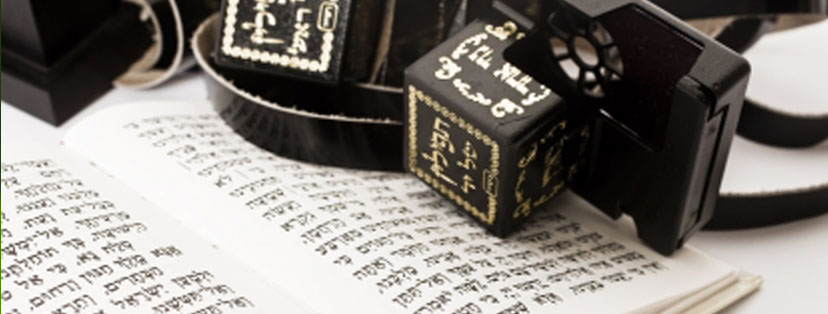
236) This is a whole man, who is called Jacob, Tifferet, the Master of the house, the man of God. It is so because Malchut from Chazeh and above is called “whole,” and Jacob is Malchut’s husband. This is why he is called “a whole man,” for he is her husband and her man. “Whole” comes from the word “wholeness,” for there is the Sium [end] of the knot of the TefillinMalchut, who is called Leah. “Jacob was a whole man” was her man. The upper, inner, hidden and concealed HASHMAL stands in his form and holds all the upper hidden lights, which come out of him. Also, all the camps of Angel Uriel grip those keys of that light that comes out of the HASHMAL.

237) That light consists of two lights of right and left, and they are a single light in it. The first light is white light, which the eye does not govern. This is a light that is hidden for the righteous, as it is written, “Light is sown for the righteous.” The second light is a light that glitters and blazes as a red vision. This is the light of the left, the two lights are incorporated in it as one, and they were one.

238) This Uriel is the great appointee, and all those camps that were with him take that light. Because it consists of two, it is called “twins.” Hence, the sign Gemini [twins] governs in that month, and the Torah was given in it. From here down, the degrees are extended until they merit a name to illuminate the world.

239) All the other signs, which govern on the other months, have neither a mouth nor a tongue. The sign, Gemini, has a mouth and a tongue included together. This is why it is written in the Torah, “And you shall meditate Him day and night.” “Day” corresponds to the tongue, ZA, “Night” corresponds to the mouth, Malchut, all are included together, and the concept of Gemini rises in everything.

240) It is written, “And behold, there were twins in her womb.” “Twins” is written without an Aleph [in Hebrew]. Yet, he did not say “twins” [without an Aleph] because of the two of them, Jacob and Esau, since Esau does not count in relation to the twins. Rather, he said “twins” [without an Aleph] only because of Jacob, since Jacob is the middle line, consisting of two lights, right and left. He is called “twins” [without an Aleph] after those two lights.

It is written, “And behold there were twins [without an Aleph],” meaning Jacob, “In her womb.” This praise, that he was in the womb of that righteous woman, the text praises. And because that wicked man was there, Esau, the Aleph departed from there and it writes “twins” without an Aleph.

241) It is all one. Jacob is Tifferet, middle line, taking two months: Nissan and Iyar, and he is included in the month Sivan, which is the sign Gemini. Because it is included in the month, Sivan, which includes the two months, Nissan and Iyar, right and left, it is called “Gemini” [twins]. It follows that Jacob, who is included in him, takes those two months.

Esau takes two months, Tamuz and Av, and he is not in the middle line, Elul. He is lost because Elul is not his own. Even in the month of Av, only nine days are his and not more. Hence, he is lost and is not found. He is not Gemini, middle line, but is separated and moves to the other side with nil and desolation, as it is written, “The enemy has come to an end in perpetual ruins.”

242) And because Jacob is Gemini, the Torah was given to his sons on the month of Gemini. Also, the Torah is twins, for it is written Torah and oral Torah. It was given on the third month, to the third people, included in three degrees, three patriarchs. The Torah is tripled: it is the Torah, Prophets, Hagiographa, and it is all one.

243) At that time, when Israel arrived at Mount Sinai, the Creator gathered the descendants of Israel, looked at all of them, and found no flaw in the whole of the descendants of Israel. Rather, they were all holy seed, all sons of truth.

244) Then the Creator said to Moses, “Now I wish to give the Torah to Israel, draw them with the love of the patriarchs, the love that I love them, and by the token that I have made for them, you will be My messenger, and tell them these words.” So said the Creator to Moses: “With this, you will be My loyal messenger, to draw Israel after Me.”

(înapoi la pagina ZOHAR CUPRINS / YITRO – click)

error: Content is protected !!