– SURSĂ DE TEXTE FUNDAMENTALE, CĂRŢI, CURSURI, LECŢII, ÎN LIMBA ROMÂNĂ –
Autor: arhiprofesor
Rene Guenon spunea candva ca numai prostii cred ca se pot initia singuri. Intotdeuna ai nevoie de un maestru. Dar cartea ramane o sursa de imbogatire a cunostintelor noastre fara de care nici maestrii nu-si pot desavarsi lucrarea. Biblioteca de arhitectura este pentru un arhitect tot atat de importanta cat experimentarea in concret a trairii fiecarui spatiu arhitectural.
(înapoi la pagina ZOHAR CUPRINS / BESHALACH – click)
61) “And he took six hundred select chariots, and all the other chariots of Egypt with officers over all of them,” corresponding to the number of Israel, as it is written, “About six hundred thousand men on foot, aside from children.” “Select” corresponds to the men in Israel, who are the primary part of Israel. “And all the other chariots of Egypt” are the rest of the chariots, which are subordinate, behind the six hundred, and correspond to the children in Israel, who are not counted among the six hundred thousand men on foot, but are subordinate to them, as it was said, “Aside from children.” And he did all that by the counsel of his sorcerers and wise men.
“With officers over all of them.” He did everything with wisdom, which corresponds to the high degrees, which come as two with one atop them. And they rush, because they were nimble in everything.
62) “And he took six hundred select chariots.” It is written, “The Lord will command over the host of heaven on high and over the kings of the earth on earth.” When the Creator gives governance to the ministers of the nations above, He gives to their peoples below. When He lowers them from their degree above, He lowers their peoples below. “And he took six hundred select chariots” is their appointee, who took them. He drove the chariots of the rest of the nations, meaning that those six hundred chariots were not from Egypt, but from the rest of the nations. And they all fell in the camp of Sisera, meaning the six hundred select chariots, and then all the chariots of Egypt. Because it is written, “And all the chariots of Egypt,” the “Six hundred select chariots” is redundant. However, of course the six hundred select chariots are from the rest of the nations. This is why he later says, “And all the chariots of Egypt.”
63) It is written, “To me, my wife, you resemble my mare among the chariots of Pharaoh.” To Pharaoh’s horses, she seemed like a mare, and this is why they chased her to the sea. While Pharaoh was chasing Israel, he took mares and harnessed them to the chariot first, and harnessed the male horses behind them. Thus, the male horses were heating up for the mares, and the mares refused them and ran quickly. When he approached Israel, he took the mares and placed them in the back, and put the males up front, to harm Israel and to wage war against them because for war, males are stronger than females.
64) Similarly, “And the Lord was walking before them by day,” and then Divinity returned to the rear of Israel, as it is written, “And the angel of God … moved and went behind them.” For this reason, “To me, my wife, you resemble,” since Vav–Hey are Tifferet and Malchut, meaning He and His courthouse. Afterwards, it is written, “And the angel of God,” who is Malchut, “Moved and went behind them.” And Tifferet remained walking before them, to fight the Egyptians. It is written about that, “To me, my wife, you resemble,” from the word Demamah [“stillness.” Damam is the root of both “similar” and “still”], since he positioned her behind Israel, to fight the Egyptians on his own and to obliterate them until not one of them is left.
(înapoi la pagina ZOHAR CUPRINS / BESHALACH – click)
(înapoi la pagina ZOHAR CUPRINS / BESHALACH – click)
43) “For the Leader upon the morning star. A Psalm of David.” How beloved is the Torah before the Creator. Anyone who engages in the Torah is loved above, loved below, and the Creator listens to his words, does not leave him in this world, and does not leave him to the next world.
44) One should engage in Torah day and night, as it is written, “You shall meditate upon it day and night,” and as it is written, “If My covenant is not with you day and night.” During the day, it is the time of work for all. But at night, the time of rest, why is it necessary to engage in Torah? It is so that there will be a complete name in him. As there is no day without a night, and one is incomplete without the other, the Torah must be with the person day and night, and wholeness will be with man day and night.
Day is ZA and night is the Nukva. When one engages in the Torah day and night, he unites ZA and Nukva, and this is the entire wholeness, as it is written, “And there was evening and there was morning, one day.”
45) Night is primarily from midnight onward. And even though the first half of the night is included in the night, at midnight, the Creator comes to the Garden of Eden to play with the righteous who are there, and then one must rise and engage in Torah.
46) The Creator and all the righteous in the Garden of Eden, all listen to His voice. It is written, “You who sit in the gardens, friends listen to your voice; let me hear it.” “You who sit in the gardens” is the assembly of Israel, Malchut. At night, she praises the Creator with the praise of the Torah. Happy is he who partakes with her in praising the Creator in the praise of the Torah.
47) When the morning comes, the assembly of Israel, Malchut, comes and plays with the Creator, and He gives her the scepter of Hesed [grace/mercy]. But not only to her, but to her and to all those who partake with her. One who engages in Torah at night, the Creator draws to him a thread of Hesed during the day. This is why Malchut is called “The morning star,” for she praises the Creator at night with the praise of the Torah.
48) When the morning should rise, the light darkens and grows black, and the blackness is present. Then a woman clings to her Husband, which is the third watch, when a woman tells with her husband, meaning ZON, to tell with Him, and she comes to His palace.
49) Afterwards, when the sun should set, the night shines and comes and takes the sun. Then, all the gates close, donkeys bray, and dogs bark. When half the night is through, the King begins to rise and the queen, Malchut, begins to sing. The King, ZA, comes and knocks on the palace’s gate and says, “Open for me, my sister, my wife.” And then He plays with the souls of the righteous.
50) Happy is he who has awakened at that time with words of Torah. For this reason, all the children of the queen’s palace must rise at that time and praise the King. All praise before Him and the praise rises from this world, which is far from Him, and this is more favorable to the Creator than anything.
51) When the night departs and the morning comes and dawns, the King and queen are in joy, in Zivug, and He gives her presents, as well as to all the dwellers of the palace. Happy is he who is numbered among the dwellers of the palace.
52) “And the Lord was walking before them … by day.” “And the Lord” refers to the Creator and His courthouse, the Malchut, since the Vav of “And the Lord” adds the Malchut. Divinity journeys with the patriarchs, since “Walking before them … by day” is Abraham, “In a pillar of cloud” is Isaac, “To guide them on the way” is Jacob, and “In a pillar of fire by night to give them light” is King David.
53) And they are all the high, holy Merkava [assembly/chariot]. Abraham, Isaac, and Jacob are HGT, the three legs of the throne, and King David is the fourth leg, so Israel will go in wholeness of everything and so the fathers will see their redemption. Why did they walk by day and by night, as people on the run? After all, the Creator was keeping them and they were not afraid, so why did they go as escapees? It was so there would be the wholeness of everything in them, since there is wholeness only in day and night. This is so because day is the quality of ZA, and night is the quality of Nukva, and all the wholeness is upon their joining together, as it is written, “And there was evening and there was morning one day.”
54) “And the Lord was walking before them in a pillar of cloud by day” is Abraham, Hesed, “And in a pillar of fire by night” is Isaac, Gevura. And where is Jacob, Tifferet? He is said in the first word, and there is where he is, as it is written, “And the Lord,” who is Tifferet and Malchut, and Jacob is Tifferet.
55) “And in a pillar of fire by night to give them light,” to light in the day, in Hesed, and in the night, in Gevura, so that the Egyptians would chase them with their carriages and horsemen, to honor the name of the Creator, so they will drown and not one of them will remain. This is why he needed the quality of Gevura, to walk day and night.
The illuminating mirror, ZA, is day. The mirror that does not illuminate is Malchut, night. Also, to lure the Egyptians into saying that it is chance, and not the Creator who took them out. This is why they walked day and night, as escapees.
56) Happy are Israel, whom the Creator brought out of Egypt to be His lot and His inheritance. From the perspective of the Yovel, Bina, there is freedom for Israel, and in the future, it is written, “On that day, a great horn will be blown.”
57) And because of the Yovel, they were detained fifty years after the exodus from Egypt to receive the Torah and to draw nearer to Mount Sinai. This is so because there are fifty gates in the Yovel, and to be corrected in them, they needed fifty days. And since they were walking by day, they walked by night, as well, so that everything would be one day and there would be no separation between day and night, which are ZON.
58) Moreover, they all walked peacefully and willingly to unite day and night, which are ZON. On the day they received the Torah, there were fifty complete days and nights, as it should be, since there is no day without a night and there is no night without a day. This is so because ZA has no wholeness without the Malchut, and Malchut has no wholeness without ZA.
Also, night and day are called “One day,” as it is written, “And there was evening and there was morning, one day.” And since they walked fifty complete days, all those fifty days of the Yovel were on them, being the fifty gates of Bina. And then they were given the Torah from the side of Yovel, and this is why they were walking day and night.
59) “And it came to pass that Isaac was old and his eyes grew too dim to see.” One who loves wickedness, his eyes grow dim. The night, Malchut, was included in Isaac, who is Gevura, and the night is not clear. Hence, “His eyes grew too dim to see.” It is all one because the inclusion of the night in Isaac is the same issue as the love of Isaac for Esau.
60) “And the king of Egypt was told that the people had fled.” Who told him? His wise men and his sorcerers gathered unto him and alerted him that the people had fled. Why did they say that? They saw with their wisdom that Israel were walking by day and by night. They said, “They must be running.” Moreover, they saw that they were not walking in a straight path, as it is written, “Turn back and camp before Pi Hahirot.” They alerted him of that, as well, and this is why he chased them.
(înapoi la pagina ZOHAR CUPRINS / BESHALACH – click)
(înapoi la pagina ZOHAR CUPRINS / BESHALACH – click)
30) “And God led the people around by the way of the desert,” to correct the way to His place, to make the tearing of the Red Sea. Otherwise, it would have been enough to guide them through the desert and not through the Red Sea.
What is the difference for which it is written, “And God led the people around,” and when Israel were in Egypt, it said, “Send my people away,” as it is written, “For if you refuse to send my people away.” “My son, My firstborn, Israel.” Although at that time they were not circumcised and were properly tied to the Creator, while here when they were circumcised and did the Passover and were tied to him, He calls them, “the people” and not “My people.”
31) Because the mixed multitude clung to them and mingled with them, He called them only “the people,” and not “My people,” as it is written, “And the Lord smote the people.” “And the people assembled about Aaron.” “And the people saw that Moses was delayed.” When Israel were in a poor state, He called them only “people” and not “My people.”
33) It is written, “Do not fret because of evildoers.” Evildoers are those who cheer for themselves and for those who bond with them. “Do not fret because of evildoers” means stay away from evildoers, do not befriend them and associate with them, so his deeds will not harm you and you will not be caught by his sins.
34) Were it not for the mixed multitude that connected to Israel, the deed with the calf would not have happened and those of Israel who died would not have died, and they would not have caused Israel all that they had caused. This deed and this iniquity caused the exile for Israel.
35) The Creator wanted Israel to be, upon the reception of the Torah, as the high angels, to make them free of everything, free of death, and liberated from the enslavement of the rest of the people, as it is written, “Harut [engraved] on the tablets,” do not pronounce it Harut, with a Het with Kamatz [חָ], but Herut [freedom],” with a Het with Tzereh [חֵ].
36) When that deed was done, it caused death; it caused the enslavement of the Malchuts; it caused the shattering of the first tablets, and caused several thousand of Israel to die. All of it was because of the bonding with the mixed multitude that bonded with them.
37) Here, too, because of the mixed multitude, they were not called “the children of Israel,” or “Israel,” or “My people,” but simply, “the people.” When they rose from Egypt and the mixed multitude had not bonded with them, He called them “the children of Israel.” When the mixed multitude bonded with them, He called them “the people.”
38) It is written, “For the Egyptians whom you have seen today, you will never see them again forever.” Thus, were they seeing the mixed multitude who were in Egypt each day? However, it writes “mixed multitude” and not “Egypt,” since there were several other nations in Egypt, and they constituted the mixed multitude. They were all circumcised, and since they were circumcised, they were not called “Egypt.”
39) And by the word of Moses they accepted them, as it is written, “Go down at once, for your people … have corrupted themselves. They have quickly turned aside from the way which I commanded them.” It writes, “Commanded them,” meaning that Moses commanded them to accept the mixed multitude.
“And the children of Israel went up armed from the land of Egypt,” meaning that Israel were one in five [the word “armed” can relate to the word “five” in Hebrew]. Rabbi Yosi says, “Israel were five, and one from the mixed multitude.” Rabbi Yehuda says, “The mixed multitude were one in fifty.”
40) Because the Yovel [jubilee/fiftieth anniversary], Bina, raised them from the land of Egypt, it is written, “And the children of Israel went up armed from the land of Egypt.” Bina is called Yovel, and there are fifty gates in her. Were it not for the Yovel, they would not have risen. For this reason, they were detained fifty days to receive the Torah, and from that place, from the Yovel, the Torah came out and was given. For this reason, “Armed” is wanting [written without vowels, called “wanting text” in Hebrew]. That is, if it were to mean “armed,” it should have said “armed” with a Vav [with the vowel, called “full text”]. However, it implies to the number fifty, Yovel, that it is for this reason that Israel rose from Egypt.
41) “And Moses took the bones of Joseph,” since he was the first to go down to exile, and he was the token of the redemption.
42) Happy is Moses, for Israel were engaged in borrowing silver from Egypt, and Moses was engaged in Joseph’s oath. Some say that his ark was in the Nile and he raised it through the holy Name. Moses also said, “Joseph, it is time for Israel’s redemption.” And he said, “Let an ox rise,’ and it rose. Joseph is called “an ox,” as it is written, “As the firstborn of his ox, majesty is his.”
Some say that he was among the kings of Egypt and rose from there. And some say that he was put in the Nile so they will not do idol worship, and Serach, daughter of Asher—who was alive during the act—showed Moses his place.
(înapoi la pagina ZOHAR CUPRINS / BESHALACH – click)
(înapoi la pagina ZOHAR CUPRINS / BESHALACH – click)
28) “And Pharaoh arose at night, he, and all his servants, and all of Egypt; and there was a great cry in Egypt; for there was not a house where there was not one dead.” This is the high vengeance that the Creator avenged Egypt.
There were three deaths:
1) That the firstborn in Egypt did, killing all those that they found.
2) That the Creator killed at midnight.
3) When Pharaoh saw the death in his home, in his sons, and in his servants, he rose, rushed himself and killed the ministers, the governors, and all those who advised him to refuse to send the people away.
The Torah testifies about him that he rose in the actual night, in the Dinim [judgments] of the Nukva, who is called “night.” As the night, Nukva, killed the firstborn and avenged, Pharaoh rose in the land of Egypt and killed and avenged his rulers, ministers, officers, and every kind of minister, as it is written, “And Pharaoh arose at night,” he rose to kill and to destroy.
29) It is the conduct of the dog that when it is stricken with a stone, it comes and bites another. So did Pharaoh. Afterwards, he would walk through the streets and declare saying, “Rise up and get out from within my people. You have killed all the town’s people, you have killed the governors, the ministers, and my entire household.” It is written about it, “And he called unto Moses and Aaron at night,” since everything was through you, “And bless me, too,” meaning do not kill me. Afterwards, he himself escorted them out of the land, as it is written, “And it came to pass when Pharaoh sent.”
(înapoi la pagina ZOHAR CUPRINS / BESHALACH – click)
(înapoi la pagina ZOHAR CUPRINS / BESHALACH – click)
1) “A prayer of Habakkuk the prophet over whims.” What is the difference for which it writes “A prayer of Habakkuk the prophet” more than all the other prophets in the world? It is not written about them, “A prayer of Isaiah the prophet” or “Of Jeremiah” or Ezekiel or Hosea or any other prophet in the world.
2) Elisha was awarded in this world what no other prophet was awarded, other than Moses. It is written, “And there came a day, and Elisha passed over to Shunem, and there was a great woman there.” She was great in actions, the whole household was praised because of her, and she is the landlady. And because her husband was not at home, to be the prominent one in the house, he was not mentioned, but she was.
3) “There was a great woman there” means she is greater than all other women in the world. This is so because when the rest of the women in the world see a guest, they regret it and push him, much less spend money on him. But this one was delighted with a guest, spending money on him. When she saw Elisha she was delighted about him. Hence, all the praise is for the woman, since the guest in the house is the woman’s. This is why it is written, “And there was a great woman there,” greater than all other women.
4) “And she said to her husband, ‘Behold now, I know that this is a holy man of God.’” How did she know that Elisha was a holy man? She put a white sheet in his bed and never saw nocturnal emission on it. Also, there was never a fly on his table.
5) Why is it different, that it says that she did not see nocturnal emission in him? After all, many people in the world do not see nocturnal emission. Also, why does it say, “Behold now, I know,” since there was never a fly on his table? After all, all those who saw him eating at his table knew like her.
6) Yet, “Behold now, I know” means she knew and no other, since she would fix his bed when he laid in it at night and when he rose in the morning. And what was said, that she put a white sheet on his bed, so it was, and by that she knew, since usually, when one rises in the morning, the sheet he slept in has a foul smell. But while she lifted the sheet from the bed of this one, it would emit such fragrances as in the Garden of Eden. She said, “If he were not holy and his Master’s holiness were not on him, a holy scent would not come up from the sheet.”
7) For this reason, he should retire from the house, since one cannot be so careful in the house. However, she said, “Let us make a small attic for him and put there a bed, a table, a chair, and a lamp,” which are the correction of the assembly of Israel, Malchut, who is called “an attic,” as it is written, “And Hezekiah turned his face to the wall.”
8) A bed, a table, a chair, and a lamp. The order of the writing is not as the order of the use, since a chair is required first, then a table, then a lamp, and then a bed. Why did she say “bed” first? It is because she was more fond of the bed than of everything—and one puts what one is fond of first—since she saw higher sanctity in the bed than in all the others.
9) “One day he came there.” What is that day? It is the good day of Rosh Hashanah, in which the barren women of the world are counted and the people of the world are counted. He called Shunammite and said, “Behold, you have been careful for us with all this care. For this reason, I must scrutinize this day in the Dinim [judgments] of the world, since the Creator judges the world on this day. And because I have retired alone in this place, in the attic you have made for me, I must regard the Dinim of the world, since one who parts alone on judgment day, even if he is worthy, he is caught first.
10) “And what can be done for you? Would you be spoken for to the king or to the captain of the army?” Is this needed for a woman, who does not go out and does not go to the king’s palace? However, this day caused all the people in the world to be placed in Din [judgment], and on that day, the Creator is called “a King,” a “King of Judgment.” He told her, “If it is the high King that you need, to atone your actions, I will speak and ask on your behalf.”
11) “And she said, ‘I dwell among my own people.’” What is she saying? When the Din hangs in the world, one should not part from the collective by himself. He will not be mentioned above and he will not be known alone. This is so because when the Din hangs in the world, those who are known and are inscribed alone, though they are righteous, they are caught first. Hence, one must never retire from the people because the Creator’s mercies are always on the whole people together. This is why she said, “I dwell among my own people,” and I do not wish to part from them, as I have been doing thus far.
12) “And Gehazi said, ‘But she has no son.’” Elisha said to her, “Certainly, the time is right for you to be delivered with a son, since the day causes.” On Rosh Hashanah [Hebrew New Year’s Day], the barren are counted. “And he said, ‘At this time next year you will embrace a son’ … and the woman conceived and bore a son.” Afterwards, he died. Why did he die? It was because the son was given to her and not to her husband, and he was tied from the place of the female, and one who is tied to a female, death is his fate. How do we know that he was given to her? Because it is written, “You will embrace a son.”
13) It is written about Abraham, “I will surely return unto you,” and not to her. Indeed, to you, he was tied to you and not to the female, since one who comes from the side of the female, death catches up with him.
“She went up and laid him on the bed of the man of God,” since she saw higher Kedusha [holiness] there, more than in all of them.
14) “And said unto her, ‘Are you well? Is your man well?’” This means that she was the lady of the house, since he greeted her before he greeted her husband. Moreover, she followed him, the prophet, and not her husband. “And Gehazi came near to push her.”
15) “And the man of God said, ‘Let her alone, for her soul is bitter within her.’” What is the difference for which here the text calls him “man of God,” and when he was in the city it called him Elisha? Here he is indeed the man of God, for here is his place, and not in the city, and not at a time when the sons of the prophets were before him. This is why he was not called “man of God,” but Elisha.
16) “And the Lord has hidden it from me and has not told me.” It is written, “And the Lord showered Sodom.” “The Lord” means He and His courthouse. This is the courthouse below, Malchut. It is written, “And [he] has not told me.” What is the reason that Elisha did not know? The Creator said, “How will I kill this one? If I tell him, he will not die because it is his gift.” And he prayed for him and did not let him die. But he should die, of course, since we learned that it is written, “You will embrace a son,” so he was tied to the place of the female, and death is caused from the place of the female. This is why he did not tell him.
17) “And he said to Gehazi, ‘Gird up your loins … and lay my staff on the lad’s face,’” meaning that the miracle had parted from him because he was not worthy of it. “And the lad’s mother said, ‘As the Lord lives and as you live, I will not leave you.’” Why did she so plead him to go himself when Gehazi was going? She knew the ways of that wicked one Gehazi, that he is not worthy of a miracle being executed by him.
18) “And put his mouth on his mouth and his eyes on his eyes and his hands on his hands, and he stretched himself on him; and the flesh of the child became warm.” Why did Elisha do so? Elisha looked and knew that this place of the female to which he was now tied is what caused him to die. Hence, “He put his mouth on his mouth and his eyes on his eyes to tie him to another place, a high one, the place of the male, where there is life.”
19) But he could not uproot him from the place of the female to which he was tied from the beginning, until he evoked another spirit from above and was tied to that high place, and brought his soul back to him. Had he not done so, he would never have been revived. “And the lad sneezed seven times.” It did not amount to more than seven, which correspond to the seventy years of his life, as it is written, “The days of our years in them are seventy.”
20) This is Habakkuk the prophet, of whom it is written, “You will embrace a son.” Habakkuk is from the word Hibuk [embrace]. Thus, he should have been called Havuk [embraced]; why is he called Habakkuk, which means two embraces? One embrace is of his mother, and one embrace is of Elisha, who embraced him when he revived him.
Another interpretation: He had two embraces—from the side of his mother and from the side of the prophet. One embrace from the place on which he was initially dependent, the place of the female, and another embrace, which elevated him to the upper degrees, to the place of the male. Those two embraces are included in the embrace of his mother and the embrace of the prophet. This is why he was called Habakkuk, which means two Hibukim [embraces].
21) “A prayer of Habakkuk the prophet over whims.” What is the prayer that he says here? It is the place to which he was tied in the beginning, from his mother’s side. It is the prayer of the hand, the NukvadeZA. “For whims” means that on that day, to which he was tied, the whims of the world were hung before the Creator. It was the beginning of the year, and Gevura, the Nukva, was governing. This is why that prayer, the Nukva, was to him.
22) “A prayer of Habakkuk the prophet” means “for Habakkuk,” for the two Hibukim [embraces] that the prophet made for him, as it is written, “Lord, I have heard the report of You and I am afraid.” When the spirit of the prophet awakened upon him—meaning the male, during his embrace over the spirit of the female, which is a prayer that he had from his mother’s embrace—he feared and was startled lest the Dinim of the Nukva would return to him. This is why he said, “Lord, I have heard the report of You and I am afraid.” It is like the allegory that one who was bitten by a dog is startled by its voice.
23) “O Lord, revive Your work in the midst of the years.” Who is “Your work”? He said about himself that he is His work. “Revive … in the midst of the years” means give me life for Your work among the upper years, which are the Sefirot. Another interpretation: “Revive him, so he will not die as in the beginning.”
24) “For whims,” as it is written, “A whim of David,” which is singing and praising. This is so because there were various praises before the prophet, with which to instill the spirit of prophecy over them. It is written about it, “And you will meet a group of prophets coming down from the stage, tambourine and flute before them.” And it is written, “And now bring me a minstrel.” It is all the more so with Habakkuk, who needed contentment more than anyone, to sweeten that place, the Nukva, to which he was tied in the beginning, to extend upon him the spirit of prophecy. It is similar with all the prophets, except Moses, who surpassed all the prophets in the world, happy is he.
25) When Israel came out of Egypt, their spirit was broken within them, and they heard the praises of the angels, but they could not rejoice. When all the camps of angels and the Merkavot [assemblies/chariots] went out with Divinity, they all raised their voices in praise and songs before the Creator, and the Creator awakened the spirit of Israel and they heard the praises of the angels, and their spirit stood within them, for it did not leave them.
26) When Israel went out of Egypt, they tasted the taste of death, and the Creator healed them, as it is written, “And the Lord walks before them by day.” All the roads smelled of healing, and they came to their bodies and they were healed. And from the voice of the praises that they heard, they were glad and their spirit was made content.
27) Pharaoh and all of his men followed Israel, accompanying them until they left the land of Egypt. Similarly, all the upper ministers, appointed over them and over the rest of the peoples, accompanied Divinity and Israel until they parked in Etam, at the end of the desert, as it is written, “And when Pharaoh had sent the people, God did not lead them by the way of the land of the Philistines, for it was near.” “For it was near” means “For that oath that Abimelech would adjure the fathers is near,” for that good that the Philistines did to the fathers, as it is written, “As the grace that I have done with you, you shall do with me and with the land in which you have lived.”
(înapoi la pagina ZOHAR CUPRINS / BESHALACH – click)
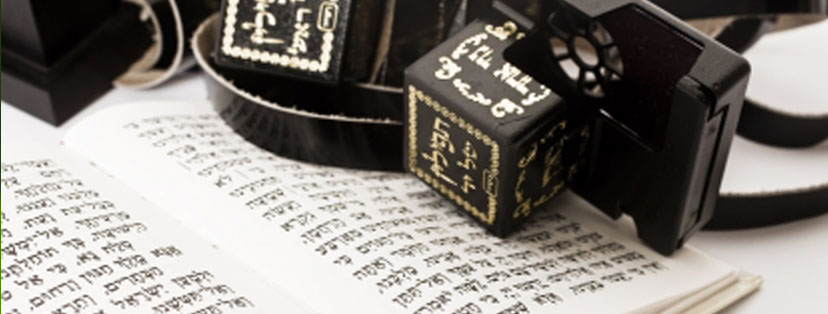
231) This commandment is called by a different name. It is not called, “a commandment,” but, “Sanctity.” And these are the Tefillin, the Tefillin of the hand and the Tefillin of the head, which are the correction of grandeur and beauty of the upper visions. This is why they are called Totafot [frontlets], as it is written, “Israel, in whom I will show My glory.”
232) It is written, “When Israel was a youth I loved him.” This is a small Israel, ZA in Mochin deKatnut. And it is written, “Hear O Israel,” which is Ysrael Saba, Bina in Mochin deGadlut, which is the beauty of the visions, above, in Bina, and below, in Malchut. He explains how the Mochin of Ysrael Saba come below. He says, Joseph, YesoddeZA, which carries the Masach deHirik in the middle line, rises to Bina and crowns there in two visions, white and red, in the two lines of Bina, through its sentencing in the two lines of Bina, as in “Three come out of one; one stands in the three.”
Before he rose to Bina, he was called, “a youth.” And after he was crowned in Mochin deBina, he was called, “a righteous.” How beautiful within him are the visions to see? This is the meaning of, “Now Joseph was handsome in form and appearance.” He is beautiful on two sides, right and left, on two degrees, Hochma and Hassadim, in two visions, white and red, above in Bina and below in ZON. This is so because after he decides in Bina, he descends and decides in ZON.
233) “You shall do what is right and good.” “Right” is the Tefillin of the hand, Malchut, to extend for her in the Tefillin of the head, ZA, so they may unite as one. And the Tefillin of the hand is placed before the Tefillin of the head, but there must not be separation between them.
234) One who is crowned with Tefillin stands like the Upper One, in the two interpretations that we said about Joseph, who is called, “Youth,” and is called, “Righteous,” as in, “faithful servant” and as in, “an only son.” These are the Tefillin of the hand—“Youth” and, “faithful servant”—and the Tefillin of the head—“Righteous,” and, “Only Son.” And both are one collective.
235) The four portions in the Tefillin are in four compartments in the Tefillin of the head. And as they are four houses in the Tefillin of the head, there are all in one compartment in the Tefillin of the hand. This is because the Tefillin of the hand, which is Malchut, has nothing of her own, except what she receives from above, from ZA. And since she receives them at once, she has only one compartment. But ZA receives them one at a time, hence they are in four compartments.
This is the meaning of the words, “All the rivers flow into the sea.” The rivers, which are the abundance from ZA, flow to Malchut, which is called, “a sea.” And because she receives them from above, from Bina, she is called, “prayer,” and she is sanctified by their holiness, and she is called, “holy,” since Mochin deBina is called, “holy,” and it is called “prayer.” Then, Malchut is called, “the complete kingdom of heaven.”
236) We have already explained the four portions. But the first portion, “Sanctify to Me every firstborn,” which is Hochma, is a sublime secret that contains all four houses, HBTM, as in, the upper light, Hochma that emerges from absence, Keter, called “absence.” This is so because each of the four portions, HBTM, contains them all, and in each there is HBTM.
237) And all of these four, HBTM, are implied here in the first portion, “Sanctify.” This is so because “Sanctify” is the high sanctity, the upper Hochma, called “sanctity,” from which everything is sanctified, as in, the high concealment, called “holiness.” “To Me” is Bina, the Upper World, the inner palace. “Every” is Hesed, both above and below, Tifferet from the discernment of Hesed. “Firstborn” is the firstborn son, as it is written, “Israel is My son, My firstborn,” Tifferet.
And this firstborn includes all the sides and all the visions, since it includes Malchut with it, too. Thus, the text includes all four, HBTM, as in, the high Hochma, which is the first portion. But this is in general, to know that all is included in it. But in particular, each corresponds to a specific Sefira, and this is the first portion, which includes the rest of the portions.
238) The second portion, “And it shall be when the Lord shall bring you,” is Bina. In this portion, there is the exodus from Egypt, which came from the side of Yovel, which is Bina. Hence, its beginning is, “And it shall be,” since this word is in the Yovel [in Hebrew this phrase is one word]. Hence its name, “And it shall be,” for there is no, “And it shall be,” in future tense [in Hebrew]. But in this place, Bina, which means that it is intended to be drawn below and to light up the illuminations, which are ZON, and to be in the lower degree, which is Malchut, because she shines in a concealed way, she is not openly called by the name, “And it shall be,” but is given for the wise to know. Hence, the Bina is written in the holy name in the word, “And it shall be.”
Even though the Mochin deHochma appear in Bina, as in, Bina that returns to being Hochma, they are nonetheless hidden in Bina herself and do not shine. But they extend from Bina to ZA, and from ZA to Malchut, and appear and shine in Malchut. Hence, Bina is named after the future, as in, “will be.” And also, “And it shall be,” for she does not shine in her place, but is destined to appear in the place of Malchut.
239) The third portion, which is, “Hear, O Israel,” is the right, called, “upper Hesed.” This means that the Daat, the middle line that determines between the two lines Hochma and Bina, divides into right and left, where the right in it is the upper Hesed, Tifferet, and the left in it is Dinim [judgments], Malchut. Also, the third portion corresponds to the Hesed in Daat, which is Tifferet, and the fourth portion corresponds to the Gevura in Daat, which is Malchut.
Daat unites them all into four sides—three lines and the Malchut that receives them—and the Creator arranges in it the order of the whole world, meaning that the whole world persists through it. This is what expands to all sides, even into the low chasms, as in Daat that spreads to the lower ones.
In this, the Creator created the world, when He wrapped in a cloak of light. Also, this is what unites the uniqueness, since it is the middle line that unites the two lines, right and left, which are Hochma and Bina. For this reason, ”Hear” is near the, “And it shall be,” since, “And it shall be” is Bina, and “Hear” is the Daat that decides between Hochma and Bina.
240) The unification of every day is a unification to know and to implement one’s intention. The unification of every day is, “Hear, O Israel, the Lord our God, the Lord,” and they are all one. This is why He is called, “One.” But they are three names, so how are they one?
241) However, it is known in a vision of the spirit of holiness, that the three lines implied in, “The Lord our God, The Lord,” are one. This is the meaning of the voice that is heard, for a voice is singular. And there are three discernments in it, fire, wind, and water, and all are one, as in, the voice. Here too, “The Lord our God, the Lord” are one; they are three discernments and they are one.
ZA is Ruach and the middle line. When it rises to Bina, called Awzen [ear], and decides between the two lines, right and left, which are there, called “water” and “fire,” the two lines—water and fire—unite in him, and it is called, “the voice that is heard.” Through it, the lights of Bina open and are heard outside, meaning they spread outwardly, since it contains all three lines within it, called, “fire,” “wind,” and “water.”
Also, these three lines cannot shine without each other, but all at once, since the right line without the left is missing GAR, and the left without the right is Hochma without Hassadim, which cannot shine. And without the middle line, the left does not unite with the right. Thus, the three lines are interdependent and shine only all at once.
And as in the voice, all three become one. If one of them had been missing, the voice would not have been heard. Similarly, Aba is considered the right line, Ima, the left line, and ZA rises and decides between them, as in the middle line. This is why it writes here, too, “The Lord our God, the Lord is One,” since, “the Lord” is Aba and right line, and “our God” is Ima and left line. The Lord is ZA, middle line, which decides between Aba and Ima. And since they are three lines, they do not shine without each other, but rather all at once.
242) This is the voice, which one makes, as in unification, to implement one’s aim on uniting all the degrees from Ein Sof to the end of all, in uniting this voice, which he does in these three lines, which are one. And this is the unification in each day, which appears in the spirit of holiness.
243) Several manners of unification were said, and they are all true. One who makes this unification does good, and one who makes that unification does good. But this unification, which we evoke from below, in the voice, which is one, is the scrutiny of hearing in general, and contains within it all three lines, as in, “The Lord, our God, the Lord.” But besides that, it is particular, meaning that the portion of, “Hear” is only one element, ZA, the right of Daat.
244) The fourth portion is the harsh Din, Malchut, the left of Daat, as it is written, “Beware,” meaning Din [judgment]. These are the four portions of the Tefillin of the head, which are in four houses. The Tefillin of the hand are four portions, too, but they are in one house, and we already commented that they are considered one.
245) The knot of the Tefillin of the head is the shape of [the letter] Dalet. It is written about that, “And you will see My back.” Hence, the knot is in the back, and there everything connects into one knot, because the knot implies Mochin deAchoraim [posterior], which extend from the left line before it is connected with the right, which is Hochma without Hassadim, which cannot shine.
However, in Mochin deGadlut, the left and the right connect through the middle line, and the Hochma in it clothes in the Hassadim in the right. Thus, the Hochma of the left line, which was in Achoraim, can now shine to the lower ones, since she had been clothed in Hassadim, as it is written, “And you will see My back.” This is so because seeing is Hochma, whose source is in the left line, in the Achoraim, hence the knot is in the shape of Dalet, from the words Dalah [poor] and Aniah [meager], since she was poor and meager before she clothed in Hassadim.
246) When Malchut lets the Tefillin of the hand connect to ZA, there is another knot—of the Tefillin of the hand—which is in the shape of [the letter] Yod, the holy covenant, the Yesod to which Malchut connects. Happy are those of Israel who know that secret. And one should put them every day, to be the sublime form. It is written about it, “And all the peoples of the earth shall see that the name of the Lord is called upon you; and they shall fear you. Blessed is the Lord forever, Amen and Amen.
230) “And every firstborn of an ass.” It is a commandment to redeem the firstborn of an ass, and to decapitate the firstborn of an ass, if it is not redeemed, as it is written, “But if you do not redeem it, then you shall behead it.” This is the meaning of the evil inclination being able to repent and to later return to being good inclination, as it is written, “I will make him a helpmate against him.” If he is rewarded, “help”; if not rewarded, “against him.” This is because it was said of these forms, a lamb and an ass, “Every firstborn of an ass you shall redeem with a lamb,” meaning that if he is rewarded with repenting, although he is an ass, ignorant, he will be redeemed from the exile with a lamb, where a lamb is the disperse of Israel. And if he does not repent, “You shall behead him,” since he makes himself stiff-necked, and they are destined to be blotted out from the book of life. It is said about them, “Whoever has sinned against Me, I will blot him out of My book.”
214) This is the reason why he said, “‘To whom then will you liken Me, that I would be his equal?’ says the Holy One.” There is no creature that will be equal to Me. And even though I have created it in the image of My letters, I can obliterate that form and remake it several times, and there is no other God over Me that can obliterate My form. This is why it is written, “For their rock is not as our Rock, even our enemies themselves being judges.”
215) And should one say that it is written, “For you saw no manner of image,” so how can we specify letters and names in Him? He will reply to him that this image that I have seen is as it is written, “And he beholds the image of the Lord,” which means the Sefira of Malchut, and not any other image that He created and formed in the letters. This is so because the Sefira of Malchut is the root of all the receivers and the Kelim [vessels], but not the first nine Sefirot, which are devoid of any form. And this is why He said, “To whom then will you liken Me, that I would be his equal?” and, “To whom then will you liken God? Or what likeness will you compare with Him?”
216) And even this image in Malchut is not in the place of Malchut, but only when the light of Malchut descends and expands to the creatures, to rule over them. Then it appears to each of them, according to their image, and vision, and imagination—with respect to the receivers, not with respect to Malchut herself—as it is written, “And through the prophets I gave parables.”
217) This is why the Creator tells them, “Although I appear to you in your forms, in vision and imagination, still, To whom then will you liken Me, that I would be his equal?” After all, before the Creator created an image in the world, and before He drew a form, the Creator was alone in the world, shapeless and imageless. And one who attains Him prior to the degree of Beria, which is Bina, still outside of any form, is forbidden to make a form and likeness in the world, not in the letter Hey, not in the letter Yod, or even to call Him by the Holy Name, or by any letter or point. It is written, “For you saw no manner of image,” meaning you did not see anything that has an image or similitude.
218) But after He had made that form of the chariot of the upper Adam, He descended and clothed there, and He is named in it in the shape of the four letters HaVaYaH, the ten Sefirot KHBTM, so He will be attained through his qualities, which are the Sefirot, in each and every quality. And He is called, “God, Oh God, I will be the Lord of Hosts,” so he will be known in each quality, how He leads the world with mercy and with judgment, according to people’s actions. And had He not spread His light over all creations, how would they know Him, and how would, “The whole earth is full of His glory” come true?
219) Woe unto one who resembles Him to any quality, and even one of His qualities, and all the more so to people, which are inferior Kelim. But the imagination that we imagine is according to His dominion over that quality, and even according to His dominion over all creations. And there is no similitude above that quality. And when His dominion departs one, one has no measure, no likeness, and no form of that quality.
220) Such as the sea. There is neither perception nor form in the waters of the sea that come out of Him. But the expansion of the waters of the sea over the Kli, which is the earth, creates their image. And we can calculate there: The source of the sea is one; the spring that emerges from it—according to its expansion in the Kli as a circle, which is Yod—makes two forms, for the source is one and the spring that emerges from it is two. Also, the source is the Keter and the spring is the Hochma.
221) Afterwards, He made a big Kli, similar to one who digs a deep hole, and it was filled with the water that comes out of the spring. And this Kli is called, “the sea.” This is the third Kli, Bina.
Also, that Kli is divided into seven streams. As with long Kelim [vessels], the water spread from the sea to the seven streams. Thus, the source, the spring, the sea, and the seven streams make ten. And if the craftsman were to break these tools that He had corrected, the waters would return to the source and the broken Kelim would remain dry, without water.
222) Thus, the Cause of Causes made ten Sefirot. He called the Keter, source, and in it, there is no end to the springing of His light. For this reason, He called Himself, Ein Sof [No End]. And He has no shape and form, and there is no tool by which to attain Him there, and to know anything at all about Him. This is why they said, “Do not interpret what you cannot perceive; do not inquire into what is covered from you.”
223) Afterwards, He made a small Kli, which is the Yod, and it was filled by it, by the source. He called it, “a wellspring,” Hochma [wisdom]. And He called Himself within it, “Wise.” And he called that KliHochma. Subsequently, He made a big Kli and called it, “Sea,” and called it, Bina [understanding]. And He called Himself within it Mevin [the one who understands].
224) Wise of his own and understanding of his own. This is so because Hochma is not called Hochma with respect to itself, but because of this wise, who fills her with His springing. And she is not called Bina with respect to herself, but after that Understanding One, who fills her with Him. If He parted her, she would remain dry, as it is written, “As water evaporates from the sea, and a river becomes parched and dried up.”
225) Afterwards, He struck it into seven streams. He made seven precious Kelim and called them, “Greatness,” meaning Hesed, Gevura, Tifferet, Netzah, Hod, Yesod, Malchut. And in greatness, He called Himself, “Great,” and Hasid [kind/benevolent], Gibor [mighty] in Gevura, Mefoar [glorified] in Tifferet, and Baal Nitzahon [triumphant] in the wars in NetzahNetzahim [all eternity]. In Hod, He called Himself, “The Magnificence of Our Creator,” and in Yesod, He called Himself, “Righteous.” And Yesod, everything is near it, all the Kelim and all the worlds. And in Malchut, He called Himself, Melech [King]. And His is the greatness, the Gevura, the Tifferet, the Netzah, and the Hod, for all that is in heaven is righteous, Yesod, and His is the kingdom, which is Malchut.
226) Everything is under His authority. Whether to remove Kelim and add springs in them, or to subtract, goes by His will for them. And there is no God that will add or subtract in Him. Hence, it is about the Kelim from the world of Atzilut.
227) Afterwards, He made servants to these Kelim de [of] Atzilut—a chair with four pillars and six steps to the chair, thus, they are ten. And altogether, it is called, “A Throne,” which is the world of Beria. It is like a cup of blessing in which ten things are corrected, since the Torah was given in the ten commandments because the world, which is the act of creation, was created in ten utterances.
228) And He established parties to serve the throne. Those are angels, serpents, animals, Ofanim [wheels], Hashmalim [electricity], Elim [gods], Elohim [God], sons of Elohim, persons. And He made servants to these—Sam’el with all his parties, which are as clouds, to ride them and to descend to the earth. And they are as horses for them, for the angels.
229) Clouds are called, “vehicle,” as it is written, “Behold, the Lord is riding on a swift cloud and is about to come to Egypt.” This is Egypt’s appointee, called, “Swift Cloud.” And as soon as they saw that their god, which is their appointee, is as a horse under the Creator’s chariot, promptly, “The idols of Egypt will tremble at His presence, And the heart of the Egyptians will melt.” They moved from their faith and their hearts melted like wax from the faith that they had in their appointed minister. And they said, “Until now, faith,” meaning the Godly, “Our appointee has become like a horse.” Their hearts moved from their faith and melted like wax. And how do we know? Because melting comes from the words, “melting like wax,” as it is written, “My heart is like wax; it is melted within me.”
200) Before a person comes to this world and emerges from his mother’s womb, “And a man wrestled with him.” This is Gabriel. “Wrestled,” meaning in that same dust of ground, as it is written, “Then the Lord God formed man of dust from the ground.” It follows that man is dust, and the dust of the ground is the evil inclination.
Also, Gabriel is the good inclination, which wrestles with the evil inclination, called “dust.” It teaches him seventy languages, which is why it writes, “formed,” with two Yods [in Hebrew]. One Yod opposite the good inclination, Gabriel, who taught him seventy languages, and one Yod opposite the evil inclination, which wrestled him, as it is said, “For he touched the socket of Jacob’s thigh in the sinew of the hip,” and made him forget the seventy languages that the good inclination had taught him.
201) First, four angels descend. It is said about them, “For He will give his angels charge over you.” If he has ancestral merit, then one is Michael, by the merit of Abraham; the second is Gabriel, by the merit of Isaac; the third is Nuriel, by the merit of Jacob; and the fourth is Raphael, by the merit of AdamhaRishon. And the good inclination is atop him.
202) If he has no merit, four harm-doers go with him: Crime, Destroyer, Anger, and Fury. And the evil inclination is atop them, to sentence him to the world that will come. For this reason they explained, “The wicked is judged by the evil inclination, the righteous is judged by the good inclination, and the intermediate is judged by both.” Hence, if he is intermediate, then Gabriel, which is the good inclination, and Sam’el, which is the evil inclination, both sentence him.
203) Every person with four foundations—fire, wind, water, and dust—has four angels descending with him on the right, and four on the left. The four on the right are Michael, Gabriel, Raphael, and Nuriel, and the four on the left are Crime, Destroyer, Anger, and Fury. And as for the body, Matatron descends upon him from the right, and Sam’el from the left.
204) There is not a person without the four foundations—fire, wind, water, and dust. But the order of these four follows the foundation that was first in him. If his sign is Lion, which is Hesed, then Michael comes first, followed by Gabriel, Nuriel, and Raphael. If his sign is Ox, which is Gevura, Gabriel comes first, followed by Michael, Nuriel, and finally Raphael. If his sign is Eagle, which is Tifferet, Nuriel comes first, followed by Michael, Gabriel, and Raphael. And if his sign is Adam (man), which is Malchut, Raphael comes first, followed by Michael, Gabriel, and Nuriel.
205) For those on the right, the side of Michael, all of its four faces—Lion, Ox, Eagle, Man—are Rachamim. He is benevolent and his face is white. If this man engages in the Torah, he is generous, pious, and wise. But if he does not engage in the Torah, he is the opposite—from the side of the evil inclination: a thief, foolish, and mean-spirited, since the ignorant is not pious.
206) From Gabriel’s side, which is Sam’el, his four faces are Ox, Lion, Eagle, and Man. They are judgment, the quality of judgment over the wicked, and provoke them, as we established, that it is permitted to provoke the wicked in this world. He is a hero over his inclination, fears sin, and he will be a judge if he engages in Torah and is strong in his studies.
And conversely, if he is from the side of the evil inclination, he provokes the righteous, to perform harsh judgment over them. He is strong in committing transgressions, does not fear sin, and his face is red, like the blood shedder Esau.
207) One whose sign is eagle, who is from the middle line, is not very merciful, and is not in a great measure of Din. Rather, he is intermediate in his good inclination, his good qualities, and intermediate in the evil inclination, bad qualities. And he has a white and red face.
208) One whose sign is man, which is Malchut, is included with all the good qualities from the good side: pious, wise, strong in Torah, fears sin, and filled with every good quality. The color of his face is black. And if he is from the evil inclination, his is filled with every bad quality.
209) And if one has many sins, all the camps of the evil inclination govern him, until all the camps of the good inclination depart him, and he will crown Sam’el and all his camps over his organs.
210) And if one has many merits, the camps of the good inclination govern him, until all the camps of the evil inclination depart him, and he crowns the camps of the good inclination over all his organs. At that time, the name HaVaYaH governs him.
211) And if he is intermediate, the hosts of heaven stand over him from his right and from his left. These pull right, toward merit, and those pull left, toward sin. And the stronger one prevails. For this reason, the authors of the Mishnah stated, “One should always consider oneself as though the whole world depends on him,” meaning he should consider himself and the whole world as intermediate. And if he keeps one commandment, he sentences himself and the whole world to a scale of merit. And if he commits one transgression, he sentences himself and the whole world to a scale of sin.
212) From Michael’s side, man is called Bechor [firstborn], and his degree is white silver, implying Hesed. For this reason, the redemption of the firstborn is silver, five rocks, equal to Abraham’s Hey [which equals 5 in Gematria]. If he grows wise in the Torah, the Yod—holiness, Hochma—will be added to him, and in it he will need to sanctify every firstborn of the cattle, “The holiness of Israel to the Lord.” And in it, he must give tithing of the young, for each young is from the side of the son of Yod–Hey, which is Vav, Tifferet.
213) All the holy animals were called by the letters of the Holy Name, as it is written, “Every one that is called by My name, and whom I have created for My glory.” Even all the creations were created in the letters of the Holy Name, and there is no creation that is not written in this name, to know the one who created it. Yod of the name HaVaYaH is the form of the head of each creation. The Hey, Hey of the name is the form of five fingers on the right hand, and the five of the left hand. Vav is the form of the body.
197) “Sanctify to Me every firstborn.” This commandment is to sanctify every firstborn of cattle. The ignorant needs two things: 1) to be redeemed from under the government of the evil inclination, which is its master. It is similar to what Jacob said to Esau, “Let my lord pass on before his servant,” in this world. He is a master from the perspective of the many transgressions on the body. As we explained, the wicked is judged by the evil inclination, the righteous is judged by the good inclination, and the intermediate is judged by both. Intermediate is a brother to the evil inclination and a brother to the good inclination, as it is written, “my brother; let what you have be yours.”
198) When merits are plentiful, the wind breaks the two shifts of the night—which are a braying ass, yelling dogs—and rises to the third shift of the dawn where there is man, meaning a woman speaking with her husband. And man returns to being master over all creations, as it is written, “And I have oxen, and asses and flocks, and men-servants and maid-servants,” and he rises to the degree of man, of whom it is said, “And have dominion over the fish of the sea, and over the fowl of the air… And the fear of you and the dread of you.” This is the second thing that the ignorant must achieve.
199) And when the merits are intermediate, “And a man wrestled with him.” This means that the merits and transgressions struggle and wage war. From the side of the merits, it is written, “He saw that he had not prevailed against him.” From the side of transgressions, it is written, “He touched the socket of his thigh in the sinew of the hip.” The word Nashe [hip] comes from the verse, “God has made me forget all my trouble and all my father’s household” [in Hebrew Nashani means made me forget]. It comes from the word Neshia [oblivion], which is one section of these seven countries. And one who goes down there forgets the Torah.