– SURSĂ DE TEXTE FUNDAMENTALE, CĂRŢI, CURSURI, LECŢII, ÎN LIMBA ROMÂNĂ –
Autor: arhiprofesor
Rene Guenon spunea candva ca numai prostii cred ca se pot initia singuri. Intotdeuna ai nevoie de un maestru. Dar cartea ramane o sursa de imbogatire a cunostintelor noastre fara de care nici maestrii nu-si pot desavarsi lucrarea. Biblioteca de arhitectura este pentru un arhitect tot atat de importanta cat experimentarea in concret a trairii fiecarui spatiu arhitectural.
368) “The offering of My bread.” The offering of the Creator each day is to nourish the world, to give provision above and below because by the awakening below with the offering of the perpetual offering, imparting of abundance awakens above. By that, each is given proper provision. Food is abundance of light of Hassadim, and provision is Hochma that is clothed in Hassadim, comprising both sides. This is the meaning of the word, “provision.”
369) “The offering of My bread,” as it is written, “I have eaten my honeycomb with my honey; I have drunk my wine with my milk,” which indicates provision. The Creator commands to evoke nourishments above to impart nourishments below from that food of above. One who gives nourishments to an afflicted, to keep the soul, the Creator blesses him several times over and imparts upon him nourishments of above, and the world is blessed because of him.
370) It is said about it, “No man should ever slight another person in the world.” This is so because in the beginning, they consider him a commoner and were almost deriding him. However, there are two ways by which one can be rewarded through that man: to be rewarded with the next world through him, by giving charity, and to be rewarded with hearing innovations in the Torah from him.
371) Another meaning to “The offerings of My bread to My fire, of a sweet savor unto Me”: “The offerings” is the assembly of Israel, the Nukva, “The.” “Offering” means approaching and connecting the Nukva to ZA. “My bread” is the nourishment, the abundance of Mochin that goes above due to the awakening below through the perpetual offering. “To My fire” includes all the other angels that must be nourished from here, each according to his essence. “Of a sweet savor unto Me” is the desire and the unification for everything to unite in the upper world, Bina, the disclosure of illumination of Hochma from the upper world, which shines from below upwards, which is the savor.
372) “Shall you observe to offer unto Me in its due season.” When Abraham awoke to do His will, as it is said, “And Abraham rose early in the morning,” it is the time of the perpetual offering of the morning. When Isaac was tied on the altar at twilight, it was the time of the perpetual offering of the afternoon. Thus, why does it say, “In its due season,” in singular form? It should have said, “In their due season,” in plural form, since there are two times. At the time of the offering of the perpetual offering, the quality of Abraham, water, is included with the quality of Isaac, fire, and vice versa. This is why it writes, “In its season” in singular form, since they were incorporated into being one.
373) With all the offerings, it does not say, “Observe,” as it is written, “Shall you observe to offer,” since observing is the Nukva, who should bring closer above, to ZA, as it is written, “Shall you observe to offer unto Me,” offer the Nukva in its time, in the right and left of ZA, who are Abraham and Isaac.
364) “He does not withdraw His eyes from the righteous.” When the wicked ones do not rule over the world and perish from the world, a righteous governs the world, as it is written, “He does not keep the wicked alive, but gives justice to the afflicted,” meaning that the wicked will pass away from the world. Afterwards, it is written, “He does not withdraw His eyes from the righteous.” “His eyes” are as it is written, “The eyes of the Lord are toward the righteous,” who are then rewarded with Mochin of illumination of Hochma, which are called “eyes.” At that time, the righteous rules the world, which is the middle line because there is domination only in the light of Hochma.
365) “But with kings on the throne” are the ruling kings, in whom there is illumination of Hochma, which is the governance, meaning those who hold the throne.
“He has seated them forever” means that they persist in the throne in complete existence.
“And they are exalted” means that they have been exalted to govern the world, and the throne exists on its pillars.
When the left line governs without mingling with the right, its illumination extends from above downwards. Then the wicked receive liveliness and power to rule the world from its illumination, and they destroy and ruin everything they find, as it is written, “The earth is given into the hands of the wicked.” When the lower ones raise MAN to ZON, ZA rises for MAN to Bina with its Masach deHirik, and the level of Hassadim from BehinaAleph emerges on it. This diminishes the GAR of the left line and its illumination no longer extends from above downwards, but only from below upwards. At that time, the liveliness of the wicked is revoked and they are lost, as it is written, “He does not keep the wicked alive.”
And even though the GAR of the left line, which is illumination of Hochma, have been revoked, the text tells us, “He does not withdraw His eyes from the righteous,” meaning that the eyes, the Hochma, was not reduced to the righteous—middle line—as a result of that. This is so because he receives VAKdeGAR of the left, which are included in the right, and this is the whole perfection of the illumination of Hochma. When the wicked do not govern the world and are lost from the world, when ZA raises the Masach deHirik for MAN to Bina, the wicked are lost and the righteous governs the world, meaning that then the righteous receives illumination of Hochma, which is the dominion.
This is why it is written, “But with kings on the throne.” These are the ruling kings who have illumination of Hochma in them, which is governance, who hold the throne. These are the kings that govern the earth and receive domination from Malchut, the throne. They are considered Mochin of sitting because when a person sits on the throne, his height lessens by the sitting, which is comfortable for him. Similarly, these Mochin diminish from GAR to VAKdeGAR to root out the wicked from the world. When it writes, “He has seated them forever,” it means that they exist in the chair in complete existence and their domination will never stop because the wicked have been uprooted and will no longer be able to cling to those Mochin.
“And they are exalted” means that they have risen to govern the world, and the throne will exist on its pillars. They receive the Mochin from below upwards and must therefore rise to the place of Gevura, NukvadeZA, to receive Mochin there. Why are they exalted? They do it to govern the world, to receive the Mochin deHochma and to sustain the correction of the throne on its pillars—the correction of lines of the throne, the Nukva—in a way that they may live forever.
Another interpretation: they take the throne, the Nukva, and place it above in Bina’s place, to properly unite her in her place. This is so because the Mochin deNukva are complete only after she rises to Bina and clothes her.
362) “The Lord lives, and blessed be my Rock; and exalted be the God of my salvation.” It is written, “The Lord lives.” But do I not know that the Lord lives? Yet, even a righteous, Yesod, is called “alive,” since a righteous extends the illumination of Hochma, the light of Haya, and this is why he is called Hay [alive].
“Lives” means that he is righteous above and righteous below. ZA above and his Yesod below are called “alive.” Above, he is called “the Creator,” who is ZA, alive, as it is written, “The Lord lives,” and below, the righteous is called “alive,” YesoddeZA, as it is written, “And Benaiah the son of Jehoiada, the son of a living man,” which points to Yesod.
And why is the Creator called “alive”? It is so because He is righteous, containing the righteous Yesod, as well, since “righteous” is called “alive,” “the One who lives forever,” since He extends illumination of Hochma, which is called “light of Haya [living/animal].” Also, the Creator imparts Hochma only after NHYdeKelim—which are primarily the righteous Yesod—are complemented. At that time, it is said, “The Lord lives,” after the extension of Hochma.
“The Lord lives, and blessed be my Rock.” Everything is one, “lives” and “blessed,” since they are not separated from one another. “Lives” means illumination of Hochma, and “blessed” means illumination of Hassadim. They must clothe one another because Hochma without Hassadim is darkness, and this “The Lord lives” and “blessed” are Hochma and Hassadim together.
“My Rock” is the NukvadeZA. When “Lives,” “the Lord,” and “Rock” unite as one, the rock is called “a well of living water,” springing from within the well, which is “Lives,” “the Lord,” and “Blessed.” The well is filled by the rock, and she is called “a well of living water” because water is Hassadim that she receives from “blessed.” Life is illumination of Hochma that she receives from “Lives.” She is called “a well” after the fountain that springs in her, these two illuminations. This explains the words, “The Lord lives, and blessed be my Rock.” It indicates to the perfection of the Zivug of ZA and Nukva when she receives the complete Mochin from him, which are implied in the words “lives” and “blessed.”
363) “And exalted be the God of my salvation.” This is the upper world, Bina. “High and lifted up” means higher than all because from Him, from Bina, emerges all the Mochin in ZON and in BYA, and every springing that springs, from which to fill the well. And the Nukva is blessed from there, to shine for all that is below Atzilut. And when everyone is filled with abundance from her, then “And exalted be the God, my … salvation,” since the upper one rises and is lifted up by the proliferation of abundance that He imparts upon the lower ones.
341) Woe unto the wicked of the world who do not know and do not look at words of Torah. And when they do look at it, because there is no wisdom in them, the words of Torah seem to them as though they were empty and useless words. It is all because they are devoid of knowledge and wisdom, since all the words in the Torah are sublime and precious words, and each and every word that is written there is more precious than pearls, and no object can compare to it.
342) When all the fools whose heart is blocked see the words of Torah, not only do they not know, but they even say that the words are spoiled, useless words, woe unto them. When the Creator seeks them out for the disgrace of the Torah, they will be punished with a punishment fit for one who rebels against one’s Master.
343) It is written in the Torah, “For it is no vain thing.” And if it is vain, it is only vain for you, since the Torah is filled with every good stone and precious gem, from all the abundance in the world.
344) King Solomon said, “If you are wise, you are wise for yourself.” This is so because when one grows wise in the Torah, it is to his benefit, not for the Torah, since he cannot add even a single letter to the Torah. “And if you scorn, you alone shall bear it,” for nothing shall be subtracted from the praise of Torah because of that. His scorn is his alone and he will remain in it, to annihilate him from this world and from the next world.
345) All the upper letters, the degrees of Bina, join in that degree, which is the end of all the upper, holy degrees, the Nukva. She is filled by them and she is blessed by the upper world, Bina. At that time that degree is poised to water all the herds, to each as it should be, and each one is watered with Din and with Rachamim.
346) It is written, “And he set the rods.” Jacob came to establish the evening prayer, the Nukva in the discernment of left and darkness, and to shine upon the moon, Nukva, in the government of the night, to water her, and to bless her from all sides, from the right and from the left. It is written, “And he set the rods,” which are Dinim from the Malchut, the Masach in her, and Gevurot that come out of the upper Gevura, from the left line of Bina. Also, the rods include two kinds of Dinim—of Malchut and of Bina.
347) When Jacob wished to establish the Nukva, he removed all those Dinim and Gevurot from the rods, opposite their Dinim, as it is written, “And peeled white streaks in them,” meaning extending Hassadim on the Masach and on the Gevurot, “Making the white appear.” which was in the rods. And placed rods in the tresses, meaning in four tresses, the four KelimHBTM under the well that the princes dug, the Nukva that is corrected in HGTdeBina, who are called “princes.”
She consists of four KelimHBTM, which are called “tresses.” She is filled by the upper streams and fountains, from the Sefirot of Bina, since when the water come out of that holy well, those four HBTM take everything. This is why they are called “tresses,” and from there the angels and the souls come to drink.
348) All those Dinim and Gevurot that he removed from the rods stand in the tresses so that each and every one will receive what he should from there, as it is written, “Against the flocks in the gutters in the watering-troughs where the flocks came to drink.” He says, “flock” twice, one opposite the other. These are the degrees that should receive Hassadim standing opposite the degrees that should receive Dinim and Gevurot.
“And they were rutting when they came to drink,” when the angels, called “flock,” are crowned in Hassadim and receive the Din, they warm up in that Din because the reception of Din within them is called “heating.” And they wander and roam in the world, to observe the ways of people, to do good, as well as to harm, to reward and to punish, since they are made of Hassadim and of Dinim.
349) “And the flocks were rutting at the sight of the rods.” Because those rods are Dinim and Gevurot, they were heating and watching the Dinim in the world. They were appointed over them and people were sentenced in them.
350) King David always attached himself to the Creator. He did not worry about anything else in the world except to cling unto Him with his soul and his will, as it is written, “My soul cleaves unto You.” And since he clung to the Creator, He supported him and He did not leave him, as it is written, “Your right hand holds me fast.” We learn from this that when a person comes to cling to the Creator, the Creator holds him fast and does not leave him.
351) “My soul cleaves unto You,” so that his degree would be crowned above. This is so because when his degree clings to the upper degrees, to rise after them, the right side, Hassadim, holds him so as to elevate him and connect him with the right in one bonding, as it should be. It is written about it, “Your right hand would hold me,” and it is written, “And his right hand embrace me.” This is why “Your right hand holds me fast.”
352) When he grips to the Creator, it is written, “Let his left hand be under my head, and his right hand embrace me.” This is one unification and one bonding with the Creator. And when it is one bonding with Him, his degree is filled and blessed.
353) When all those tresses are filled, they are filled to the four winds of the world, HBTM, and all the herds are watered by those four Behinot [discernments] HBTM, each according to its own Behina [discernment]. When Jacob came to correct the Nukva, he chose for himself the right side, which befits him, and the other side, which does not befit him, parted him, as it is written, “And put his own droves apart, and did not put them unto Laban’s flock.” “His own” means he was on his own, not using the other gods that are on the other sides. Happy are Israel, of whom it is written, “For you are a holy people.”
354) Jacob is the senior patriarch, the inclusion of everyone, since the middle line, Jacob, contains the two lines—right and left—within it, meaning Abraham and Isaac. And because it is the inclusion of everyone, it is poised to shine for the moon, the Nukva, since Jacob is poised to correct the evening prayer, the Nukva.
355) He made that whole correction as he should. He set up all those holy Behinot in the correction in his own Behina, in the middle line, and separated his own share from the share of the rest of the peoples, which are in the left. Those were high, holy discernments, in upper Kedusha [holiness], and those were discernments that were defiled by the filth of impurity. It is written, “And put his own droves apart.” “And put” means he set up corrections for faith, the Nukva, alone, as it is written, “The Lord your God has chosen you to be a people for His own possession out of all the peoples.” “And did not put them unto Laban’s flock” means that he did not place his share and lot with them.
357) This is why Jacob, the senior patriarch, established the faith and separated his own share and lot from the share and lot of the rest of the peoples, as it is written, “And you who cleave unto the Lord your God are alive every one of you this day.”
358) Happy are Israel for they are superior to the idol worshipping nations because their degree is above, meaning they receive illumination of the left from below upwards. The degrees of the idol worshipping nations are below because they extend the light of the left from above downwards. These are on the side of Kedusha [holiness] and those are on the side of impurity; these are to the right, and those are to the left.
359) It is written that when the Temple was ruined, “He has drawn back His right hand from before the enemy.” This is why it is written, “Save with Your right hand, and answer me,” meaning that then the left prevailed and impurity increased, until the Creator builds the Temple, sets the world straight, things return to their perfection as it should be, and the side of impurity vanishes from the world. It is written about it, “And I will cause the … unclean spirit to pass out of the land,” and it is written, “Death shall be swallowed up forever.”
360) Then the Creator will remain alone, as it is written, “And the idols shall utterly pass away,” and as it is written, “And the Lord alone shall be exalted in that day.” It is also written, “And there was no strange god with Him” because the force of impurity will pass away from the world and only the Creator will remain above and below, and Israel will be a holy nation to His work, and they will be called “holy.” It is written about it, “And it shall come to pass, that he that is left in Zion, and he that remains in Jerusalem, shall be called ‘holy,’ even every one that is written unto life in Jerusalem.” Then there will be one King above and below and one nation to serve Him, as it is written, “And what one nation in the earth is like Your people Israel.”
361) Divinity connects with those who walk on ways, to keep them. Anyone who engages in words of Torah and exerts in it is rewarded with extending it, meaning ZA, who is the Torah. Then ZA and Nukva, meaning Divinity, will be connected in them in one unification.
337) “The trees of the Lord have their fill, the cedars of Lebanon, which He has planted.” “Lebanon” is Bina that returned to Hochma. This is so because Lebanon is Lamed–BetNun, the letters Lamed–Bet [32] paths of Hochma [wisdom], and Nun [50] gates of Bina. “There the birds make their nests. As for the stork, the fir-trees are her house.” In Lebanon is upper BinadeAA that returned to Hochma, and they are two birds, two females of ZA, Leah and Rachel. Of those, several other birds part in BYA, but those two birds are above in Atzilut, and they come out from Lebanon, from above. It is written, “Laban had two daughters,” two birds, Leah and Rachel. Laban is Lebanon because Laban is male and Lebanon is male with female.
338) “As for the stork, the fir-trees are her house,” in those six upper sons, HGTNHY, that come out of the upper world, Bina, and are regarded as the house of Bina. Bina is called “a stork” because although this upper world is female, Bina, she is called “a male” because every good thing and every light spreads out of her, and the giver is considered a male.
339) Because Bina is a stork, the light of Hesed came out of her, which is the first light. It is written about it, “And God said, ‘Let there be light.’” This is why it is said, “The fir-trees are her house.” Do not call it Broshim [fir-trees] but BeRoshim [in the heads], since Bina is GAR and “her house,” her HGTNHY, are in the Roshim [heads], Rosh and GAR. This is so because the lower world, the Nukva, her house is in the lower ones, and not in the Roshim, which is VAK and not Rosh and GAR. She is the courthouse of the world. Sometimes it is called “the lower world,” Nukva, as the upper world, Bina, is called by all its names when the Nukva rises and dresses the Bina.
340) It is written about the Nukva, “And it repented the Lord … and it grieved Him,” since Dinim and sadness are in this place. However, in everything that is above, in Bina, it is all in light and life to all directions, and there is no sadness before the place, which indicates to the inner one, Bina, who is the only one in whom there is no sadness. But the external one, the Nukva, there is sadness in her. This is why it is written, “Serve the Lord with gladness; come before His presence with singing.” “Serve the Lord with gladness” corresponds to the upper world. “Come before His presence with singing” corresponds to the lower world.
332) There are two firmaments—beginning and end—and one equals the other.
The beginning is the eighth firmament, in which all the stars—small and great—are stuck. It is the upper, hidden firmament that sustains everything and from which everything emerges. It is the eight from below upwards and it is the beginning, bringing everything out from it.
333) Such is the eighth firmament from above downwards, in which all the stars are stuck, all the lights and the candles. It receives everything and it is the end of everything.
The firmament is the Parsa, the new Sium from Tzimtzum Bet [second restriction], which brings Bina and TM of each degree out and lowers them down to the degree below them. During Gadlut [greatness/adulthood], the Parsa—firmament—returns to the Sium of TzimtzumAleph [first restriction], and brings the Sefirot Bina and TM back to the degree.
As a whole, there are three Parsas [plural of Parsa] in the world of Atzilut. The first firmament is in PehdeAA. It brings Bina and TM outside of RoshdeAA, and into the degree of AVI, leaving only Keter and Hochma in RoshdeAA. It is the first firmament because there is no Tzimtzum Bet in Partzuf Atik, but either a fissure or no fissure. The second is the middle firmament in Chazeh deAA, which brings Bina and TM of HGTdeAA to the place of YESHSUT and ZON below the Chazeh. The third is the bottom firmament at the Sium of Atzilut, which brings Bina and TMdeZONdeAtzilut to BYA.
Here TheZohar speaks only of the first and last firmaments. It says, “There are two firmaments, beginning and end, and one is equal to the other. The firmament at PehdeAA is the beginning of everything and the firmament at the place of AteretYesod deZA ends the whole of the world of Atzilut.
It is written that the beginning is the eighth firmament, in which all the small and great stars are stuck. Stars are Mochin, and both Katnut and Gadlut depend and come from the first firmament. This is so because when it brings Bina and TMdeRoshAA outside, Mochin deKatnut are imparted upon all the Partzufim. And when the firmament returns to the Sium in Tzimtzum Aleph, Bina and TM of RoshdeAA are brought back, and the Gadlut is imparted through all the degrees. This is the hidden, upper firmament, which is called “hidden” because it is below the hidden Hochma deAA. The one who keeps everything, all the types of Gadlut—and from which everything come out, meaning all the types of Katnut—is the eighth from below upwards. This is so because AA is Hochma deMA, and it is a count of eight Sefirot, HB, and HGTNHY from AteretYesod to Hochma. This is why it is regarded as the eighth, and it is the beginning from which everything emerges because no Mochin extends to ABYA from Partzuf Atik before it.
So is the eighth firmament from above downwards, the firmament at the place of AteretYesod deZA, the eighth from above downwards, when beginning to count eight Sefirot from AA, from Hochma to Yesod. All the stars are stuck in it, all the lights and the candles, from which all kinds of Mochin come to the Nukva and to all the lower ones, the dwellers of BYA. This is so because when it brings Bina and TMdeZON outside of Atzilut, the Nukva and all the lower ones are in Katnut. And when Tzimtzum Bet is cancelled, bringing back Bina and TMdeZONdeAtzilut, all the lower ones receive Mochin deGadlut.
It receives everything, taking from the upper ones all the Mochin for the lower ones, and this is the Sium of everything, for it ends the whole of Atzilut. We could ask, “But isn’t Malchut ending Atzilut, and not Yesod?” The whole of Partzuf Malchut is built from AteretYesod. This is the reason why the Sium is regarded as AteretYesod.
As the eighth firmament is the beginning of everything, and all the lights that it receives from the upper ones depend on it, and from it, they come out to all the Partzufim of Atzilut, similarly, all the lights depend on the eighth, bottom firmament, which it receives from the ones above it. And from it, they come out to all the worlds, to Nukva and to BYA.
334) The beginning and the end, meaning the two firmaments, are in one form. The lower firmament—the river that stretches out and whose waters never stop—is all to equalize the end with the beginning. This is why it is written, “And God placed them in the firmament of the heavens,” the lower one. They are there to illuminate the earth, the Nukva, and BYA.
335) And even though the upper firmament and the lower firmament are in one form, the difference between them is that the upper firmament sustains and nourishes the upper world and all those upper discernments, and the lower firmament sustains and nourishes the lower world, the Nukva, and all the lower discernments in BYA.
336) But is that hidden eighth firmament not the upper world itself? Can it be that it nourishes the upper world, which means that it is a different discernment than the upper world? Indeed, the upper firmament itself is the upper world, and all the degrees that come out of it are called by his name, “the upper world.”
The upper and lower firmaments are all one. Therefore, it should not perplex you that the upper firmament is in PehdeAA, while here he says that it is the upper world, and the upper world is Bina. He says that they are two worlds because there are no more than two worlds in each Partzuf—above the Chazeh is considered the upper world, and below the Chazeh is considered the lower world. Hence, above the ChazehdeAA is considered the upper world entirely, and it is also regarded as Bina, since the firmament, which is TzimtzumBet, was made only on Bina of AA, which he took outside the Rosh.
331) “And God placed them in the firmament of the heavens” is righteous, Yesod. Although it was said, “The firmament of the heavens,” and the heaves are ZA and not Yesod, “The firmament of the heavens” is still the conclusion of the Guf [body]. The heavens, ZA, which is Tifferet, is the Guf of the Sefirot HGTNHY, and Yesod is the last Sefira in it. It is regarded as standing at the Sium of the Guf. This is the reason why the text calls it “The firmament of the heavens,” the Yesod that stands at the end of the heavens, the end of ZA.
326) It is written, “I have been young, and now am old; yet I have not seen the righteous forsaken.” This was said about the holy unification.
327) “Yet I have not seen the righteous forsaken.” The merit of the unification of ZA and Nukva is that there is no day, ZA, without a night, Nukva, since the night is always attached to the day, ZA to the Nukva. And the righteous, Yesod, is gripped above, in ZA, who is day, and grips below, to the Nukva—night. This is the complete unification in a perpetual, never-ending Zivug.
328) “Nor his seed begging bread.” However, when he imparts the seed and it is continued, he does not demand and ask for the Nukva because at that time she is with him, for they are in a never-ending Zivug. She is ready for him because the seed continued only when the Nukva is ready for him and both their lusts are as one, in one Dvekut [adhesion] that never stops. This is why he does not need to demand and to seek her.
There are two Hochmot [plural of Hochma] in the world of Atzilut: 1) The upper Hochma in AA; 2) The lower Hochma in Nukva. All the degrees in between do not contain Hochma. This is the craving of ZA to the Nukva, to be completed through her by the illumination of Hochma. And the Nukva craves for ZA, to receive his seed, Hassadim, since Hochma without Hassadim is darkness and freezing. The seed that YesoddeZA, meaning righteous, gives to the Nukva is Hassadim. When he gives the seed and is extended, he does not demand or seek the Nukva, since when the righteous imparts the seed, Hassadim, he does not demand to receive the illumination of the Nukva, Hochma.
This is so for two reasons:
The Nukva is in a never-ending Zivug with him. At that time, ZON clothe upper AVI, whose Zivug does not stop and who are always in Hassadim that are covered from Hochma. Hence, their Zivug does not stop either, and they, too, are only in Hassadim, like upper AVI. Therefore, at that time, the righteous does not wish to receive the illumination of Hochma from the Nukva.
He was already included with illumination of the Nukva. His seed is extended only when the Nukva is ready for him, he is already included in her illumination, and both their lusts are as one. Hence, now their lust is one, meaning that now both of them crave only Hassadim. Prior to the Zivug, ZA craved to be mingled with Hochma, and the Nukva with Hassadim. But now that ZA has been mingled with Hochma, he no longer craves after Hochma but only after Hassadim, in one never-ending Dvekut. This, itself, is the reason why they are in a never-ending Zivug, since there is no grip to the Klipot in the abundance of Hassadim, to force the Zivug to stop. However, if Hochma were in the illumination of the Zivug, they would not be in a never-ending Zivug because when the lower ones blemish their actions, the grip of the Klipa is in the Zivug of ZON and the Zivug stops.
329) But during the exile, ZON is not in a never-ending Zivug, but only when Israel are in their land and the Temple exists. However, it is written, “Nor his seed begging bread.” The seed comes out only when the Nukva is in a Zivug with the male. In other words, the text does not speak of the righteous himself, but of his seed, which is necessarily during the Zivug and not during the exile. It is written, “Yet I have not seen the righteous forsaken.” But is this not about the righteous himself when the righteous is forsaken during the exile and has no Zivug with the Nukva?
330) Indeed, during the exile, too, he grips above, in ZA. He never leaves ZA, which is why the text says, “Yet I have not seen the righteous forsaken,” even during the exile. At another time, when the Temple existed, the righteous is not forsaken from the Nukva, too, for then he grips above, in ZA, and grips below, in Nukva. It turns out that during the exile he grips above, in ZA, and at another time, he grips to both sides, above and below, in ZA and Nukva. But either way, he is never forsaken.
323) It is written, “Blessings are upon the head of the righteous.” Should it not have said, “To the righteous”? However, the head of the righteous is the holy crown, AteretYesod. The head of the righteous is Jacob, Tifferet, and Guf [body]. He is called “the head of the righteous” because he receives the blessings and imparts them upon the righteous, to Yesod, who is called “righteous,” and from there they are thrown to all directions—right and left in Malchut—and all the worlds are blessed.
324) “Blessings are upon the head of the righteous” means the place that is a covenant called “righteous” that springs come out of it. It is like the hole in the pitcher through which the wine is poured. The head of the pitcher is like the head of the righteous. When He throws fountains to the Nukva, that place is called “the head of the righteous.” The righteous is the head because all the blessings are in it and are given abundance from it.
325) A man who has been rewarded with keeping the holy covenant, who keeps the Mitzvot [commandments] of the Torah is called “righteous.” He is righteous from head to toe. The writing says about him, “Blessings are upon the head of the righteous,” since when the blessings are extended to the world, they are on his head and from him are the blessings in the world, in the holy and righteous sons that he begets.
307) It is about that that Jacob intended to act in wisdom, to aim his actions according to the upper degrees, as it is written, “And Jacob took him rods of fresh poplar, of hazelnut and of chestnut.” It is also written, “For the Lord has chosen Jacob unto Himself, and Israel for His own treasure.” Who chose whom [in Hebrew it is not as clear as in the English translation]? Did the Creator choose Jacob or did Jacob choose the Creator? Indeed, the Creator took Jacob into His lot, as it is written, “For the portion of the Lord is His people, Jacob the lot of His inheritance.”
308) Jacob, too, chose his lot and his share into His inheritance, and rose above all the degrees. He took to his share a rod of fresh poplar—the degree of white from the right side, light of Hassadim—and hazelnut and chestnut—the degree of the red on the left side, the Dinim of Bina after she returned to Hochma, since the two discernments of Dinim, from the right and from the left, were included in the rods.
309) “And peeled white streaks in them, making the white appear which was in the rods.” This means that he lifted the Din from the hazelnuts and the chestnut, which are left, and connected it to the right line, while he himself, the middle line, entered between them and took them as one, and everything became one in two colors. This means that he elicited the level of Hassadim on the Masach in the Aviut of the rods at the level of the middle line, which includes white and red, right and left, Hassadim and illumination of Hochma.
And atop all that, “Making the white appear,” which means that the white would appear over the red, that the illumination of Hochma—red—would clothe in Hassadim—white—to extend blessings to his degree, the middle line, from the source of everything, Bina, which is the source of the three lines, and to correct this degree with correction of lines, three lines as one.
310) Through this act of Hochma [wisdom], the correction of the three lines—as it is written, “In the gutters, in the watering-troughs”—the blessings extend downwards and all the worlds are watered and the blessings are upon them. It is written about it, “In the morning he devours the prey,” and then, “And in the evening he divides the spoil,” so all the worlds BYA below are blessed. Jacob took his share from those blessings that are on him below because he is the lot and the inheritance of the Creator. Jacob is the middle line, and the middle line is the part of the Creator. And the middle line below receives all those lights that the middle line causes in its subjugation above. And Jacob took his share from those blessings that are on him below.
311) “And Jacob took him rods of fresh poplar.” The aim of this act was for the ties of faith, meaning to extend three ties, three lines to the Nukva, who is called “faith.” The voice of the voice of the voices awakens from above downwards and has become open-eyed. The wheel that turns to several directions and the voice of the melodies have awakened. A wheel is the turning of the illumination in three places, Holam, Shuruk, Hirik, in three lines. It turns to several directions because the illuminations are included in one another and three lines come out, each of which contains three lines—the three lines HBD, right, Moach [mind] of Hochma, the three lines HBD, left, Moach of Bina, and the three lines HBD, middle, Moach of Daat.
The middle line is rewarded with the full measure of illumination that it causes to come out in the two upper lines. This is why it is considered that the Moach of Daat, the middle line, consists of three lines in and of itself. This is because each of them comprises three lines so there are HBD in Hochma deMoach of Daat, HBD in BinadeMoach of Daat, and HBD in DaatdeMoach of Daat. The wheel turns to several directions, which are three sides in the Moach of Hochma, and three sides in the Moach of Bina, nine sides in the Moach of Daat.
It is known that the two lines—right and left—always belong to the upper one himself, and only the middle line spreads below, meaning the Moach of Daat. It turns out that the three sides in the Moach of Hochma and the three sides in the Moach of Bina do not spread downwards. Rather, the Moach of Daat spread downwards alone. Not all nine sides in the Moach of Daat expand from above downwards, but only one of those sides—the middle side in the three lines of Daat in the Moach of Daat. This is so because HBDdeHochma of the Moach of Daat, HBD of Bina of the Moach of Daat, and HB of Daat of the Moach of Daat are regarded as the two upper lines and do not spread below, except for the DaatdeDaat in Daat, meaning only one of the nine in the Moach of Daat.
The voice of the voice of the voices has awakened from above downwards. The Daat—which is ZA who rises to MAN and becomes a middle line between HB—is called “a voice.” As a result, the Moach of Daat in general is called “a voice.” And since there are nine sides to the Moach of Daat, three times HBD, it follows that HBDdeDaat of the Moach of Daat is considered the middle voice, of two voices, which are HBDdeHochma deDaat and HBDdeBinadeDaat. The Daat in this voice is regarded as the voice of the voice of the voices, who is the only one that awakens from above downwards, and not the other eight sides. It is on this voice that spreads downwards that he says, “The voice of the melodies has awakened.”
Now TheZohar explains the turn of the wheel to several directions: three of Hochma, three of Bina, and nine of Daat, from the perspective of negation and loss. Those who cling to the left are considered asleep and in slumber, and they are subtracted. TheZohar says, “The one who are asleep and those who are in slumber, with sleep in the holes of their eyes, and who cling to the left line, ‘Awaken!’” It details their loss from all fifteen directions that come out with the middle line.
Corresponding to their loss of HBD on the right, the Moach of Hochma, he says, “And they do not know,” which is Daat. “And they do not look,” which is Bina, “And they do not see,” which is Hochma.
Corresponding to their loss of HBD on the left, the Moach of Bina, he says, “Of closed ears,” which is Hochma, “Heavy-hearted,” which is Bina, “Asleep without knowing it,” which is Daat.
Corresponding to their loss of HBD on the right, the Moach of Daat, he says, “The Torah stands before them,” which is Daat, “And they do not notice and do not know what they are looking at,” which is Bina, and “They see and they do not see,” which is Hochma.
Corresponding to their loss of HBD on the left, the Moach of Daat, he says, “The Torah raises voices, ‘Look, you fools,’” which is Bina, “Open your eyes,” which is Hochma, “And know,” which is Daat.
And corresponding to their loss of HBD on the middle line of the Moach of Daat, he says, “There is no one to watch,” Hochma, “And there is no one to lend an ear,” Bina, “How long will you be in the dark due to your ill will?” Daat, “Observe to know through the middle line and the light that shines will appear to you, meaning the light of ZA, the middle line, called ‘the illuminating mirror.’”
312) Because of the plight of being in another land and another authority, not in the holy land and within foreign degrees, the complete Jacob repelled them all and chose his lot and share in the middle line. Light out of darkness is the right line, and wisdom out of folly is the left line. He honored his Master while he was still in a foreign domain, in Padan-Aram, the middle line. At that time, it was said about him, “Jacob shall not now be ashamed.”
313) “And Jacob took him rods of fresh poplar,” which is the middle line, the Aviut of Masach deHirik that became a pure knot by which to tie the three lines to one another in purity. He rose within, to Bina, by raising MAN, and there the middle line came out on him, extended from there to the Nukva, and she became a place for settling people, to bestow all the wholeness upon them. Before he found a settlement in the Nukva by raising MAN, that place of left in the Nukva was not a place. It was lost of any light and abundance. It was perdition from all the lower ones, who had nothing to receive from there.
This perdition is male, SAM, who came out of Isaac’s Gevura, since this left precedes the emergence of the middle line and is regarded as waste; it is SAM’s lot. Death is his Nukva, and she is the primordial serpent, called “a woman of harlotry,” of whom it is written, “Her legs go down to death.” Those two—perdition and death—heard the force of the commandment of the King, who is ZA, who revokes the Dinim of perdition and death by extending Hassadim, and it is considered as though He had commanded them not to destroy the world and they heeded Him.
314) AA, the hidden secret, the concealed upper one, who is more hidden than all that is hidden, more than any concept and thought, who is implied in the upper tip of the YoddeHaVaYaH, from him emerged the letter Yod in the name, HaVaYaH, who is the uppermost point, AVI, which together are called Aba. Everything comes from that uppermost point, Hochma, as well as Hassadim. The Yod extended and elicited the letter Hey from the name HaVaYaH, which is upper Ima, YESHSUT, which are called Ima, who waters everything.
Mochin deHochma are called “drinking,” and they are unique to Ima. Out of this Hey emerges the letter Vav of the name HaVaYaH, the six Sefirot HGTNHY, ZA, the middle line that unites the right side and the left side with each other. It is called “Rods of fresh poplar, of hazelnut and of chestnut,” implying to the three lines included in the middle line. The rod of fresh poplar is the right line in it, the hazelnut is the left line in it, and the chestnut is the middle line in it.
315) The two upper lines, right and left, which are called arms, are included in ZA, the middle line. Those arms come out and are included in the lower Hey in the name HaVaYaH, the NukvadeZA, at which time the Hochma in the left arm dresses in the Hassadim in the right arm, connecting the tabernacle, which is the Nukva, as one, to be one with ZA. Then the thirteen qualities of Rachamim become one because one is thirteen in Gematria, and the white, the Hassadim, is engraved on the colors HBTM in the rods and rises, meaning governs all the colors in them, as it is written, “Making the white appear.” Then it is said, “The Lord is one and His name, One,” meaning that both are one. It is written about it, “The Lord is my shepherd; I shall not want.” This is the right line. “He makes me lie down in green pastures” is the left line, “He leads me beside the still waters. He restores my soul” is the middle line.
316) “And Jacob took him,” meaning he chose for his share and his lot, “a rod of fresh poplar,” which is the right line. “Fresh” means water, Hassadim. “Hazelnut” is left line, red like a rose. “Chestnut” is the middle line that includes them in one another. And all are held by the right, whose color is white. And he governs them, as it is written, “Making the white appear.” Although ZA is the middle line, holding both lines—right and left—it still leans to the right. And he engraved the illumination of the right in all of them, and then he is called, “a whole man,” complete in everything.
317) There are sublime degrees among the camps of the upper angels, one atop the other. Some are inwards and some are outwards. The inner ones connect to the Holy King, ZA, and connect to Israel—the Creator’s Holy Sons. They are called, “the connected flock,” as it is written, “And it came to pass, whenever the connected flock were rutting,” meaning camps of angels connected above, in the right line, and below, in the middle line.
Sons are light of consequence, which does not appear through the cascading of degrees from one another, but through raising MAN from lower to Upper. This is the Masach of Hirik, by which the lower one becomes a middle line in the right and left of the Upper One, inducing renewal of light in it, as in, “three emerge from one.” And to that extent, the lower one is rewarded with it, as well, as in, “one is rewarded with all three.”
And this measure, with which the lower one has been awarded, is called, “a son to the upper one.” And the two lines in the upper one, which received the middle line from the lower one, are called AVI to the lower one.
This is why the souls of Israel are called, “sons of the Creator,” as in, “You are the sons of the Lord your God.” It is so because prior to the Zivug, ZA and his Nukva are two lines—right and left—that do not shine, unless Israel raise MAN to ZON—the Masach of Hirik—on which the deciding middle line emerges and copulates ZA and Nukva. Then the light in them is renewed, in “three emerge from one.” Through the lower one that rose to MAN, three lines were renewed in the upper one, and to that extent, Israel are rewarded because they raised MAN and caused the renewal of that light in three Mochin, too, which are called, “souls,” in “one exists in three.” These Mochin are sons to ZON, and ZON are considered their AVI, as it is written, “You are the sons of the Lord your God.”
Holy angels are born from ZON together with the souls, comprising two discernments: internal and external. This is so because those who emerge from the general three lines are considered internal, and those who extend from the time of the domination of the left line during the Zivug, before it is included in the middle line, are external angels.
Those who extend from the correction of three lines are internal, and those who extend from the left are external. The internal ones connect to the holy King, ZA. They connect to Israel—the holy sons of the Creator, who is the holy King, ZA, the right line. Israel are the middle line and they are the ones who caused the Zivug. The connection, the Masach deHirik, on which the level of Hassadim emerges, is called “the middle line,” by which the left line, too, is connected in Hesed and shines.
It turns out that there are two connections here that extend Hassadim: right line and middle line. This is why it is written that they connect to the holy King, the right line, and connect to Israel, the middle line. It is written, “Israel are the holy sons of the Creator” because they extend from the renewal of light that they cause to ZA and Nukva, who is called “a son,” as it is written, “You are the sons of the Lord your God.”
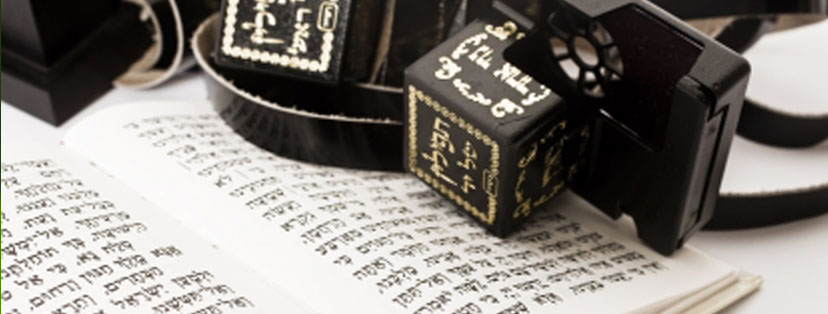
318) When their desire is for the upper brightness, the middle pillar, the complete Jacob, takes these rods, which are the four portions of the head-Tefillin, meaning the four Mochin HBTM. The rod is a Masach, on which the Zivug of fresh poplar—the right line—was made, and the portion, “Sanctify unto Me all the first-born.” The hazelnut is the left line and the portion, “And it shall be when the Lord shall bring you.” Chestnut is the middle line, which includes ZA and Nukva, which are the portions, “Hear O Israel” and “And it shall come to pass, if you listen diligently.”
He placed them in tresses, which are the place and the receptacle for placing the Tefillin. From here all these upper armies and camps receive light and brightness. They connect above in the right line and they connect below in the middle line, the connecting sheep, since they receive from the tresses and the watering-troughs. At that time, they become fountains and springs to descend below to BYA and to give abundance to all.
319) This is the reason why Jacob separated the upper holy degrees from the degrees of the rest of the nations, as it is written, “And put his own droves apart.” He separated herds for himself and his share will not be as the rest of the nations. Jacob separated the degrees of faith for himself above, which are the connected sheep that are born from the Nukva, faith, which he separated from the external camps that extend from the left. Similarly, he had to separate the degrees of the holy camps below, the dark ones that were born from the connected sheep, which he separated from the feeble ones, which are the ones that are born from the external camps, and tie them to him in the palaces of the sovereign one, the Nukva. It is said about them, “And Jacob separated the lambs.”
320) And all are written in the Reshimo of the high King, ZA, the middle line. As Israel are written and marked among the rest of the nations, the degrees of the camps of upper holy angels are written for the share of the Creator among the rest of the armies and camps of angels that are not from the middle line. This is why Jacob chose faith, Nukva, for his share and lot. And the Creator, too, chose Jacob from among all the armies and camps in the world.
321) The upper camps are separated from one another because when the brightness of the fire in the illumination of Divinity appears, all the other degrees that extend from the left are ashamed and become feeble. They faint with the lust for that brightness that they cannot approach, and all those holy degrees that are in its correction—of the middle line, Jacob—rejoice when the brightness appears and promptly rises to approach it and connect, and the brightness is corrected in them. It is written about it, “So the feebler were Laban’s,” meaning those who extend from the left, who faint when the brightness appears, “And the stronger Jacob’s,” meaning those who are corrected so as to connect to him.
322) Jacob had to choose and to separate the holy degrees for his lot, the connected ones, from the degrees of the other nations, the feeble ones. Jacob had to do all that, which is why the Creator wrote of Jacob’s loyalty and righteousness in the Torah. Happy is he.