– SURSĂ DE TEXTE FUNDAMENTALE, CĂRŢI, CURSURI, LECŢII, ÎN LIMBA ROMÂNĂ –
Autor: arhiprofesor
Rene Guenon spunea candva ca numai prostii cred ca se pot initia singuri. Intotdeuna ai nevoie de un maestru. Dar cartea ramane o sursa de imbogatire a cunostintelor noastre fara de care nici maestrii nu-si pot desavarsi lucrarea. Biblioteca de arhitectura este pentru un arhitect tot atat de importanta cat experimentarea in concret a trairii fiecarui spatiu arhitectural.
527) “Remember the Sabbath day to keep it holy.” This is the holy covenant, Yesod. And because all the origins of the organs of the body are in that covenant and it contains everything, similarly, the Sabbath is the whole of the Torah, and all the secrets of Torah depend on it. Thus, the keeping of the Sabbath is as the keeping of the whole of the Torah, and one who keeps the Sabbath, it is as though he kept the whole of the Torah.
528) Remembering the Sabbath is as written, “Remember the Sabbath day to keep it holy.” In all the places, the Sabbath is a day of remembering the everlasting rest. It is also the whole of the Torah, and one who keeps the Sabbath, it is as though he kept the whole of the Torah. The memory of the Sabbath is to sanctify it in all kinds of sanctities. He who remembers the King must bless Him. He who remembers the Sabbath must sanctify it.
529) Remember is for a male, ZA, and keep is for the Nukva, Malchut. The Sabbath day is the whole faith, which hangs down from the upper Rosh [head], Keter, through the end of all the degrees. The Sabbath is everything.
530) There are three degrees, and they are all called “Sabbath.” The upper Sabbath is Bina, the Sabbath of the day is ZA, and the Sabbath of the night is Malchut. But they are all one and everything is called “Sabbath.” When each rules, he takes his friends and invites them to govern with him in his governance. And when that comes to the world, they all come and consult with him.
531) When the Sabbath of the night arrives, it invites the Sabbath of the day with it, inviting it to its palace and hides with it. When that comes, the upper Sabbath is drawn on it, as well, and all are hidden in the palace of the Sabbath of the night. For this reason, the night meal is as important as during the day.
532) When the Sabbath of the day arrives, ZA, it invites the two others with it, the upper degree and the lower degree, the one that shines and the one that shines from him, Bina and Malchut. All as one are called “Sabbath,” and govern on the Sabbath day, and those three degrees are the whole of the Torah, the written Torah, Prophets, and Hagiographa. One who keeps the Sabbath keeps the entire Torah.
519) When the Creator planted the world, He sank a bundle in the deep, a splinter of stone, engraved with the holy name. He sank it in the deep, and when the waters wish to rise to sink the world, they see the holy name engraved on that bundle and return, sink, and turn back. To this day, this name is found in the deep.
520) When people swear truthfully, in true keeping, the bundle rises, receives the oath, and returns and stays over the deep, and the world persists. Thus, true oaths sustain the world.
521) When people swear in vain, the bundle rises to receive the oath. When it sees it is a lie, the bundle that would rise retreats, the waters go and sail, and the letters of the bundle disperse within the deep and scatter. Then the waters wish to rise and cover the world, and bring it back to how it was when it was water.
522) Finally, the Creator summons Yazriel, the appointee over seventy keys in the holy name, who enters the bundle and engraves the letters in it as before. Then the world exists and the waters return to their place. It is written about it, “You shall not take the name of the Lord your God in vain.”
523) The twelfth commandment is to swear in His name in truth. He who swears includes himself in these seven upper degrees in which the name of the Creator, Malchut, is included. Thus, there are six degrees HGTNHY in which a person who swears in truth by a court includes himself, and he himself is the seventh, corresponding to Malchut, to keep the holy name, Malchut, in its place. This is why it is written, “And swear by His name.” And one who swears in vain and falsely causes that place, Malchut, not to exist in its place.
524) An oath to keep the commandment of his Master is a true oath. When the evil inclination slanders a person and seduces him to break his Master’s commandment, it is an oath in which his Master is praised. A person should swear by his Master on it, and it is His praise and the Creator is praised in it. Such was Boaz, as it is written, “As the Lord lives. Lie down until morning,” since the evil inclination was slandering him and he swore on it.
525) A vow is above. It is the life of the King, the Mochin of Malchut, which are in Bina, 248 organs and 12 ties, four Sefirot HGTM, each of which comprises three lines, as the number [in Gematria] of Neder [vow], since 248 and 12 are NeDeR (254). This is why it is more serious than an oath. It is called “the life of the King” because it gives life to all 248 organs. These lives descend from above, from Ein Sof, down to that source of life, Bina, and from that source they come down to Malchut, to all those 248 organs.
526) The oath is to keep the degree below, the holy name, Malchut. This is called “the king himself,” when the upper spirit in his body comes to reside within him and to dwell in him as a spirit that dwells inside the body. That is, the Mochin have already clothed in the Kli of Malchut, the Guf [body], which is hidden above in Bina and appears only in Malchut.
For this reason, one who swears in truth keeps that place. And when that place is kept, he keeps the whole world. There is a vow over everything, over what is commanded and over what is permitted. But this is not so with an oath, which does not apply to a Mitzva [commandment].
504) “And God spoke all these things, saying.” “All these things”: this rule is the rule of everything—the rule of above and of below; everything is included in the Ten Commandments.
505) “I am the Lord your God.” “I” is the upper world, the Nukva from Chazeh deZA and above, the holy name Yod–Hey–Vav, which are the three lines HGT that the Nukva receives from ZA. “I” is Malchut that appeared and was then concealed. She appeared in the throne, Bina, to which Malchut became a fourth leg. At that time, the moon, Malchut, stands in wholeness with ZA as one. Their level is equal and both use the same Keter. Then the moon is concealed, when the sun, ZA, governs, and she shines from him. At that time, she has no merit of her own except for the merit of the light that ZA shines upon her. It follows that her own essence is hidden, a state which occurred after the moon was diminished.
506) “I” is Malchut when she is in completion of the wholeness of the bottom throne after she has been diminished and descended from above, from the Chazeh to below the Chazeh and was established there in the bottom throne, and the holy animals from Chazeh and above departed her. She is established in her corrections, and when she is of comely appearance and her husband, ZA, comes to her, she is called “I.”
507) “I” includes everything together. It includes together 22 letters and 32 paths of Hochma in all the letters, which are 22, and in the paths of the Torah, which are 32, which come out of the upper one, from Hochma. The secrets of the upper ones and lower ones depend on this “I.” “I” is about giving a good reward to the righteous who are awaiting Him and keep the Mitzvot of the Torah. In “I,” they have confidence as it should be for the next world, as it is written, “I am Pharaoh,” who said so to give Joseph confidence that his words would be kept.
508) “I am the Lord your God, you shall have no other gods.” “I,” and “You shall have no” are “remember” and “keep.” “I” is “remember” and “You shall have no” is “keep.” “I” is hidden and concealed in all those degrees of the upper world, which are Yod–Hey–Vav, in one rule. And since it was said, “I,” everything joined together in one, meaning that “I” is the essence of the joining of all the degrees together.
509) “I” is the two thrones: the upper throne, Bina, where Malchut serves as a fourth leg, and the bottom throne, Malchut, after she has been diminished. Ani of Anochi [Anochi means “I” in Hebrew] implies to the bottom throne, and Chaf of Anochi implies to the upper throne.
510) “I” indicates that the Temple, Malchut, has been purified and no stranger approaches it, and only the Temple shines. At that time, the evil inclination was annulled from the world and the Creator Himself rose by Himself. Then it is written, “I am the Lord your God.” This is whole in the holy name. The Aleph of Anochi indicates the unification of the holy name in its degrees to become one, for it is the Vav of HaVaYaH. Nun of Anochi is to fear the Creator and to know that there is a judgment and there is a judge, and there is good reward for the righteous and a punishment to the wicked, for He is the bottom Hey of HaVaYaH.
511) The Chaf of Anochi is to sanctify the holy name each day, to be sanctified in the holy degrees, and to pray a prayer to Him at all times, to properly raise the upper Keter, the upper throne, Bina, over the upper animals, which are HG TM from Chazeh de ZA and above, the four legs of the throne, where Malchut is a fourth animal and a fourth leg. This is so because Chaf is the first Hey of the name HaVaYaH, Bina, since with regard to Malchut being a fourth leg to the upper throne, Bina, she is regarded as Bina and as the first Hey of HaVaYaH.
512) The Yod of Anochi is to engage in Torah night and day, to circumcise after eight days, to sanctify the firstborn, to wear Tefillin, Tzitzit, and Mezuzah, and to dedicate oneself to the Creator and to cleave unto Him. These are the twelve upper Mitzvot implied in the Anochi, which include 236 other Mitzvot, which are in the Anochi. Together, they are 248 positive Mitzvot [commandments to do something], which are the rule of “remember.”
“Remember” consists of all 248 positive Mitzvot, and “Keep” consists of the 365 negative Mitzvot [commandments to avoid actions]. This letter Yod is not replaced in another place like Aleph, Nun, Chaf ofAnochi, who are replaced with Hey, Vav, Hey de HaVaYaH, since she is the Yod, the upper secret, the whole of the Torah, the bottom Hochma that unites with Yod de HaVaYaH, upper Hochma. Hence, this is not a change of place.
Also, there are twelve Mitzvot in these twelve qualities of Rachamim that hang down from them, and one governs all of them, which is the actual Malchut. Called Anochi. And they are thirteen, corresponding to the thirteen qualities of Rachamim.
513) “You shall have no” is a kept secret that includes the 365 negative Mitzvot in the Torah. The Lamed of “Shall not have” is to not give honor and greatness to other gods. Lamed is a tower that flies and rises in the air, Hochma that appears through the exit of Yod from Avir [air], living Ohr [light]. By that, Bina returns to being Hochma, so his heart will not stray to build a tower for other gods, as there is one who builds a tower in the generation of Babylon. The Lamed is so he will not look at the form of idol worship, not think about it, not bow before it, and will not subdue himself to other gods.
514) The Aleph of “You shall have no” is so he will not exchange the unification with his Master for other gods. The Aleph is so he will not think that there is another god besides Him. Aleph is so he will not stray after sorcery and soothsayers in a human form or in some other form. Aleph is so he will not consult with the dead or perform witchcraft. Aleph is so he will not swear with his mouth in the name of other gods. Thus far are the twelve other Mitzvot, which are the Mitzvot included in “keep.” 353 other Mitzvot depend on those Mitzvot of “keep” and are included in those twelve, and together they are 365. This is the meaning of “I” and “You shall have no.”
515) “I” is the rule of above and of below, the rule of the upper ones and lower ones, the rule of the holy animals included in it. Everything is in the “I.” “You shall have no” is below, the twelve lower animals that are in Malchut.
516) “You shall not make for yourself an idol, or any likeness.” Pesel [idol] means Pesolet [waste] from the high place, from a holy place, from the left side of Kedusha [holiness]. Waste of Kedusha is other gods, as it is written, “And I looked, and, behold, a stormy wind came out of the north, a great cloud, and a blazing fire.” The north is the left of Kedusha. “Or any likeness” is as it is written, “And a blazing fire.” It is also written, “For I the Lord your God am a jealous God.” “I the Lord your God” is in order to evoke the heart upwards, and to not descend or draw near the gate of the house of the Sitra Achra. “A jealous God,” since there is envy in this place.
517) “Under three was the earth vexed”: “You shall not make you” is one, “An idol” is two, and “Or any likeness” is three.
518) “Visiting the iniquity of the fathers on the children, on the third and the fourth.” Thus, why does it say, “Sons shall not be put to death for fathers”? However, it is one soul which He has planted once, twice, thrice, and four times. In other words, it has reincarnated and came in four bodies. He visits for the first iniquities in the fourth incarnation because a father and son and third and fourth, these four incarnations are one soul, when he is not corrected and was not concerned with being corrected. This is why he was punished for the first incarnations. And vice versa—when he is properly corrected through the incarnations and persists, it is written about him, “Showing mercy [Hesed].”
499) “Ye shall not make with Me gods of silver, or gods of gold,” since it is written, “Mine is the silver and Mine is the gold.” And although Mine is the silver and Mine is the gold, “You shall not make with Me,” meaning of Me.
500) It is written, “There is none like You, O Lord; You are great, and great is Your name in might.” “You are great,” meaning “Mine is the silver,” Hesed, right line. “And great is Your name in might [Gevura],” meaning “And Mine is the gold,” left line. These two colors are invisible and are not praised except when they are carved in one place, in Israel, middle line, Tifferet, which decides and sustains both lines. Here the colors appear so as to be praised, as it is written, “Israel, in whom I will be glorified.”
501) “I will rejoice greatly in the Lord, my soul will exult in my God, for He has clothed me with garments of salvation, He has wrapped me with a robe of righteousness.” Happy are Israel more than idol-worshipping nations because their joy and delight are in the Creator, as it is written, “I will rejoice greatly in the Lord.” Since he said, “In the Lord,” why is it written, “In my God”? However, if He comes to Israel with Rachamim [mercy], “I will rejoice greatly in the Lord,” which is Rachamim. If in Din [judgment], “My soul will exult in my God,” which is Din.
502) Israel rejoice with both Hesed and Din because they were carved in Him, in the Creator, as it is written, “For He has clothed me with garments of salvation,” which are colors of HG, which were carved to look in Him and to draw Hochma, as it is written, “They looked, but there was none to save to the Lord.” Thus, salvation is looking. He who wishes to look at Me will look at My colors, which are HG, since it is written, “He has wrapped me with a robe of righteousness.” Malchut is called Tzedakah [righteousness/almsgiving], and the colors are engraved in her, meaning that Hochma extends only from Malchut. “As a bridegroom puts on a diadem” is the color Hesed, and “As a bride adorns herself with her jewels” is the color Gevura. When the colors join in the middle line they are visible and all wish to see and to look at Him.
503) “I will rejoice greatly in the Lord, my soul will exult in my God.” There are two joys here: In the Lord is in Rachamim, and “My soul will exult in my God” is in Din. They are glad in all, in both Rachamim and Din, joy over joy. And the joy of Zion: the Creator is destined to delight Israel with more joy than all, as it is written, “And the ransomed of the Lord will return and come with joyful shouting to Zion, with everlasting joy upon their heads. They will find gladness and joy.” “And the ransomed of the Lord” is one, “Will return and come with joyful shouting to Zion” is two, “With everlasting joy upon their heads” is three, and “They will find gladness and joy” is four. These correspond to the four times that Israel scattered among the nations. Then it is written, “And you shall say on that day, ‘Thank the Lord, call out His name.’”
485) “And a river came out of Eden to water the garden.” This river is the flowing of the spring that always comes out and never stops. The whole of the Garden of Eden is watered by the river of that fountain. That river of the holy fountain is called “father” because it flows to nourish the garden.
On the part of their emanation, ZON are unfit to receive the upper light because Malchut deTzimtzum Aleph [first restriction] governs them. To be fit for reception of the light, Bina raised this Malchut to her, and through this ascent became fit to receive the light. Because of this correction, the name HB in Bina has been changed to AVI, and ZON are considered their children, since they are established and care for the correction of ZON as a mother and father for the children.
Malchut’s first ascent to the place of Bina was in RoshAA. Due to this ascent, Bina came out of RoshAA, and this is why AA is called Resheet [beginning/Rosh], as it is written, “And a river came out of Eden.” Eden is Hochma deAA. The river, Bina, came out of the Rosh and became GufdeAA without a Rosh. This was in order to water the garden, to give light to the Malchut, for had it not been for that raising, Malchut would never be able to receive light.
Hochma deAA is called Eden. This is the fountain. Bina, who comes out of it, is called “flowing” and is called “a river.” This Bina is considered a father because she received the Malchut into her and was diminished by her into a Guf, to correct her. For this reason, HB in her is regarded as AVI, since she cares for the correction of the garden, Malchut. This is why she is considered a father.
486) Eden is considered a father because this Eden extends from a place called “naught,” KeterdeAA, in which there is no attainment whatsoever. The beginning of the disclosure for the correction of Malchut in Bina was made in RoshAA, who is called Eden. This is the reason why AA is called Resheet, and this is why he is called “father.” The place from which everything begins to extend is called “you” and is called “father,” as it is written, “For You are our Father.”
487) “Honor your father and your mother.” “Honor your father” is the Creator, ZA. “And your mother” is the Assembly of Israel, Malchut. “Your father,” Et [comes between “honor” and “your” in Hebrew], comes to include the upper Divinity, Nukva, who stands from Chazeh deZA and above. Simply “Honor your father” and simply “Your mother,” since everything is counted. That is, they imply to both HB and ZON, for Et comes to include all that is above and below, both AVI and ZON.
488) The place from which everything is first extended is called “You.” The one who is hidden and in whom there is no beginning to the giving of the Mochin is called “He,” which is a word for hidden. We call the place from which the beginning of giving of Mochin comes, “You,” and it is called “father.”
489) Indeed, it is all one. “Honor your father” is the Creator, ZA. “And your mother” is the Assembly of Israel, Malchut. It is written, “You are the children of the Lord your God,” that place which is called “sons,” which are ZON. This is why he hid the matter, “Honor your father and your mother” to include everything, AVI above and below, to include in it the plenty that he brings to the life of the next world, and it includes the Creator.
490) Everything is included in the five commandments on the right. The other commandments, on the left, were engraved in those five commandments, five within five. How so? “I am the Lord your God” corresponds to “You shall not Kill.” Those two are included in one law, for one who kills diminishes the likeness and image of his Master, as it is written, “For in the image of God has He made the man.” It is also written, “And on the likeness of the throne, a likeness as the appearance of a man.”
491) It is written, “Whoever sheds man’s blood, by man his blood shall be shed.” One who sheds blood, it is as though he diminishes the likeness and image above. That is, he did not diminish that likeness of the lower one, but another likeness. In the upper man, that flaw comes from the blood that he shed, since it is written, “For in the image of God has He made the man.” This is why they are interdependent, “I am the Lord your God” depends on “You shall not kill.”
492) “You shall have no other gods” corresponds to “You shall not commit adultery.” The adulterer lies in the name of the Creator, which is inscribed in man. Several sins and sentences and punishments depend on that: One who lies in that, lies in the king, as it is written, “They have betrayed the Lord, for they have borne foreign children.” It is also written, “You shall not bow to them or serve them.” They are interdependent: “You shall have no” depends on “You shall not commit adultery.”
493) You shall not take the name of the Lord” corresponds to “You shall not steal.” It is written, “He who shares with a thief hates his own soul; he hears the oath but tells nothing.” Indeed, one depends on the other because it happens to the thief that he swears falsely; one who does this, does that.
494) Remember the Sabbath day” corresponds to “You shall not bear false witness against your neighbor.” Sabbath is called “testimony.” One must testify about what is written, “For in six days the Lord made,” and Sabbath includes everything. It is written, “Let truth be given to Jacob.” It is as written, “And the sons of Israel shall keep the Sabbath.” One who bears false witness lies on Sabbath, which is a true testimony, and one who lies on Sabbath lies in the whole of the Torah. For this reason, “Remember” depends on “You shall not bear.”
495) “Honor your father” corresponds to “You shall not covet your neighbor’s wife.” “Honor your father” means actually your father, for one who covets a wife and bears a son, that son honors another, who is not his father. It is written, “You shall not covet you neighbors house, his field,” and here it writes in regard to “Honor your father,” “On the land which the Lord your God gives you.” This means that the one who gives to you will be yours, and you will not covet another. Indeed, “Honor your father” depends on “Do not covet.”
496) The five other commandments are included in those first five commandments on the right. This is why it is written, “On His right was a fiery law,” for everything was made right. This is why the Torah was given in five voices. All ten commandments were five within five, and five books of Moses corresponding to them.
497) All the Mitzvot [commandments] of the Torah, the sentences, and the punishments were engraved in these ten commandments: purity and Tuma’a [impurity], branches and root, trees and plantings, heaven and earth, seas and deeps, since the Torah is the name of the Creator. As the name of the Creator was engraved in the ten commandments, the Torah was engraved in the ten commandments. The ten commandments are the name of the Creator, and the whole Torah is one name, literally the holy name of the Creator.
498) Happy is one who has been rewarded with her, for one who has been rewarded with the Torah, has been rewarded with His holy name. He has been rewarded with the actual Creator, for “He is One and His name One.”
444) It is written, “And God blessed the seventh day.” It is written of the manna, “Six days you shall gather it, but on the seventh day there will be none.” If there is no food on the seventh day, what is the blessing in it?
445) All the blessings above and below depend on the seventh day. Why was there no manna on the seventh day? It is because all the six upper days are blessed by that day, meaning HGTNHY, and each gives food below, each in its day, from that blessing that they are blessed on the seventh day.
446) For this reason, one who is in the degree of faith must set the table and set up a meal on the eve of Sabbath so that his table will be blessed on all of those six days. At that time, the blessing comes to bless all six days of the Sabbath, and there is no blessing on an empty table. Hence, the table must be set with bread and food on Sabbath night, to extend blessing for six days.
447) Even on the Sabbath day, a meal must be fixed, to extend blessing for six days. We must be delighted on the Sabbath day and eat three meals in it, so there will be satiation and delight in the world on that day.
448) The reason for the three meals is to extend blessings on these days of above, HGTNHY, which are blessed by that day, which is Divinity, the seventh quality. On that day, the head of ZA, meaning his GAR, is filled with dew, which is abundance that comes down from holy Atik, which is hidden to all. He gives to the field of holy apples, to Divinity, three times since the time of the beginning of the Sabbath, so that all will be blessed as one.
The seven days are seven Sefirot HGTNHYM. ZA includes six days, and Malchut is the seventh day. Hence, on the seventh day, the wholeness of Malchut and its construction appear PBP [face-to-face] with ZA, they rise and clothe upper AVI, and receive the abundance from PehdeAA, which is called “the hidden Atik.” But on weekdays, there is no wholeness to Malchut before the end of correction, and ZA is not in the complete Zivug with Malchut and lacks GAR. Hence, on the Sabbath day, when Malchut is completed and comes in a Zivug with ZA, ZA receives GAR through the Malchut, and the six days of ZA are blessed in GAR through her.
On Sabbath, HGTNHYdeZA receive GAR from Malchut through a Zivug with her. However, Malchut has nothing but what she receives from ZA. All the abundance comes to her from him, and even though the six days of ZA are blessed with GAR from her, it is only due to the Zivug with her.
449) Hence, one must delight these three times because on that depends the faith above, in holy Atik, in ZA, and in the field of holy apples, since ZA receives from Atik and gives to Malchut. One should delight in them and rejoice in them, and one who denies them of a meal shows a flaw above, and that man’s punishment is harsh.
450) For this reason, one must set one’s table three times from the time of the beginning of the Sabbath, so his table will not be empty and the blessing will be on it for the rest of the days of the Sabbath. And the faith above depends on and is seen by that thing.
451) One who completes three meals on Sabbath, a voice comes out and declares about him, “Then you will delight in the Lord, and I will make you ride on the high places of the earth, and I will feed you with the heritage of Jacob your father.” “Then you will delight in the Lord” is one meal opposite the holy Atik of all the holy ones. “And I will make you ride on the high places of the earth” is the second meal, opposite the field of holy apples, Malchut. “And I will feed you with the heritage of Jacob your father” is the wholeness that he is completed in ZA in the third meal.
452) Corresponding to them, he must complete his meals and he must delight himself in all the meals and rejoice in each of them because it is whole faith. For this reason, the Sabbath is more important than all the occasions and festivals, since everything is in it, which is not so in all the other occasions and festivals. “Because everything is in it” is mentioned three times, as it is written, “And on the seventh day God finished,” “And He rested on the seventh day,” “And God blessed the seventh day.”
453) When Rabbi Aba would sit in a Sabbath meal, he was glad at each and every one. He would say, “This is the holy meal of the holy Atik, who is hidden from all.” In another meal he would say, “This is a meal of the Creator, ZA,” and so on, on each and every meal. When he completed the meals he said, “The meals of faith have been completed.”
454) When Rabbi Shimon would come to the meal he would say this: “Set up the meal of the upper faith; set up the meal of the King.” Then he would sit and be happy. When he finished the third meal, he would be declared upon, “Then you will delight in the Lord, and I will make you ride on the high places of the earth, and I will feed you with the heritage of Jacob your father.”
455) How are these meals fixed? He told him, “Sabbath night.” It is written, “And I will make you ride on the high places of the earth.” At that night the queen is blessed, as well as the entire field of apples, Malchut. Also, a man’s table is blessed and a soul is added to the man. That night is the queen’s joy, and one should rejoice and eat the meal of the queen, Malchut.
456) On the second meal of Sabbath, it is written, “Then you will delight in the Lord.” “In the Lord” indeed, above ZA, since at that time, holy Atik appears and all the worlds rejoice. We make the wholeness and joy of Atik, and the meal is his.
457) On the third meal of Sabbath, it is written, “And I will feed you with the heritage of Jacob your father.” This is the meal of ZA, who is in wholeness, and all six days are blessed by that wholeness. One should be happy at one’s meal and complete those meals, which are the meals of the whole faith of Israel’s holy seed—the upper faith—for he is theirs, and not of idol-worshipping nations. This is why it is written, “Between Me and the children of Israel.”
458) On these meals, it is apparent that Israel are the children of the King, that they are from the King’s palace, that they are the children of the faith. And one who blemishes one meal from them shows a flaw above, and shows himself as not being one of the children of the upper King, that he is not one of the members of the King’s palace, that he is not from the holy seed of Israel. He is burdened with the load of three things: the judgment of Hell, the war of Gog and Magog, and the pangs of Messiah.
459) At all other occasions and festivals, one should be glad and delight the poor. If he is happy alone and does not give to the poor, his punishment is harsh, for he is happy alone and does not give joy to another. It is written about him, “And [I] will spread dung upon your faces, the dung of your feasts.”
If he is happy on Sabbath although he is not giving to another, he is not punished as on other occasions and festivals, for it is written, “The dung of your feasts,” and not “The dung of your Sabbaths.” It is also written, “My soul abhors your new moons and your occasions,” but it does not write, “Sabbath.”
460) This is why it is written, “Between Me and between the children of Israel.” And because all the faith is on Sabbath, a person is given another soul, a high soul, a soul that all the wholeness is in it, as in the next world. This is why Sabbath is called “the name of the Creator,” Malchut. The name, which is whole in every way on the Sabbath day.
461) It is certainly so. Woe unto a person who does not complete the joy of the holy King. And what is His joy? It is the three meals of faith, the meals in which Abraham, Isaac, and Jacob are included. All are joy upon joy, faith, Malchut, who is complete in every way.
462) On that day, the patriarchs, HGT, which become GAR, are crowned. And all the sons, NHY, nurse from them, unlike all the festivals and occasions. On the rest of the festivals and occasions, the patriarchs are crowned in Mochin deYESHSUT. But on Sabbath, the patriarchs are crowned in Mochin of upper AVI.
On that day, the wicked in Hell rest. On that day, all the Dinim [judgments] surrender and do not awaken in the world. On that day, the Torah, ZA, is crowned in whole crowns from upper AVI. On that day, joy and delight are heard in 250 worlds.
463) On all six days of the Sabbath, when the time for afternoon prayer arrives, a harsh Din governs and all the Dinim awaken. But on the Sabbath day, when the time for the afternoon prayer arrives, the will of wills is present and the holy Atik reveals his will, and all the Dinim surrender, and there is will and joy in all.
464) With this desire, Moses, the faithful holy prophet, parted from the world, to know that he did not part in Din. At that time, his soul came out in the will of holy Atik and was hidden in it. This is why it is written, “And no man knows his burial place.” As holy Atik is the most hidden of all that are hidden, and neither upper nor lower know him, here, too, this soul that was hidden in this will of holy Atik that appeared at the time of the afternoon prayer on Sabbath, it is written about it, “And no man knows his burial place,” and he is more hidden than all the hidden things in the world, and Din does not govern him. Happy is Moses.
465) On Sabbath, the Torah is crowned with him, crowned with all those Mitzvot, all those sentences and punishments in seventy branches of light that shine to every direction, since seven Sefirot are HGTNHYM, and each consists of ten, hence they are seventy. Who saw the branches that come out of each of the seventy branches? Five that stand within the trees are HGTNH in ZA, who is called “a tree.” He receives them from Bina, and all the Panim [face/faces] grip them. Who saw those gates that open to each of the directions in them, where each consists of ten, and they are fifty gates? They all shine and illuminate in that light that is emitted and which never stops.
466) A herald calls, “Arise, you holy high ones, arise you holy chosen people above and below, raise joy before your master, arise in complete joy, come in three joys of three fathers, three meals, come toward faith, who is the joy of joys. Happy are you, Israel, who are holy in this world and in the next world. This is your inheritance more than all the idol-worshipping nations. It is written about it, “Between Me and between the children of Israel.”
467) So it is indeed. This is why it is written, “Remember the Sabbath day, to keep it holy,” and it is written, “You will be holy, for I the Lord am holy,” and it is written, “And call the Sabbath a delight, the holy day of the Lord honorable.”
468) On Sabbath day, all the souls of the righteous are refined in delights of the holy Atik, the most hidden of all that are hidden, Keter. And one spirit, from the delight of the holy Atik, spreads throughout the worlds, rising and falling, and spreading to all the holy sons, to all the keepers of the Torah. They rest in complete rest and any fret is forgotten from all, all the Dinim and every hard work, as it is written, “In the day when the Lord gives you rest from your sadness and fret, and hard work.”
469) For this reason, Sabbath is equal to the Torah. Anyone who keeps the Sabbath, it is as though he kept the whole Torah. It is written, “Blessed is the man who does this, and the son of man who takes hold of it; who keeps from profaning the Sabbath, and keeps his hand from doing any evil.” This means that one who keeps Sabbath, it is as though he keeps the whole Torah.
470) It is written, “Thus says the Lord to the eunuchs who keep My Sabbaths, and choose what pleases Me, and hold fast My covenant. To them I will give in My house and within My walls a hand, better than sons and daughters.”
472) “Thus says the Lord to the eunuchs.” Eunuchs are the friends who engage in Torah and emasculate themselves all six days of the Sabbath and engage in Torah. On Sabbath night, they hurry themselves in their Zivug because they know the upper secret when the queen joins the King.
473) Those friends who know that secret aim their hearts to their Master’s faith and are blessed in their offspring on that night.
474) They are called “eunuchs,” indeed, since they wait until the Sabbath to find their Master’s will, as it is written, “And choose what pleases Me.” This is the queen’s Zivug. “And hold fast My covenant” is a Zivug. Simply “My covenant” is the upper Yesod that connects with the queen. Happy is he who is sanctified in this sanctity and knows this secret.
475) It is written, “Six days you shall labor and do all your work, and the seventh day is a Sabbath of the Lord your God.” “All your work” indicates that people’s actions are in those six days. This is why the friends mate only when people’s actions are not present, but only the actions of the Creator. On Sabbath, work is forbidden for a person. His work is the Zivug with the queen, Malchut, to produce holy souls to the world.
476) For this reason, on that night the friends sanctify in the sanctity of their Master, aim their hearts, and good sons come out, holy sons, who do not stray to the right or to the left, sons of the King and the queen. It is written about them, “You are the children of the Lord your God.” Indeed, “Of the Lord your God” because they are considered His sons, sons of the King and the queen.
477) But the view of the friends who know that secret cling to it. This is why they are called “Children of the Creator.” They are the ones by which the world exists, and when the world is sentenced to judgment, the Creator looks at those sons of His and has mercy over the world. It is written about that, “Entirely a seed of truth,” the holy, perfect ring, who are in the middle line and not to the right or to the left, as though surrounded by a ring. It is written about it, “Let truth be given to Jacob.” Jacob is the middle line, and hence certainly a seed of truth.
478) Woe to the people of the world whose ways are as beasts, who do not know and do not look. It is better for them if they were not born. Woe to the world when Rabbi Shimon departs it: who will be able to reveal secrets, who will know them, and who will look in the ways of Torah?
479) Rabbi Shimon said to them, “The world is only for friends who engage in Torah and know the secrets of the Torah. Indeed, the friends determined about the nations of the earth that spoil their ways and do not tell right from left that they are as beasts, that they should be subject to judgment even on Yom Kippur [Day of Atonement]. It is written about their sons, “For they are children of harlotry.”
480) It is written, “And I will give them in My house and within My walls a hand and a name better than sons and daughters; I will give him an everlasting name.” Should it not have said, “And I will give them”?
481) “And I will give them in My house.” “My house” is as it is written, “He is faithful in all My house.” Divinity is called “a house.” “Within My walls” is as is written, “On your walls, Jerusalem, I have appointed guards,” which is the exterior of Divinity. “A hand and a name,” so they will produce holy souls from that place, Divinity. That hand means part of the wholeness. “Good” [translated as “better”] means plenty of sons and daughters. “I will give him an everlasting name,” to the part of the wholeness called “hand.” “That shall not be cut off” for all generations. Another interpretation: “I will give him,” the one who knows the meaning of the thing—the eunuchs who will keep My Sabbaths—and he will aim what he must aim.
482) It is written, “You shall not kindle a fire in any of your dwellings on the Sabbath day,” since Din is not seen on that day, and one who lights a fire causes an awakening of Din. Hence, why does the fire of the altar, which is conducted also on the Sabbath, rise to the high one? Indeed, it is written, “In your dwellings,” and not “to the high one.” That fire which rises to the high one rises to subdue another Din. The fire of the altar consumes another fire, so it will not have dominance on weekdays.
483) For this reason, on that day the holy Atik appears more than on other days. And when the holy Atik appears, Din is not seen at all, and all the upper and lower are in complete joy and the Din does not govern.
484) “For in six days the Lord made the heavens and the earth.” The six days are HGTNHY, from which the heaven and earth were made, ZON. Those upper holy days are called “days,” meaning that the holy name, Malchut, earth, is included in them and they are included in it. Happy are Israel more than all the idol-worshipping nations. It is written about them, “And you that did cleave unto the Lord your God are alive every one of you this day.”
437) “And Elisha said unto her: ‘What shall I do for you? Tell me; what do you have in the house?” Elisha said to her, “Do you have anything on which the blessing of the Creator will be”? A person must not bless on an empty table because the blessing above does not stay over an empty place.
438) For this reason, one must set upon one’s table one bread or more to bless on. If he cannot set many, he should leave of the food that he has eaten so as to have what to bless on, and he will not be blessing on an empty table.
439) Since she said, “Your maidservant has nothing in the house except a jar of oil,” he said, “There is indeed a complete blessing in that,” as it is written, “A name is better than good oil,” since the holy name comes out of oil to bless and to light the holy candles. What is this oil? It is as it is written, “As the good oil over the head,” meaning the upper abundance. These are the mountains of pure persimmon, the abundance of upper Bina.
440) “A name is better than good oil.” How good is the upper name of the high and holy lights, when they all shine with the good oil? It is forbidden for a man to mention the name of the Creator in vain, for anyone who mentions the name of the Creator in vain, it is better for him not to be born.
441) The holy name should be mentioned only after a circumcision, since the holy name is not mentioned in the Torah, except after two words, as it is written, “In the beginning God created” [in Hebrew it is BeresheetBarah Elokim].
442) The holy name, HaVaYaH, is mentioned only with regard to a complete world, as it is written, “On the day that the Lord God made earth and heaven.” Hence, we must not mention the holy name in vain, as it is written, “You shall not take the name of the Lord your God in vain.”
443) A blessing is the holy name because from Him is there blessing throughout the world, and there is no blessing in an empty place and it does not stay over it, as it is written, “You shall not take the name of the Lord your God in vain.”
434) “And see among the captives a beautiful woman, and have a desire for her and would take her as a wife for yourself.” What is the reason that the Torah permitted, for it is written, “You shall not intermarry with them.” However, “You shall not intermarry” while she stands in their domain. But here, when she has been taken captive and has come into the domain of Israel, the Torah permitted.
435) There is not a fit woman among the idol-worshipping nations, as it should be. Why was this portion placed next to the portion of a stubborn and rebellious son? Indeed, one who marries this woman inherits from her a stubborn and rebellious son, for it is hard to remove the filth from her, especially if she was once married to an idol-worshipping man, for the Din clung to the Din and she was defiled. Then it is hard to remove the filth from her. This is what he said about the women of Midian, “Kill every woman who has laid with a man.”
436) Happy is that man who inherits this inheritance of the token of the holy covenant and keeps it, for with this holy inheritance, a man clings to the Creator. It is especially so if he is rewarded with the Mitzvot of the Torah, that the King reaches his hand toward him and he clings to the holy body, to ZA. This is why it is written about Israel, “And you that did cleave to the Lord your God.” It is also written, “You are the children of the Lord,” you are actual sons, as it is written, “My son, My firstborn, Israel,” and it is written, “Israel, in whom I will show My glory.”
427) “You shall not make for yourself an idol or any likeness.” Any form of a face is permitted to make, except for the face of a man because the face of a man governs everything.
428) Another interpretation: “You shall not make for yourself an idol or any likeness” is as is written, “Do not let your speech cause you to sin.” One should be so careful with words of Torah, and one should be so careful not to err in them and utter a word of Torah that he does not know, and which he did not receive from his teacher. Anyone who says words of Torah that he does not know or did not receive from his teacher, it is written about him, “You shall not make for yourself an idol or any likeness.” The Creator will avenge him in the next world. When his soul wishes to come into her place, she will be rejected outside and will be abolished from that place, which is bundled in the bundle of life of the rest of the souls.
429) It is written, “Why should God be angry with your voice?” “Your voice” is man’s soul. It is written about it, “For the Lord your God is a jealous God,” since He is jealous for His name in everything, whether He is jealous for His name because of the form of the face or because he lies in His name, or because of the Torah that he says, which he does not know or did not receive from his teacher.
430) The whole Torah is a holy name, for there is nothing in the Torah that is not included in the holy name. Hence, we must be careful not to err in His holy name and not lie with it. One who lies with the upper King is not admitted into the King’s palace and will be abolished from the next world.
431) It is written, “You shall not make for yourself an idol or any likeness.” It is also written, “Cut out for yourself two stone tablets like the first ones,” meaning do not make an image, that is, do not make for yourself another law, which you did not know and which your teacher did not tell you, “For I the Lord your God am a jealous God.” I am the one who will avenge you in the next world. When the soul wishes to come before Me, she will be so lied to, and she will be admitted into Hell.
432) “You shall not make for yourself an idol.” One must not lie in the name of the Creator, since the first knot by which Israel tied to the Creator was when they were circumcised. This is the first law, before all the others, for entering Abraham’s covenant. It is the connection of Divinity. One must not lie in this covenant, for one who lies in this covenant lies to the Creator. And what is a lie? It is that he will not let that covenant into other domains, as it is written, “And has married the daughter of a foreign God.”
433) From here is the verse, “They have betrayed the Lord, for they have borne foreign children,” for one who lies in this covenant lies to the Creator, since this covenant is gripped to the Creator, and it is written, “You shall not make for yourself an idol.”
404) “You shall have no other gods before Me.” That is, you shall have no other gods instead of Divinity, who is called God. “Before Me” means taking out the face of the King, in which the holy King is seen. They are His name, and His name is that the apparent face is His name, Malchut, and His name is the apparent face. He is His name; ZA is His name. That is, they are one, as it is written, “I, the Lord is My name.” He and His name are one.
405) Happy are Israel, whom the Creator names “man,” as it is written, “And you, My sheep, the sheep of My pasture, you are men.” It is also written, “When any man of you brings an offering.” What is the reason that He calls them “men”? It is because it is written, “And you that cleave unto the Lord your God,” meaning you, and not the rest of the idol-worshipping nations. This is the reason why you are men. You are called “man,” and the idol-worshipping nations are not called “man.”
406) When a person from Israel is circumcised, he enters the covenant that the Creator made with Abraham, as it is written, “And the Lord blessed Abraham in all.” It is also written, “Mercy [Hesed] for Abraham.” And he begins to enter in that place. When he has been rewarded with keeping the Mitzvot of the Torah, he comes into that man of the upper Merkava [chariot/assembly] and clings to the King’s body, and then he is called “man.”
407) The descendants of Israel are called “man.” It is written of Ishmael, “He will be a wild donkey of a man.” “A wild donkey of a man,” and not a man. “A wild donkey of a man” because he was circumcised and had the beginning of a man in him, as it is written, “And Ishmael his son was thirteen years old when he was circumcised in the flesh of his foreskin.” When he was circumcised he entered that beginning called “all,” Yesod, as it is written, “And he will be a wild donkey of a man,” and not a man.
It is also written, “His hand will be in all.” Indeed, “In all” and not more because he did not accept the Mitzvot of the Torah. There was a beginning in him because he was circumcised, but he was not completed in the Mitzvot of the Torah. But the descendants of Israel, who were completed in everything, are called “actual men,” as it is written, “For the Lord’s portion is His people; Jacob is the allotment of His inheritance.”
408) For this reason, any form of face is permitted to make, except for the face of a man. When the shape of man is made, it seems engraved inside engravings of wholeness, meaning that special wholeness is seen in it. His ties with the Ruach is in form, meaning that one’s connections with the Ruach [spirit] in him is apparent in the form of the person that is made.
409) “He will be a wild donkey of a man.” Yet, what is the meaning of the end of the verse, “And he will live to the east of all his brothers”?
410) It is written, “And this is the law which Moses set,” which he heard from his teacher.
411) It is written, “For it is your life and the length of your days.” One who has been rewarded with the Torah and did not part from it is rewarded with two lives: one in this world and one in the next world. It is written, “Your life” in plural tense [in Hebrew it can be perceived as plural], which are two. And anyone who parts from it, it is as though he parted from life. And one who parts from Rabbi Shimon, it is as though he parted from everything.
412) If in this verse, in which he opened a door, we could not enter, the abstruse words of Torah are several times more so. Woe unto a generation from whom Rabbi Shimon departs, since when we stand before Rabbi Shimon, the fountains of the heart are open to all directions and everything is revealed. And when we part from him, we know nothing and all the fountains are hidden.
413) “And He took of the Spirit who was upon him and placed Him upon the seventy elders,” like that candle from which several candles shine, yet it is complete, with none of it missing because the candles were lit from it. So is Rabbi Shimon Bar Yochai, owner of the candles. He shines for all and the light does not depart from him, and he remains whole. They went until they came to him.
414) When they came to him they found him seated and engaged in Torah. He was saying, “A prayer of the poor when he is weak and pours out his complaint before the Lord.” All of Israel’s prayers are prayer, and the prayer of the poor is the highest because it rises up to the throne of the King and crowns itself in His head and the Creator is praised in this prayer. This is why the prayer of the poor is called “a prayer.”
415) “When he is weak [“weak” can also mean “wrap” in Hebrew].” This “weak” is not the wrapping of clothing, for he has no clothing. Rather, here it is written, “When he is weak,” and there it is written, “Who are weak from hunger.” Here, too, “When he is weak” is with hunger. “And pours out his complaint before the Lord,” meaning that he cries out to his Master, and it pleases him before the Creator since the world exists in him when there are no others who sustain the world in the world. Woe unto one of whom that poor cries out to his Master, since the poor is closer to the King than anyone, as it is written, “And it shall come to pass, when he cries unto Me, that I will hear; for I am gracious.”
416) As for the rest of the people in the world, at times He listens and at times He does not listen, since the tabernacle of the Creator is in those broken Kelim, as it is written, “And with the contrite and lowly of spirit.” It is also written, “The Lord is near to those with a broken heart,” and “A broken and a contrite heart, O God, You will not despise.”
417) One who rebukes a poor, rebukes Divinity, as it is written, “And with the contrite and lowly of spirit.” It is also written, “For the Lord will plead their case” because their custodian is a mighty one who rules over everything, and needs no witnesses. He also needs no other judge and does not take pawn as do other judges. What pawn does He accept? The souls of people, as it is written, “And take the life of those who rob them.”
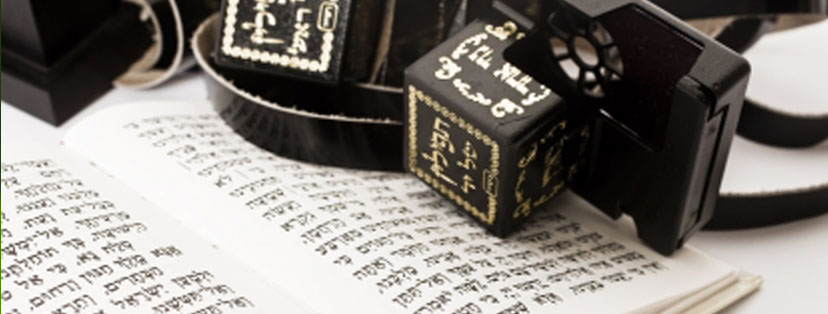
418) “A prayer for the poor.” Any place that is called “a prayer” is a high thing because it rises to a high place. Mochin deZA are called “head Tefillin,” the Tefillin that the King puts on.
419) Rabbi Shimon saw that people came to him, he looked at them and told them, “You had a treasure and you lost it, meaning that they heard words of Torah and forgot them.” They replied to him, “Indeed, the master has opened a high gate, but now we cannot enter it.”
420) They said to him, “He will be a wild donkey of a man.” They also wished to know the end of the verse, as it is written, “And he will live to the east of all his brothers.” What is “And he will live to the east of all his brothers”? We know the clarification of the verse, but we do not know that the end of the verse is not as its beginning.
421) He told them, “It is all one thing, and counts as a single degree. There are several faces within faces to the Creator. There are illuminating faces, faces that do not illuminate, lower faces, remote faces, near faces, faces within faces, faces without, faces of the right, and faces of the left.”
422) Happy are Israel before the Creator, for they cling to the King’s upper face, that face to which He and His name cling, and He and His name are one. The rest of the nations grip the remote faces, the lower faces. This is why they are remote from the King’s body, for we see that all those Egyptians were Ishmael’s relatives. He had several brothers and relatives, and they were all in the lower faces, in those remote faces.
423) Because of Abraham, when Ishmael was circumcised, he was rewarded with placing his abode and his share in a place that governs all those remote and lower faces, all those faces of the rest of the nations, as it is written, “His hand will be in all,” where “All” means Yesod. For this reason, “And he will live to the east of all his brothers,” meaning will place his abode and his share above them all. “His hand will be in all,” governing all the other faces below. For this reason, “Of all his brothers,” indeed, for they were not rewarded as was he.
424) His students came and kissed his hands. This is as people say, “Wine grows stronger over its yeast, and the fountain of the well is crowned over the knot of dust and waste that covers it,” for out of its pressure to break through the dust, it spouts more forcefully. Similarly, Ishmael grew stronger in his dominion over all his brother’s waste, which are the remote and lower faces. Woe unto the world when its lord leaves it. Woe unto the generation that will happen to be at that time. Happy is the generation that knows my lord; happy is the generation within which He dwells.
425) A stranger who converted is considered “a proselyte of Tzedek [justice],” and nothing more. So why did the Creator say here, “His hand will be in all,” meaning that he was rewarded with Yesod, which is called “all”? Rabbi Shimon said, “It all ties to one place. Ishmael is different, for he is not a proselyte, for he was Abraham’s son; he was the son of a holy man. It is written about Ishmael, “Behold, I have blessed him,” a blessing with “all.” This is why it is written, “His hand will be in all.”
426) For this reason, it is written, “And he will live to the east of all his brothers,” for if the rest of his relatives were to convert, they would only be considered “proselytes of Tzedek,” but he was greater and higher than all of them. It is all the more so with those who were not circumcised, who stood in those remote and lower faces. He, his abode is above all their faces, and more than all the faces of the idol-worshipping nations, as it is written “And he will live to the east of all his brothers.”