
His Heart Was Merry

(înapoi la pagina ZOHAR CUPRINS / VAYAKHEL – click)
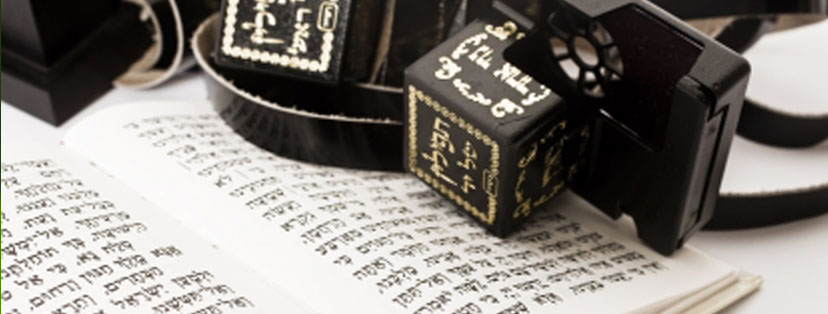
456) “Boaz ate and drank, and his heart was merry.” “His heart was merry” means that he blessed for his food. One who blesses for his feed does good to his heart. He is as it is written, “To you my heart says.” It is also written, “The rock of my heart,” which means Malchut, who is called “heart.”

457) Because the Creator favors the blessing for the food, anyone who blesses for satiation benefits and delights another place, Malchut. Similarly, on Sabbath meals, another place—Malchut—enjoys the blessing for that satiation and the joy. And here, Malchut enjoys the blessing for that satiation of the righteous Boaz. This is the meaning of what is written, “And his heart was merry.”

458) Malchut enjoys the blessing for the food because man’s food, which is the place of Malchut, is hard before the Creator. And once a man has eaten and drank, and blesses the blessing for the food, that blessing rises, and Malchut enjoys those words that are said about the satiation that rises. It follows that that man enjoys the food below, and Malchut—above.

459) On weekdays, that place enjoys only those words that rise out of satiation, the blessing for the food, and all the words are crowned, satiated and satisfied in delight, and that place enjoys them. On Sabbath, it is a different matter. Malchut enjoys the actual food and that joy of the food of the Mitzvot of the Sabbath, and the food itself is completely included, above and below, as it is written, “For all things come from You, and from Your hand we have given You.” That is, Malchut enjoys that delight of man, and in that delight in the food of the Mitzvot of the Sabbath.

460) One who blesses the Creator out of satiation should aim his heart to place his will in joy, and to not be sad. Rather, he should bless with joy and place his will, which he now gives to another with joy and with a kind eye. As one who blesses with joy and with a kind eye, so will he be given with joy and with a kind eye. And therefore, he will not be sad at all, but in joy and in words of Torah, and he will place his heart and mind on blessing where needed—Malchut.

461) Four Merkavot govern the four directions of Malchut. The camps of angels are nourished by the blessing over the satiation, and in the words, “Blessed are You,” in the blessing for the food, the Malchut enjoys, grows, and is crowned in him. And he who blesses, the will should be in joy and in a kind eye. This is why it is written, “He who has a kind eye will be blessed.”

462) “He who has a kind eye will be blessed” because he gives of his bread to the poor. If the beginning of the text does not discuss the blessing for the food, the beginning of the text is not its end, and its end is not its beginning. That is, they are unrelated. Rather, one who has a kind eye blesses with a kind eye, with joy, and it is with good reason that he blesses with joy, for out of those blessing and joy, he gives of his bread to the poor. That is, the place that should be nourished on all the sides, from the right and from the left, a place that has nothing of its own, a place that enjoys all the sides and is included from all the sides, Malchut. This is why she is called “poor,” and it is written about her, “For he gives of his bread to the poor.” These words are given only to the wise who know the upper secrets and the ways of the Torah.

463) Boaz had a kind eye. There was never any insolence in him. It is written, “He went to lie down at the end of the heap,” as it is written, “Your belly is a heap of wheat,” said about Malchut. Here, too, at the end of the heap, is Malchut. Anyone who blesses the blessing for the food properly, with joy, with the will of the heart, when he rises from this world, a place is set up for him inside the upper secrets in the holy palaces of Malchut, who is called “a heap.” This is what the text implies, “He went to lie down,” once he passed away from the world, at the end of the heap, Malchut.

Happy is a man who keeps the Mitzvot of his Master, who knows their secrets. We have no Mitzva in the Torah on which high secrets, lights, and sublime splendors do not hang. But people do not know and do not consider the glory of their Master. Happy are the righteous, who engage in the Torah. Happy are they in this world and in the next.

464) All those insolent ones who have no shame have no part in this world or in the next world. When all those insolent ones who were in Israel looked at that ornament, their hearts would break and they would look at their deeds. This is because the ornament stood on a token with the engraving, “Sanctified to the Creator,” and anyone who looked at it was ashamed of his actions. This is why the ornament atones for the insolent and impudent.

465) The letters of the holy name that were engraved on the ornament would illuminate with a bold and sparkling light. The face of anyone who looked at that sparkling of the letters would fall with fear and his heart would break. Then the ornament atones for them, such as this matter, since it caused him to break his heart and yield before his Master.

(înapoi la pagina ZOHAR CUPRINS / VAYAKHEL – click)

Your Eyes Are On the Field which They Reap

(înapoi la pagina ZOHAR CUPRINS / VAYAKHEL – click)

450) It is written, “Your eyes are on the field which they reap.” Why the need to write it here? There are several verses in the Torah that seem as though they need not be written, and we see that they are all high secrets. Moreover, one who sees this verse and does not look in it is as one who has never tasted a stew.

451) This was said in the holy spirit because Boaz, the judge of Israel, saw the humbleness of that righteous woman, that she did not raise her eyes to look elsewhere, but in front of her face, and saw all that she saw with a kind eye, and there was no insolence in her. He praised her eyes.

452) There are eyes for which blessing does not govern in that place, but Boaz saw a kind eye in her, that wherever she looked, it was with a kind eye. He also saw that success was with her, that everything she picked was added in the field. Boaz looked at how the spirit of holiness was over her. Then he started and said, “Your eyes are on the field which they reap.”

Is it because they were picking those others that he said to Ruth, “Your eyes are on the field which they reap, and follow them”? Thus, how did he say that she should follow them? It should have written, “And pick after them.” What is “And follow them”? Indeed, he said, “And follow them” because of her eyes, for her eyes caused many blessings. This is why “And follow them,” meaning follow your eyes. All the people in the world have no permission to follow their eyes, but you will follow your eyes, for your eyes cause many blessings.

453) “Your eyes are on the field which they reap.” Boaz saw in the spirit of holiness that high kings and rulers—the eyes of all—were destined to come out from her. It is as Tamar was, of whom it is written, “And sat in the gateway of Enaim [eyes],” meaning she sat at the door, and kings and high rulers, which are called “eyes” came out of her, as it is written, “If from the eyes of the congregation.” This is so because as all the organs of the body follow only the eyes, and the eyes lead the entire body, so kings and the Sanhedrin, and all those rulers follow them. This is why he said to her, “Your eyes,” for these are the kings and the rulers that were to come from her.

454) “On the field which they reap.” A field is Zion and Jerusalem, as it is written, “Zion will be plowed as a field.” It is also written, “As the smell of a field which the Lord has blessed,” which is Jerusalem. This is why it is written, “Your eyes are on the field,” for these eyes of her, which are to come from her, govern only in the field. “Which they reap,” since from that field, all the people of the world would take Torah and a light that shines, as it is written, “For the law [Torah] will go forth from Zion.”

455) “And follow them,” with these good deeds that I see in you. It is written, “But I have commanded the youths not to touch you,” for a woman’s mind is rash, and this is why he warned the youths from touching her. It is also written, “When you are thirsty, go to the water jars and drink from what the youths draw.” “When you are thirsty is a euphemism. If you wish to attach yourself to a man to keep a seed in the world, go to the Kelim. Those are the righteous, who are called “the Kelim of the Creator,” as it is written, “Purify yourselves, you who carry the vessels of the Lord.” The righteous are destined to bring them the whole world as a gift to the Messiah king. They are the vessels of the Lord, the Kelim that the Creator enjoys. They are broken Kelim, broken in this world, to keep the Torah. And the use that the Creator uses them, He uses only out of those Kelim. And when you cling to them, “And drink.”

(înapoi la pagina ZOHAR CUPRINS / VAYAKHEL – click)

They Made the Ornament

(înapoi la pagina ZOHAR CUPRINS / VAYAKHEL – click)

446) “They made the ornament of the holy crown of pure gold.” It is called “an ornament” because it is available for man to look at, and it is evident to anyone who looks at it whether or not he is righteous.

447) The letters of the holy name were engraved and decorated in decoration, and engraved in the ornament. If he is righteous, the illumination of these letters that are engraved inside the gold would protrude and rise from below upward, from that engraving, and illuminate the face of that man who stood before him.

448) Once, the sparkling would sparkle in him, and once, they would not sparkle. The first time when the priest looked at it, he would see all the illuminations of the letters inside. And when he would look to contemplate it, he would see nothing, but the illumination of his face would shine as though a sparkle that comes out of gold had sparkled in him, and not more. Only the priest would know the vision of the first looking that he would see at the time, and so did every man, since the Creator’s will was in that man who looked in the ornament, and knew that he was summoned to the next world because that vision that illuminated from the letters of the ornament illuminated on him from above, since the Creator desired him. Afterwards, when looking at it to contemplate it, they would see nothing because the vision above appears only for a time.

449) And if a person stands before that ornament and his face does not illuminate even for a time, the holy vision, then the priest would know that he is impudent and he must atone for him, ask for mercy for him.

(înapoi la pagina ZOHAR CUPRINS / VAYAKHEL – click)

Above the Firmament

(înapoi la pagina ZOHAR CUPRINS / VAYAKHEL – click)

441) “And above the firmament that was over their heads, as the appearance of a sapphire stone, was an image of a throne.” “And above the firmament” means in the firmament below Malchut. This is because in the firmament of above, Bina, there is no one to look at it. But of the firmament below, in Malchut, it is written, “And shall see My back.” And from above, from that firmament, stands a sapphire stone, Malchut, a precious gem.

442) “An image of a throne.” There is a throne and there is a throne. The upper throne, Bina, is hidden. It is not disclosed and there is no one to stand in it, to know and to look. This is why it is written here “A throne,” without the prefix “The,” which is the throne below, Malchut.

443) “An image as the appearance of a man.” It is written “An image,” but why is it also written, “As the appearance”? The image of a man is a high secret in the high glory, ZA in HaVaYaH filled with Alephs, which is 45 in Gematria [man]. This is the form of a man who sits on the throne, Malchut. This is the meaning of the added “As the appearance,” to include those forms in the words of Hochma, which are called “seeing” or “appearance,” for so the Hochma is called. These are the secrets of the Hochma that rise and crown above in ZA. Afterwards they stand in the form of a man, in the form that the righteous crown them, and the Creator plays with all of them with His crowns.

444) And you friends, the Creator is now playing with those words that are crowned in that way that you said. But you kept the form of man before your Master in your holy forms, for while I was seeing you, observing your form, I saw about you that you were inscribed in man and I know that your form was present above. So are the righteous destined to be recognized before everyone’s eyes, to show the holy form of their faces before the whole world, as it is written, “All who see them will recognize them because they are the seed whom the Lord has blessed.”

445) At that time Rabbi Shimon saw Rabbi Yosi contemplating worldly matters. He told him, “Arise, Yosi, and complete your form, for a letter is missing in you.” Because Yosi was contemplating worldly matters, he called him Yosi and not Rabbi Yosi. Rabbi Yosi rose and was delighted with words of Torah, and he rose before him. Rabbi Shimon looked at him and said, “Rabbi Yosi, now you are whole before Atik, and your form is complete.”

(înapoi la pagina ZOHAR CUPRINS / VAYAKHEL – click)

Then Those Who Feared the Lord Spoke

(înapoi la pagina ZOHAR CUPRINS / VAYAKHEL – click)

437) “Then those who feared the Lord spoke to one another, and the Lord listened and heard, and a book of remembrance was written before Him for those who fear the Lord and esteem His name.” It is written, “Then … spoke,” meaning spoke above. That is, all the holy Merkavot and all the holy armies spoke to one another before the Creator.

438) Because these holy words that they said rise up, and several rush and carry them before the holy King, and become crowned in several crowns in these upper lights, and all spoke before the holy King. Who saw joys and who saw praises that rise in all those firmaments? When these words rise and the holy king looks at them and crowns in them, they rise and sit in His lap, and He plays with them. From there, from His lap, they rise to His head and become a crown. This is why the Torah said, “And I will be delighted each day.” It does not say, “was,” but “will be,” in future tense. That is, each time the upper words rise before Him.

In a previous verse it is written, “You said, ‘It is vain to serve God, and what profit is it that we have kept His charge?’” The writing ends about it, “Then those who feared the Lord spoke to one another, and the Lord listened and heard, and a book of remembrance was written before Him for those who fear the Lord and esteem His name. …’And I will spare them as a man spares his own son who serves him.’” The words seem perplexing because while saying that they said to one another such words of heresy, as it is written, “It is vain to serve God, and what profit is it that we have kept His charge.” It is said about them, “Then those who feared the Lord spoke to one another, and the Lord listened and heard.” Moreover, they are so cared for that “A book of remembrance was written before Him for those who fear the Lord and esteem His name.”

However, the writing speaks of those righteous who were rewarded with repentance from love, when sins become merits. And the greater the transgression, the greater merit it became. It follows that when these righteous were pondering the beginning, saying, “It is vain to serve God,” an iniquity of which there is none worse, then these words of heresy have now become great merits due to the repentance from love that they have made. Now they are considered as though at that time those who fear the Lord spoke to one another these words of heresy, for they have become merits, and by this great inversion, great delight was made before the Creator.

It was said, “Spoke above. That is, all the holy Merkavot and all the holy armies spoke to one another before the Creator.” This is so because the same words that they said while they were wicked, “It is vain to serve God,” have risen up through the angels, the Merkavot, who knew that those righteous would repent from love, and the end of these words will be for merits, for great lights, and for entertainment before the Creator.

It is so because those holy words that they said, “It is vain to serve God,” which have now become holy after they repented from love, rise up through the angels as soon as they said them. Also, several of them rush and carry them to the holy King, and are crowned in several crowns in these upper lights. Even before they repent from love, the angels rush and bring the words to the holy King because it is already known above that they will repent from love for each and every word that they will say.

Each word will become a merit and a great light, and the delights are very great. It was said, “Who saw joys and who saw praises that rise in all those firmaments,” when these words rise. The holy King observes them and crowns Himself in them, and they rise and sit in His lap, since the concealment of the Creator is considered His lap. And since they have not yet repented from love, the words that they said sit in the Creator’s lap, in concealment of the face. However, since it is known to the Creator that they will repent from love, He plays with them in His lap, since after they repent, they ascend to His head and become a crown.

439) It writes, “Those who fear the Lord” twice: “Then those who feared the Lord spoke to one another … and a book of remembrance was written before Him for those who fear the Lord.” When those who fear the Lord above repent from love, they stand above before the Creator. Those who fear the Lord below means that afterwards they descend to their place, to the earth below. And even those who fear the Lord are already down in their places. These words stand in their form above.

You will find this matter in the book of Enoch, that all the words in which the righteous on the earth crown in, and stand before the King while they repent from love, at that time, they crown in sins that have become merits, and stand in themselves above before the King, and the Creator plays with them. Afterwards the righteous descend and the words remain before Him in the same form of turning from sins to merits that the righteous said, and the Creator plays with that form. Subsequently, they were written in a book of remembrance before Him, so they will always stand before Him in existence.

440) “And to those who esteem His name,” means that all those who esteem words of Torah to cling to their Master in the holy name, to know Him, so He would correct the wisdom of His name in their hearts, it is written about them, “To those who esteem His name,” which is the holy name.

(înapoi la pagina ZOHAR CUPRINS / VAYAKHEL – click)

Mentioning the Exodus from Egypt

(înapoi la pagina ZOHAR CUPRINS / VAYAKHEL – click)

429) After the intention of Shema, the exodus from Egypt should be mentioned, since Divinity was in exile. And while she is in exile, there is no bonding where the upper world, ZA, bonds with the lower world, Malchut. It should be shown that the freedom of the redemption of Egypt was in several signs, with several miracles that the Creator did. And this redemption should be remembered and seen, for although it was in exile, now it has freedom, since the day the ties in Egypt have been opened. And these are signs and miracles that were done.

430) Malchut’s freedom should be shown because she bonded with her husband, ZA, and to attach redemption, Yesod, to prayer, Malchut, so all will be one without separation. Also, divorce should not be shown, saying that the Malchut is divorced, exiled from her man, ZA, as it is written, “Nor shall they take a woman divorced from her husband.”

431) But is she not in exile, divorced from her man, ZA? She is indeed in exile so as to dwell with Israel, for wherever Israel exile, Divinity is with them to protect them. But she was not divorced from ZA. But Divinity was not seen in the First Temple and in the Second Temple when Israel sinned, which is why it was not considered exile, all the more so divorce. Rather, until Israel exiled, if they sinned, Divinity departed upwards. Afterwards, when they were exiled, she did not go up but made her dwelling with Israel. But there was never a divorce.

432) For this reason, redemption must be shown to contain four redemptions, since when Divinity came out of the exile in Egypt, she asked of the Creator to redeem her four times. These are four redemptions opposite four exiles, so she will be free and will no longer be divorced.

Hence, at the time of the redemption from Egypt, she stood and was redeemed four redemptions in the exodus from Egypt. That is, with the reception of the Mochin of the exodus from Egypt, Divinity was redeemed from all four Malchuts, all the exiles until the coming of the Messiah. Thus, she will no longer be regarded as divorced from her man, ZA.

Now that Divinity needs correction, to bond with her husband, ZA, that redemption from Egypt must be shown to contain four redemptions. With the awakening of the Mochin of the exodus from Egypt, she is corrected to bond with her husband because she has become liberated from all four Malchuts.

433) This is why it should be said in that redemption four times, “truth, truth, truth, truth,” until “The Help of Our Fathers” [a section in the prayer], corresponding to the four exiles, which are help and support for all of Israel. And from “The Help of Our Fathers” onward there are four more times, “truth, truth, truth, truth,” and they are doubled, to give these four redemptions solid existence in a strong seal of the King’s ring. Hence, there are four double redemptions in existence.

434) And all four redemptions are in that exodus from Egypt, for if those four exiles were not present in that exodus from Egypt, she would not connect in her corrections with ZA each time there is an exile, so the Holy Name will unite. Hence, the redemption of Egypt should always be mentioned in all of the Creator’s sanctities, blessed is His Name forever and ever.

435) The Kedusha [“holiness,” part of the service] in the “Holy, Holy, Holy” that we say is that in Kedusha, everyone is sanctified above and below, the angels and Israel, and all the degrees, and all the upper and lower Merkavot [structures] are sanctified in this Kedusha. There are sublime meanings in this Kedusha to those who know the secrets, who gaze at the sanctity of their Master.

436) It is good to devote one’s soul to one’s Master. Friends, happy are you, and happy are my eyes for having seen that, that in my life I was privileged with the awakening of these holy things in this world, and they are all written above before the Holy King.

(înapoi la pagina ZOHAR CUPRINS / VAYAKHEL – click)

The Meaning of the Word Shema

(înapoi la pagina ZOHAR CUPRINS / VAYAKHEL – click)

420) Shema [hear] is a name, Malchut, which adds up to 70 names, which is the name AB in the upper MerkavaHGTM de ZA above the Chazeh. It is one whole, for the Malchut, who is called “a name,” is included in ZA above the Chazeh, which is a big Ayin.

Israel is Ysrael SabaVAK de Bina. This is because there is a small Israel, ZA, as it is written, “When Israel was a youth I loved him.” ZA and Malchut, which are implied in the Shema, are in one whole with Ysrael Saba, ascending to him and uniting in him.

“Hear O Israel” indicates that in Ysrael Saba, a woman is included with her husband, Malchut with ZA.

421) Once ZA and Malchut are included in one another in Ysrael Saba, the organs need to be united, meaning VAK de ZA and Malchut, connecting the two abodes together in all the organs. The upper abode is YodHey, and the lower abode is VavHey. By the will of the heart to ascend in Dvekut [adhesion] of Ein Sof, it clings there to become one will, upper and lower.

422) This is YodHeyYodHey [will be], as it is written, “The Lord will be one,” that is, one with regard to YodHeyYodHey. The Yod of YodHeyYodHeyHochma, is to unite and to cling to the letter Hey of YodHeyYodHey, who is the inner palace, Bina, to a place of concealment of the upper point, YodHochma. This is “The Lord [HaVaYaH] our God.” These two names are YodHey HB, where HaVaYaH is Hochma and “Our God” is Bina.

423) Including all the organs, VAK de ZA and Malchut, in the place from which they came out, from the inner palace, Bina, to bring matters back to their places, to their core, foundation, and root, up to the root of the covenant, Aba.

424) Afterwards, two other letters of YodHeyYodHey unite and attach the letter Yod in the letter HeyYod is the holy covenant, Yesod de ZAHey is a palace and concealment of the holy covenant, YodMalchut, a palace for Yesod, like the Bina, which is a palace for HochmaYesod is a second Vav, of the Vav in its fullness, where the first Vav is Tifferet, the second Vav is Yesod, and it is said here that it is Yod, to unite them as one. In the unification with MalchutYesod is called Yod.

425) The aim in the word “one” is to unite everything together from Malchut and above, to elevate the will, to tie everything in one knot, and to elevate the will with fear and love through Ein Sof. The will to ascend to Ein Sof will not leave all those degrees and organs but will elevate his will in all of them, not one of them missing, to attach them, so they will all be one knot in Ein Sof.

426) It is a unification in correction.

427) One who wishes to include all the secrets of unification in the word “one” is better. Hence, we prolong the “one,” [in the Shema reading] to elevate the will to extend from above downward, and to raise from below upwards so all will be one.

428) The word, “one” is above and below and the four directions of the world. Above and below, which are AVI and ZON, must be united, and the four directions of the world are the upper Merkava [assembly], HGTM de ZA above the Chazeh to include everything together in a single tie, one unification through Ein Sof.

(înapoi la pagina ZOHAR CUPRINS / VAYAKHEL – click)

You Shall Fear Your God

(înapoi la pagina ZOHAR CUPRINS / VAYAKHEL – click)

412) It is written, “You shall fear the Lord your God, and Him shall you worship.” It is also written, “And you shall fear your God,” from a place that connects and surrounds the brain within, which is Divinity, who is called Elokim and who is surrounded by fire, in the matter of fire that surrounds the shining, from which the Din extends to the wicked. “From your God” is the surrounding fire. This is the fear that one should fear Him, for there is where the Din lies. It is a Din that is drawn from the Din above, which is in this place.

413) There are three kinds of fire here: 1) a fire that receives fire with joy, and they delight in one another with love, 2) a fire in which the shining is seen, Divinity. It is a fire that stands with joy inside the inner fire, the first fire. 3) A fire that surrounds the shining, Divinity. In this fire there is the fear of Din to strike the wicked.

There are two interpretations to the shining: 1) It is a Klipa that is close to Kedusha. Half of it is good, and half of it is bad. 2) Divinity is called “a shining.”

Here, “shining” means Divinity, lower Hochma.

There are three kinds of fire, meaning Dinim: 1) Fire on the right line, extending from the point of Holam. 2) Fire on the left line, extending from the point of Shuruk for lack of Hassadim. 3) Fire from the middle line, extending from the point of Hirik, for which the unification of right and left occurred. It also limits the left so it illuminates only from below upward.

The fire that receives fire with joy is the fire on the right line, which receives the fire on the left line with great joy because the fire on the left line complements it with illumination of Hochma. Also, the fire of the left receives the fire of the right with joy, for it is completed by it with Hassadim. For this reason, they rejoice in one another with love because they complement one another.

Fire, in which the shining is seen, Divinity, is the lower Hochma who receives from the left line. It is known that Hochma appears only upon disclosure of the Dinim of the point of Shuruk. The shining, lower Hochma, is seen only in the fire of the point of Shuruk, which extends to her from the left line. It is fire that stands in joy inside the inner fire, the first fire, for it is the same fire of the left line from the point of Shuruk that stands with the inner fire of the right line with great joy.

The fire that surrounds the shining, the fire of the middle line that surrounds it and limits it from shining from above downward, but rather from below upward, in this fire there is the fear of the Din, to strike the wicked. It punishes the wicked who trespass her boundary.

414) There are four colors to fire—white, red, green, and black. They are one, for each is included in the four colors HG TM.

415) One should place one’s will in that fear with fear and love together, fearing on the side that extends from the left, and loving on the side that extends from the right, and in these colors, for in Malchut, too, there are four colors, HG TM. That fear will be to fear punishment, the lower fear, that one who transgresses the Mitzvot of the Torah is punished from the left. It is so because when that side begins to strike, it is not quieted down until it annihilates him from this world and from the next world. This is why this fire should be feared, for fear is in it.

416) Out of the third fire, spreads the fire of other gods. It is written about it, “You shall not fear the gods of the Amorites,” for it is forbidden to fear him. This fire of fear—the third fire—is holiness and partakes in Kedusha. This is the one that surrounds the shining. Were it not for this fire, the right would not unite with the left. Therefore, it is Kedusha although it limits the shining to illuminate only from below upward.

But another fire, from without, sometimes joins this fire of fear and sometimes moves away from it and does not connect to it. When the iniquities cause the external fire to connect to this fire of fear, it is the fire of darkness, darkening and covering the lights of the other ones in the shining, as it is written, “A flaming fire,” and it is not permanent.

417) There is love after he has been rewarded with fear. Once fear is present over a man’s head from the left, then love awakens, which is right, ZA with respect to the Hesed in him. One who worships out of love clings to a high place above, and clings to the Kedusha of the next world, Bina, since he rises to be crowned and to cling to the right side, Hesed de ZA, on which there is Bina.

418) Work that comes from the side of fear is respected but does not rise to cling above in ZA. When he worships out of love, he rises and crowns above and clings to the next world. This is a man who is summoned to the next world. Happy is he, for he dominates the place of fear because no one governs the degree of fear but love, the right, the unification of ZA and Malchut.

419) One who is worthy of the next world needs to unify the name of the Creator and unite the organs, ZON, and the upper degrees, AVI, upper and lower, including them all, and bringing all of them into Ein Sof, tying knots, as it is written, “Hear O Israel, the Lord is our God, the Lord is one.”

(înapoi la pagina ZOHAR CUPRINS / VAYAKHEL – click)

The Four Corrections of the Prayer

(înapoi la pagina ZOHAR CUPRINS / VAYAKHEL – click)

409) In the prayer, a man’s body and soul are corrected and perfected. A prayer is correcting corrections, which are corrected as one. There are four corrections: 1) correcting oneself to be completed, 2) correcting this world, 3) correcting the upper world in all the armies of heaven, 4) correcting the holy name in the holy Merkavot and in all the worlds, above and below.

410) The first correction is the correction of himself because he needs to correct himself with a Mitzva and with Kedusha, to be corrected in the sacrifices and in the offerings to be purified. The Tzitzit is a Mitzva, the Tefillin is Kedusha, and in saying sacrifices and offerings, he is corrected as though he offered sacrifices.

The second correction, the correction of this world, is in the work of creation, to bless the Creator for each and every work with these Halleluiah, as it is written, “Praise Him, all you stars of light. Praise Him, you heavens of heavens,” to keep the existence of this world. In the prayer, it is said about it, “Blessed be He who said,” where blessed means blessed for everything.

411) The third correction is the correction of the upper world in all those armies and camps. It is the praise, “Who makes servants, and Whose servants all stand at the height of the world.” And also, “The Ofanim [wheels/angels] and the holy animals, with a sound of great noise, raise themselves toward the seraphim.”

The fourth correction is the Eighteen Prayer, the correction of the holy name, the correction of a complete name. Happy am I with you in this world and in the next world.

(înapoi la pagina ZOHAR CUPRINS / VAYAKHEL – click)

One Who Eats Without a Prayer

(înapoi la pagina ZOHAR CUPRINS / VAYAKHEL – click)

403) “You shall not eat with the blood; neither shall you practice divination nor soothsaying.” One who eats without prayer should pray for his blood. He is as one who practices divination and soothsaying.

404) At night, the soul rises to see the upper glory, each as she deserves. The man stays in that force that spreads through the blood to sustain the body. For this reason, he tastes the taste of death, for the force of the blood is not willing to awaken toward the force of the soul and accept her. Therefore, when a person awakens from his sleep, he is not pure, for the Sitra Achra governs a place that is without a soul.

405) Once he is purified in water, although the man engaged in Torah, a soul does not exist in her place and does not govern a person, but only the force of the blood, which is called Nefesh. That Nefesh always spreads through the blood, and when a person prays a prayer to worship his Master, the force of the blood settles in its place, and the force of the soul increases and it settles in that place in the body. At that time the man is completed before his Master, as the soul is needed below, and the word of the soul above.

406) For this reason, one who prays a prayer before he has eaten positions himself properly and the soul rises to her dwelling place as she should. But if he eats before he prays his prayer, so the blood may settle in its place, he is as one who practices divination and soothsaying because this is the way of one who practices divination—to elevate the Sitra Achra and to lower the side of Kedusha.

407) A man who eats before he prays is regarded as practicing divination because he exerted in the serpent of the Klipot to increase his power and grow stronger. It is as one who worships other gods. Similarly, he worships the force of the blood and did not worship the Creator, to enhance the side of the soul, the side of Kedusha.

408) One who eats prior to his prayer is called soothsaying because he exerted in an iniquity and did not exert in merits. [In Hebrew] Soothsaying has the letters of “from iniquity.” Why is the letter Nun standing in the middle of the word “soothsaying”? Accordingly, he should have said, “causing iniquity,” without the Nun in the middle? So it is, indeed. It is impossible to rule over the Sitra Achra until a mingling of Kedusha is mingled with her, like a fine thread. One who wishes to keep a lie should mix it with a word of truth so that that lie will persist. Hence, an iniquity is a lie, and to keep it, a word of truth is inserted into it. This is the Nun in the middle of the word, “soothsaying,” and by that the lie is kept. Therefore, one who did not pray a prayer before the Creator for his blood prior to eating is as one who practices divination and soothsaying.

(înapoi la pagina ZOHAR CUPRINS / VAYAKHEL – click)

error: Content is protected !!