– SURSĂ DE TEXTE FUNDAMENTALE, CĂRŢI, CURSURI, LECŢII, ÎN LIMBA ROMÂNĂ –
Autor: arhiprofesor
Rene Guenon spunea candva ca numai prostii cred ca se pot initia singuri. Intotdeuna ai nevoie de un maestru. Dar cartea ramane o sursa de imbogatire a cunostintelor noastre fara de care nici maestrii nu-si pot desavarsi lucrarea. Biblioteca de arhitectura este pentru un arhitect tot atat de importanta cat experimentarea in concret a trairii fiecarui spatiu arhitectural.
699) “You shall make the tabernacle with ten curtains.” The number ten is because the establishing of the tabernacle, Malchut, is in ten. Eser [ten without a Hey] and not Asarah [ten with a Hey]. It writes Eser, without a Hey, which is ten Sefirot without Divinity, for Divinity encircles them from above because she is not counted among the ten, as it is written, “It stood on twelve oxen.” Since it writes ten, Divinity is not in the count of the twelve, for she is standing over them from above, as it is written, “And the sea was set upon them from above,” meaning Divinity, which is called “sea.” In those places that imply what they are missing from above, Divinity is in excess to that number, for she is not in the count.
700) The Sitra Achra is given an addition to the number, and she is subtracted in the number, such as 11, where the added Ayin to the number 12 [in Hebrew] reduces the count from 12 to 11. It indicates what they are lacking from above, that the added Ayin is the evil Ayin [eye]. Wherever letters were added, it is a subtraction, such as adding a Yod to Amnon to reduce his honor, as it is written, “Has Amnon your brother been with you?” On the side of Kedusha [holiness], reducing a letter is an addition, as he removes Ayin from 11 and the number turns from 11 to 12.
701) “Covering Yourself with light as with a cloak, stretching out heaven like a tent curtain.” When the Creator created the world, He cloaked Himself in the first light in the work of creation and created the heavens with it.
702) Light and darkness were not together because light is from the right line and darkness is from the left line. What did the Creator, Bina, do? He associated them together and created the heavens out of them, ZA, since ZA is the middle line that includes and determines the two lines—right and left, fire and water. Shamaim [heaven] has the letters of Esh and Mayim [fire and water respectively], which He associated together and made peace between them.
703) When fire and water were included together and He spread them as a curtain, as it is written, “Stretching out heaven like a tent curtain,” making the letter Vav of the name HaVaYaH out of them, ZA. It is called “a curtain” or “curtains,” since light expanded to Malchut from the letter Vav and became curtains, as it is written, “You shall make the tabernacle with ten curtains,” her ten Sefirot.
692) “In a multitude of people is a king’s glory, and in the dearth of people is a prince’s ruin.” “In a multitude of people is a king’s glory” is Israel, of whom it is written, “For you are a holy nation to the Lord your God.” They are a nation, counting several thousands and several tens of thousands. When they are of great numbers, it is the glory of the Creator since the upper ones and lower ones praise the name of the upper King, and praise Him thanks to this holy nation, as it is written, “For this great nation is a wise and intelligent people.”
693) But it is written, “For you are the fewest of all the nations.” Of all the nations, of course they are the fewest, but they are more than a single nation among them, for there is not a nation in the whole world as big and great as Israel. And what of the sons of Ishmael, and the sons of Edom, who are many? Of course they are many, but all the other nations mingle in one another: this nation has sons in that nation, and those have sons in another nation, and those in another.
But Israel do not mingle, and other nations do not mingle with them. For this reason there is not a nation in the whole world as big and great as Israel. They are a distinct and unique nation, and in those there is no mingling of others at all, as it is written, “For you are a holy people to the Lord your God; the Lord your God has chosen you.” This is why “In a multitude of people is a king’s glory” is the glory of the upper King, the Creator.
694) When the Creator comes to the house of gathering and the whole people come together, pray, thank, and praise the Creator, it is the glory of the King, for the Creator is established with beauty and correction to rise up to AVI.
695) When the Creator comes to the house of gathering early and the people did not come to pray and to praise the Creator, the whole of the governance above and all those upper appointees and camps break from their rising, which they correct in the corrections of a King, the Creator.
696) The reason why they break from their rising is that when Israel below establish their prayers and litanies, and praise the high King, all those upper camps praise and become corrected in the holy correction, since all the upper camps are friends with Israel below, to praise the Creator together so the rising of the Creator will be above and below together.
697) And when the angels come to be friends with Israel, to praise the Creator together, and Israel below do not come to establish their prayers and litanies, and to praise their Master, all the holy camps in the upper government break from their corrections. It is so because they do not rise in rising, for they cannot praise their Master because the praises of the Creator must be above and below together, upper and lower at the same time. This is why it is written, “A prince’s ruin,” and not “A king’s ruin,” as it concerns only the camps of angels, not the King Himself.
698) And even though not many came to the house of gathering, but only ten, the upper camps come into these ten, to be friends with them and to praise the Creator, since all the King’s corrections are in ten. Hence, ten is enough, if they are not more.
686) “A Song of ascents for Solomon: Unless the Lord builds a house, they who built it labor in vain. Unless the Lord guards the city, the watchman watches in vain.” Did Solomon say this praise while he was building the Temple? It is not so. Rather, King David said it for his son, King Solomon, when Prophet Nathan came to him and told him about Solomon that he would build the Temple. Afterwards, King David showed Solomon the shape of the Temple. When David saw the shape of the Temple and all its corrections, he said a psalm about Solomon and said, “Unless the Lord builds a house.”
687) “A Song of ascents for Solomon,” to the king that peace is his, to him who is ZA. This singing is a song and praise more than all other songs. This singing exceeds them all. “Unless the Lord builds a house,” since King David saw all those seven pillars, HGTNHYMdeZA, on which the house, Malchut, stands. They stand row by row to build this house, and atop them all stands the landlord, Bina, walking over them and giving each of them strength and courage.
688) David said about that, “Unless the King that peace is all His, Bina, the landlord, does not build this house, they who built it labor in vain, meaning the pillars, HGTNHYMdeZA, which are poised to build that house.” If Bina did not mitigate the Malchut, who is called “house,” Malchut would be unfit to receive any light. “Unless the Lord guards the city” is the King that peace is all His, Bina, “The watchman watches in vain, which is one pillar on which the world, Malchut, was established.” This is the righteous, YesoddeZA, who keeps this city, Malchut. Bina is called “The King that peace is all His,” from which all the Mochin extend. And ZA is called “The king that peace is His,” Yesod, who is called “peace.” For this reason, “A Song of ascents for Solomon,” ZA, “Unless the Lord,” Bina, “Builds a house.”
689) The tabernacle that Moses did, which is Malchut in Mochin deVAK, Joshua always stood and guarded it. There is no guarding except in him, who is called “a youth,” Matat, as it is written, “His servant Joshua, the son of Nun, a young man, would not move from the tent.” This tabernacle was not guarded by another youth, as it is written, “And the boy Samuel was ministering,” since there is no guarding of the tabernacle but in a youth, and that guard is the same one who guards the upper tabernacle, Malchut in Mochin deVAK, and he is called “a youth,” Matat.
690) But you high and holy ones, your guarding is not as the guarding of the tabernacle. Rather, your guarding is as the guarding of the Temple, the Malchut in Mochin of PBP [face-to-face] with ZA, which only the Creator guards, as it is written, “Unless the Lord guards the city, the watchman watches in vain.” It is so because whenever the righteous are walking on the road, the Creator always guards them, as it is written, “The Lord will keep your going out and your coming in.”
691) “For He will give His angels charge concerning you, to guard you in all your ways. They will carry you in their hands.” First it writes, “For He will give His angels charge concerning you, to guard you,” which is the angel Matat. Then it is written, “They will carry you in their hands,” which is the Creator Himself, Bina, who carries Malchut and the righteous in His hands, for her diminution that she received through the Malchut. By that, she can later bestow her Gadlut, as well, upon the righteous and upon Malchut. It is written, “They will carry you in their hands,” meaning on her diminution and Katnut, which is called “hands,” since “That you do not strike your foot against a stone,” which is Midat ha Din [quality of judgment] of Malchut deTzimtzum Aleph. It is called “a stone,” for wherever it appears, all the Mochin promptly part.
681) “Please take my blessing which has been brought to you.” When Jacob saw the slanderer, SAM, that night, when he fought with him at the ford of the Yabbok, he saw him in the shape of Esau, and he did not recognize him until the dawn rose. When the dawn rose, he saw him with a hidden and revealed face. He looked in his form, which was as the form of Esau, and immediately noticed and knew that he was Esau’s appointee, SAM. He attacked him, as it is written, “And he said, ‘Let me go, for the dawn has risen,’” as it was his time to sing and praise the Creator. This is why he said, “For the dawn has risen.”
682) Here we should consider that his governance is only at night, in the dark, as it is written, “For fear at nights,” which is the fear of Hell. And the reason why it writes “Nights,” in plural form, is that they are SAM and his Nukva, Lilit. For this reason, he governs only at night.
683) “And he said, ‘Let me go, for the dawn has risen.’” “For the dawn has risen” because when the morning comes and the governance of the night’s darkness has passed, he and his camps enter the hole of the great deep on the north side until the night comes and the dogs, Sitra Achra, are loosened from their shackles and rule and roam in the night until the morning comes. This is why SAM was pushing and saying, “Let me go, for the dawn has risen,” for he does not govern during the day.
684) Similarly, the exile of Israel is considered night and is called “night.” The evil kingship of the idol worshippers rules over Israel until the morning comes, redemption, and the Creator shines for them, removing the dominance of the kingship of the idol worshippers. This is why he said, “For the dawn has risen.” He was held by his hand and his strength waned, for the night was over. For this reason, Jacob overcame him and saw his shape as the shape of Esau, but not so openly. Then SAM was forced and thanked him for the blessings that his father had blessed him, as he told him, “I will not let you go unless you bless me.” And it is written, “And he blessed him there.”
685) Afterwards, it is written, “For I saw your face as one sees the face of God, and you have received me favorably.” It is so because he saw in Esau’s face such as that very form in which SAM appeared to him, for wherever a person connects, so his face appears. And you, high holy ones, Divinity is with you, hence your faces are as her face. Happy are you.
680) When a person sees the righteous or the ones who are fitting in the generation and meets them, they are certainly the face of Divinity. They are called “the face of Divinity” because Divinity hides within them. Divinity is hidden in them, and they are revealed because those who are close to Divinity are considered her face. And who are those who are close to her? It is them with whom she is established to be seen by the high King, ZA. They are the ones who raise MAN to unite the Creator and His Divinity.
668) The love of the Creator, when a person loves Him, awakens only from the heart, since the heart is the place of the awakening, to evoke love toward Him. Therefore, why is it written, “With all your heart,” and then “With all your soul”? It means that they are two manners in love, one in the heart and one in the soul? And if the heart is the important one, what is the need for a soul? But the heart and the soul are two that unite into one, for heart, soul, and silver all unite in one another, and the heart is the primary and the foundation of everything.
669) “With all your heart [with a double Bet in “heart” in Hebrew],” that is, with two hearts, which are two inclinations—the good inclination and the evil inclination. Each is called “a heart”—one is called “a good heart” and the other is called “a bad heart.” This is why it was written, “With all your heart,” and does not write, “With all your heart [with a single Bet],” for it implies two, which are the good inclination and the evil inclination.
670) “And with all your soul.” “With all” comes to include NRN, all that this soul holds. “And with all your might.” “And with all,” since there are also several kinds of silver here, which are different from one another: silver, gems, etc.. This is why it is written, “And with all your might,” meaning all his possessions, since the love of the Creator is to give all that to Him, and to love Him in each and everyone.
671) How can one love the Creator with the evil inclination? After all, the evil inclination slanders so one will not approach the work of the Creator, so how can one love the Creator with it? But the work of the Creator is more important when this evil inclination surrenders to Him and the person breaks it. This is the love of the Creator, for one knows how to bring the evil inclination into the work of the Creator.
672) This is the secret for those who know the judgment: Anything that the Creator does above and below is only to show His glory, and everything is for His work. Who has seen a slave slandering his master, that in all that his master wishes, he becomes a slanderer so they will not do his master’s will? The Creator’s will is for people to always be in His work and to walk by the path of truth to reward them with much good. And since this is the Creator’s will, how can a bad servant come and slander his master’s will, deflecting people toward the bad way and deviating them from the good way, making them not do their master’s will and deflecting people to the bad way?
673) Indeed, he certainly does his master’s will. It is like a king who had an only son, whom he loved dearly. For his love, he commanded him to stay away from an evil woman because anyone who approaches her is unworthy of entering the king’s palace. That son promised to do his father’s will with love.
674) Outside the king’s house there was a harlot of beautiful appearance and beautiful form. One day, the king said, “I wish to see my son’s desire toward me.” He summoned that harlot and told her, “Go and seduce my son, to see my son’s desire toward me.” The harlot followed the king’s son and began to embrace him and kiss him and seduce him with all sorts of seductions. If that son is decent and keeps his father’s commandment, he rebukes her, does not listen to her, and repels her from him. Then his father is happy with his son and brings him into his palace, giving gifts and presents and great honor. And who caused all that good to that son? It is that harlot.
675) Does that harlot get any praise for all that or not? Of course she is praised in every way: 1) For having done as the king commanded; 2) for having caused all that good to that son, all that love of the king toward him. This is why it is written, “And behold, it was very good.” “It was good” is the angel of life. “Very” is the angel of death, who is the evil inclination, who is certainly very good for one who keeps his master’s commandment. Were it not for that slanderer, the righteous would not have inherited those high treasures that they are destined to inherit in the next world.
676) Happy are they who meet this slanderer, and happy are all those who did not meet this slanderer. Happy are those who met him and were saved from him, for thanks to him they inherit all of that good and all those refinements, and all those adorable things of the next world, of which it is written, “Neither has the eye seen a God besides You.”
677) Happy are those who did not meet him, who did not fail in him, for because of him they would inherit Hell and would be expelled from the land of the living. This is because those wicked ones who had met him would listen to him and follow him. Hence, the righteous should be grateful to him for thanks to him they inherit all the good, the refinements and those adorable things for the next world.
678) What is the point of the slanderer when the wicked ones listen to him? 1) Even though he is useless, he is still performing his master’s commandment. 2) When he intensifies because of it, for because he is evil, he becomes stronger when evil is done, the evil does not intensify until he kills a man. Once he has killed people, he becomes stronger, increases in his power, and has contentment. In this way, that slanderer, the evil inclination, the angel of death, does not strengthen until he incites people and slanders them and kills them. Then he has contentment and he strengthens and increases his power.
679) As the side of life strengthens when people are good and walk by the straight path, this slanderer strengthens and intensifies when the wicked listen to him and he governs them. Happy are those who are rewarded with defeating and subduing him, to be rewarded with the next world thanks to him. And the man always strengthens in the holy King, as it is written, “Happy is the man whose strength is in You; in whose heart are the highways,” happy are they in this world and in the next world.
664) “You shall make the tabernacle with ten curtains.” Here is the unification, since ten curtains correspond to ten Sefirot, for the establishing of the tabernacle is from several degrees, for it is written about it, “And the tabernacle was one,” showing that all the organs of the body of the tabernacle are of a single body.
665) It is like a person who has several high and low organs. The internal ones are inside, and the revealed ones are outside. However, all are considered one body, and it is considered one person in one bonding. So is the tabernacle: all the organs are such as above, and when they all unite as one, it is written, “And the tabernacle was one.”
666) The Mitzvot of the Torah are parts and organs as above. When they all join into one, they all rise to one place. The tabernacle is organs and parts, all adding up to a man, such as the Mitzvot of the Torah, since all the Mitzvot of the Torah are in man, male and female, ZON. When they conjoin, they are one, in a man, HaVaYaH filled with Alephs, which is Adam [man] in Gematria. One who omits even a single Mitzva in the Torah, it is as though he omitted the form of faith, Malchut, for all the organs are together in man. For this reason, everything rises in a unification.
667) This is why Israel are one nation, as it is written about them, “And you, My sheep, the sheep of My pasture, you are men,” and as it is written, “And who is as Your people Israel, one nation in the land.”
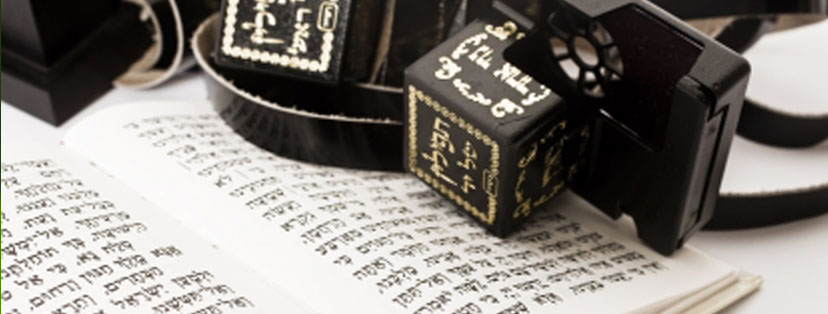
659) By right and left being included in the holy name in general, in “Hear O Israel” and in “Blessed be the name of the glory of His kingdom forever and ever,” they should later be taken out in particular, in the verses, “And you shall love,” “And it shall come to pass, if you hear.” However, not by unification because the unification is in the first verse in “Hear O Israel,” that the Lord will be one in the head Tefillin, and His name One in the hand Tefillin, and all will be one. Since all this unification was arranged in the general—from the highest point, Hochma—there needs to be an awakening from the Rosh of the first light—HeseddeZA—the first of the Sefirot of ZA.
660) The portion, “And you shall love” is the beginning of the right, the SefiraHesed, to love the Creator in love of bonding with Him. Right, Hesed, evokes love. One who loves the Creator, the Creator awakens His right toward him and accepts him with love. All the matters in the world depend only on the will, Ruach drawing Ruach and bringing Ruach, as it is written, “If He set His heart upon him, He will gather unto Him his spirit and his soul.”
661) When one evokes love for the Creator, awakening of the right, love, it awakens in three ways, as it is written, “With all your heart, and with all your soul, and with all your might.” Thus, there are three ways here. Do not say, “Either this or that,” for it is not written, “Or in all your heart, or in all your soul, or in all your might.” Rather, all are needed, heart, soul, and silver. Then the Creator evokes toward him His right hand and stretches it out to him, and He accepts him.
662) It is written about it, “The Lord says unto my lord: ‘Sit at My right.’” King David said that in regard to his degree, the Malchut, when it connects to the right.
There are 13 Mitzvot here in the right: “And you shall love the Lord your God” is one, “With all your heart” is two, “With all your soul” is three, “And with all your might” is four. “You shall teach them diligently to your sons” is five, “And you shall speak of them” is six, “When you sit in your house” is seven, “When you walk by the way” is eight, “When you lie down” is nine, “And when you rise up” is ten. “You shall bind them as a sign on your hand” is eleven, “And they shall be as frontals on your forehead” is twelve. “You shall write them on the doorposts of your house and on your gates” is thirteen.
663) These 13 Mitzvot depend on the right, and the left is included in the right, and so it should be. Each time the left awakens, the right begins in it first. For this reason, if they are rewarded, the left is included in the right. And if not, the right is included in the left, and the left governs, as it is written, “’If you walk in My statutes,” writing “If” in the beginning. In every place, the left awakens with love, in the right, and then its Din increases, as it should be. So it should be everywhere.
651) The evening prayer is mandatory because the Shema reading of the evening is mandatory, since the Creator unites with Malchut at night as He unites during the day. The quality of the night, Malchut, is included in the day, ZA, and the quality of the day is included in the night, creating a single unification. One who says that the evening prayer is optional is because it corresponds to internal organs and fat that are eaten by the altar at night, where it is not mandatory for them to remain burning at night.
652) “And you shall love the Lord your God with all your heart, with all your soul, and with all your might.” If the right and left are included in the unification, “Hear O Israel,” since the Lord is right and our God is left, why do we need to say afterwards, “And you shall love,” which is right, “And it shall come to pass, if you hear,” which is left? Were they not already included in the unification, “Hear O Israel”? In “Hear O Israel,” they are implied in general. In the verses, “And you shall love,” and “And it shall come to pass, if you hear,” they are in particular.
653) This unification is like the head Tefillin and the hand Tefillin. There are four [Torah] portions in the head Tefillin, and there are three names in “Hear O Israel, the Lord our God, the Lord.” There are four portions in the head Tefillin, each to its own, and here there are three names. What is the connection between them?
654) In those four portions, one portion is “Sanctify.” This is the first upper point, Hochma, right line. One portion is “And it shall be when the Lord brings you.” This is the next world, Bina, left line. One portion is “Hear,” the right of the Moach of Daat. And one portion is “And it shall come to pass, if you hear,” the left of the Moach of Daat, since the Daat, the middle line, comprises HB, right and left. These are the head Tefillin.
And here in the unification, “Hear O Israel,” there are three names, which are like those four portions. The first HaVaYaH [the Lord] is the uppermost point, the beginning of everything—Hochma and right line. Elokeinu [Our God] is the next world, Bina and left line. The last HaVaYaH is the whole of the right and left together in one whole, Daat, middle line, comprising right and left—the unification of the head Tefillin, for they are both equal. This is the first unification, “Hear O Israel,” the upper unification, which precedes the lower unification, which is “Blessed be the name of the glory of His kingdom forever and ever.”
655) The hand Tefillin are the whole of all those four portions together, which are not placed in four specific compartments, as in the head Tefillin, but are all in the same box. This is the unification, “Blessed be the name of the glory of His kingdom forever and ever,” the lower unification of the Malchut. In the lower unification there is the whole of the head Tefillin, HBDdeZA, which were included in the hand Tefillin, the Malchut.
656) That unification, “Bless” is the uppermost point, which is “Bless,” from which all the blessings—Hochma—come. The next world, Bina, is not called “blessed” because the uppermost point is a male, the next world is a female, and is therefore called “blessed” [male form], and she—“blessing” [female form]. For this reason, “Bless” is the high point, Hochma. “Name” is the next world, Bina, a big name, as it is written, “What shall You do to Your great name?” “Glory” is the upper glory, ZA, comprising right and left.
657) Hochma, Bina, and ZA are included in the hand Tefillin, which is “His kingship,” taking everything within it. All the worlds are included in this “His kingship,” to nourish them and provide for them with all that they need. For this reason, “Forever and ever” indicates that it provides for all the worlds.
658) This is the unification of the head Tefillin, ZA, and of the hand Tefillin, Malchut. Like the unification of the Tefillin, so is the unification of everything. The unification is set up in four ways: HB, right of Daat and left of Daat. This arrangement is the clearest, and all are the faith, the Malchut that receives them. But the order of the unification of the Tefillin is the upper unification, ZA.
643) The Creator tells her and swears her that when she comes down to this world, she will engage in Torah to know Him and to know the faith, for all who were in this world and did not try to know Him would be better off not being created. For this reason, she appears before the King through the appointee, to know Him in this world and to exert in the Creator in faith.
644) It is written, “To you it was shown to know,” meaning shown by that appointee before the Creator. “To know” means to know and to look in this world, in faith, in the Torah. Anyone who was in this world but did not engage in Torah to know Him, it would be better for him if he were not created, for this is why the Creator brought man to this world.
645) “To know that the Lord He is the God” is the whole of the faith of the entire Torah, the whole of above and below. The whole of the faith, Malchut, since the name Elokim [God] is Malchut. The whole of the Torah is the written Torah, the name HaVaYaH, ZA. This is the oral Torah, the Malchut, the name Elokim. It is all one: it is the whole of the faith because HaVaYaH [the Lord] is the Elokim [God]; it is the full name.
Faith is called “a name” for in this unification it is full and complete. And He, “The Lord is one and His name One.” HaVaYaH is one; He is “Hear O Israel, the Lord our God, the Lord is one.” This is one unification. “And His name One” is “Blessed be the name of the glory of His kingdom forever and ever,” which is a different unification, so His name will be one, Malchut. It is also written, “The Lord is the God,” when they are in one unification.
646) How do you say that the verse, “The Lord is the God” is as it is written, “The Lord is one and His name One”? After all, is it not similar? If it were written, “The Lord is one and His name is One,” I would say so. But it is written, “The Lord is one and His name One.” Should it not have said here, “The Lord He is the God He,” and then it would seem like “The Lord is one and His name One”?
647) It is all one because when uniting these two names, this in one unification and that in one unification, as it is written, “The Lord is one and His name One,” the two names become one, included in one another, and everything becomes whole there, in one unification. Then, “The Lord He is the God,” since everything is included in one another to be one. And as long as they have not all united, this in itself and that in itself, they are not included in one another to be all one.
648) “The Lord He is the God” is the whole of the Torah because the written Torah, HaVaYaH, is ZA, and the oral Torah, the God, is Malchut. And because the Torah is the holy name, “The Lord He is the God,” it is called so—“written Torah” and “oral Torah.” The written Torah is the general, and the oral Torah is the particular, since ZA is the general and Malchut is the particular, for Malchut is a single Sefira of the ten Sefirot deZA. The general needs the particular, the particular needs the general, and they unite in one another to become all one.
649) Therefore, the whole of the Torah is the whole of above, ZA, and of below, Malchut, since the name HaVaYaH is above, in ZA, and the name Elokim is below, in Malchut. This is the upper world, and that is the lower world, as it is written, “To you it was shown to know that the Lord He is the God.” This is the whole of everything, and this is what one must know in this world.
650) Where are the Mitzvot [commandments] of the Torah in this rule of “The Lord He is the God”? HaVaYaH [The Lord] is “Remember,” and Elokim [God] is “Keep,” and all the Mitzvot of the Torah are included in those. “Remember” comprises 248 positive Mitzvot [commandments to actions], and “Keep” comprises 365 negative Mitzvot [commandments to avoid actions]. Together they are the 613 Mitzvot in the Torah, and all is one.